
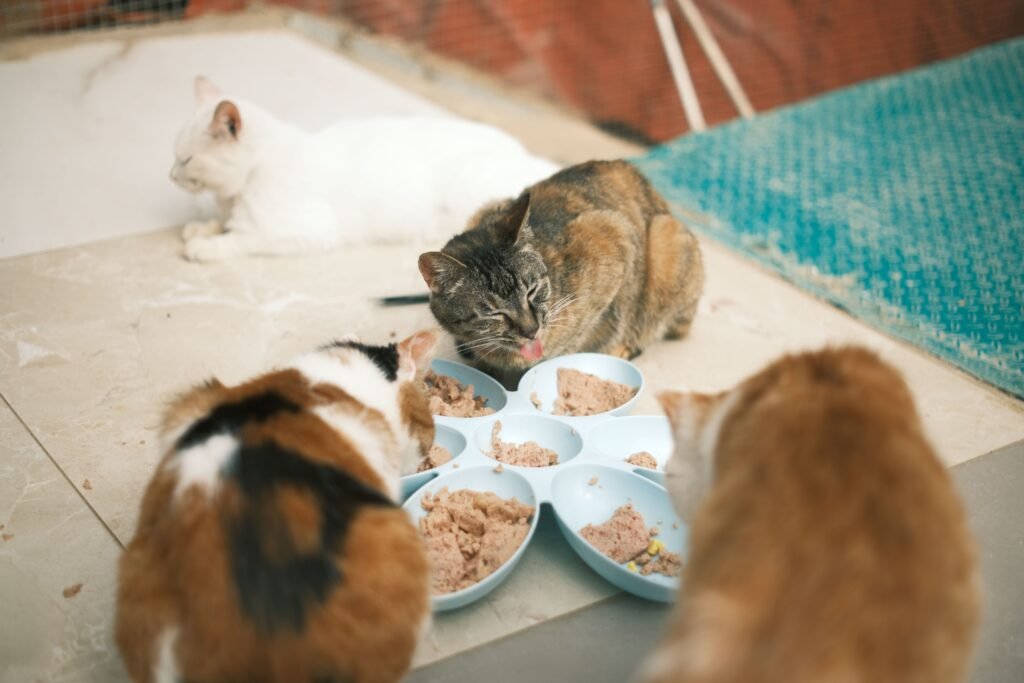
Wet cat food is a highly nutritious choice for cats, but its texture and moisture content make it particularly susceptible to bacterial contamination. At normal room temperature, it is not safe to leave wet food out for more than 30 to 60 minutes. After this short period, airborne germs and ambient temperatures interact with the food’s proteins and moisture, causing it to deteriorate rapidly.
If your home is hot or humid, this time can be reduced to as little as 20 minutes. The purpose of this short period of time is to protect your cat’s digestive system from foodborne infections.
Remember that a cat’s stomach pH level is different from that of humans, but this does not completely protect them from the toxic effects of bacteria, so “leaving food out” is a practice that can put your cat at risk for food poisoning.
- Why Should Wet Cat Food Not Stay Out Too Long?
- How Long Can Wet Cat Food Stay Out in Different Temperatures?
- How Can You Tell If Wet Cat Food Has Gone Bad?
- What Happens If a Cat Eats Wet Food That Has Been Left Out Too Long?
- What Should You Do With Leftover Wet Cat Food?
- Can You Serve Refrigerated Wet Cat Food Again?
- FAQ,S
Why Should Wet Cat Food Not Stay Out Too Long?
The main reason why wet food spoils quickly is its moisture content, which is usually 75% to 82%. This high moisture content provides an ideal environment for bacterial growth. When the can is opened, its sterile environment is destroyed, and airborne microorganisms enter it. Bacteria such as Salmonella and Listeria.
Once they colonize the food’s surface, they begin releasing toxins that cannot be eliminated by cooking alone. Furthermore, animal fats and proteins in wet food undergo lipid oxidation when exposed to air.
This process not only changes the taste and smell of the food but also reduces the availability of essential amino acids (such as taurine), thereby reducing the food’s nutritional value.
How Long Can Wet Cat Food Stay Out in Different Temperatures?
At normal room temperature (68to72°F to 20to22°C)
At normal room temperature, which is between 68°F and 72°F (20 to 22°C), wet food can be left out for up to an hour. Bacterial growth is moderate at this temperature, but the 60-minute limit is set because after that time, the bacterial population begins to grow exponentially.
If food is left out for longer than that, the number of bacteria can reach a dangerous level that can cause infection in your cat.
In hot weather (above 90°F to 32°C)
When the room temperature exceeds 90°F (32°C), it becomes a “danger zone” for food. The heat accelerates bacterial metabolism, which can cause food to spoil within 20 to 30 minutes.
In this weather, the rate of protein and fat degradation in food increases significantly, and the food begins to smell unpleasant very quickly. In such a situation, it is wise to remove the food immediately after feeding the cat.
In air-conditioned rooms
In air-conditioned rooms, where the temperature remains below 70°F, food can be preserved a little longer (about 90 minutes), provided the humidity is low.
But even with air conditioning, we must not forget that dust and other contaminants in the room air can settle onto the food. Therefore, it is not recommended to leave food out for more than 90 minutes, even in a controlled environment.
How Can You Tell If Wet Cat Food Has Gone Bad?
Bad smell: A strong, sour, or rotten smell from food is the first symptom. If the food’s original aroma changes to an unpleasant one, it should be discarded immediately.
Color changes: The color of fresh wet food is natural. If the color of the food becomes dull, dark spots form on it, or it starts to look different from its original color, this is a sign of oxidation and bacterial spoilage.
Dry or crusty surface: If the top layer of the food becomes dry and hard, it means the food has lost moisture. This dryness creates a layer where bacteria can thrive.
Mold: A white, green, or gray cottony coating on food is a clear sign of mold. It can produce mycotoxins that are toxic to cats.
Insects: If small flying insects (fruit flies) or ants are seen around the food, it is evidence that the food-spoilage process has begun and that contamination has occurred.
What Happens If a Cat Eats Wet Food That Has Been Left Out Too Long?
If a cat eats bad food, its stomach can react negatively immediately. The first stage is a mild stomach upset, in which the cat experiences gas or mild stomach pain. This is followed by vomiting, a defensive reaction of the body to expel toxins.
If the bacterial infection is severe, the cat may develop diarrhea, which can cause rapid dehydration. Dehydration is very dangerous for cats because it directly affects their kidneys.
If the cat becomes sluggish after eating food, stops eating or drinking, or complains of persistent vomiting and diarrhea, this is a sign that it needs veterinary attention. Doctors usually prescribe antibiotics or fluid therapy in such cases.
What Should You Do With Leftover Wet Cat Food?
Refrigeration: If your cat hasn’t eaten all of the food, remove it from the can immediately. Prolonged contact of food with metal inside the can (oxidation) can give the food a metallic taste and make it spoil faster.
Airtight container: Always transfer food to a clean, airtight glass or BPA-free plastic container.
How long it lasts in the fridge: In the fridge (usually at 40°F to 4°C), wet food will last at most 3 to 5 days. After 5 days, its nutritional value is lost, and harmful bacteria can grow.
Can You Serve Refrigerated Wet Cat Food Again?
Yes, but serving it straight from the fridge can affect your cat’s appetite because cats have a keen sense of smell and don’t like cold food.
Bring it closer to room temperature: Take it out of the fridge 20 minutes before serving so it can warm up naturally.
Safe warming methods: You can raise its temperature by placing it in a bowl of hot water (Bain-marie method) or by placing the can in lukewarm water for a while.
What not to do: Never heat it in a microwave. Microwaves heat the food’s internal components unevenly (creating hot spots), which can burn your cat’s mouth and destroy the integrity of the food’s vitamins and amino acids.
Tips to Prevent Food Waste
Feed smaller portions: Instead of giving your cat one large meal, divide its food into several smaller portions throughout the day. This reduces the time the food is out of reach.
Use meal schedules: Set a fixed time for your cat to eat (for example, morning and evening). This helps your cat get used to eating at set times and prevents food waste.
Store unopened and opened cans correctly: Store unopened cans in a cool, dry, and dark place, and refrigerate all opened cans.
Final Thoughts
Wet food is an excellent source of hydration and protein for your cat, but it is your responsibility to provide it within the “Safe Time” limit. Make the 60-minute limit a rule of thumb.
Remember that cleanliness and proper storage can protect your cat from food poisoning and gastrointestinal complications. If you are ever suspicious of the smell or texture of a food, it is best not to feed it to your cat for its long life.
FAQ,S
Can I leave wet cat food out overnight?
Absolutely not. Nighttime is the best time for bacteria to grow. Leaving food out overnight can increase the number of bacteria in it to several million, which can be fatal to your cat.
How long can wet cat food stay out after opening?
Once the can is opened, it can be left out for up to 1 hour. After that, it should either be fed or discarded.
Can wet cat food stay out all day?
No. Leaving the food out all day spoils it and allows harmful bacteria to grow. This is a serious mistake for your cat’s health.
Is dry cat food safer to leave out?
Dry cat food (Kibble) can stay out longer than wet food because it has much less moisture. It can usually be left out for up to 24 hours, but even then, there is a risk of oxidation