
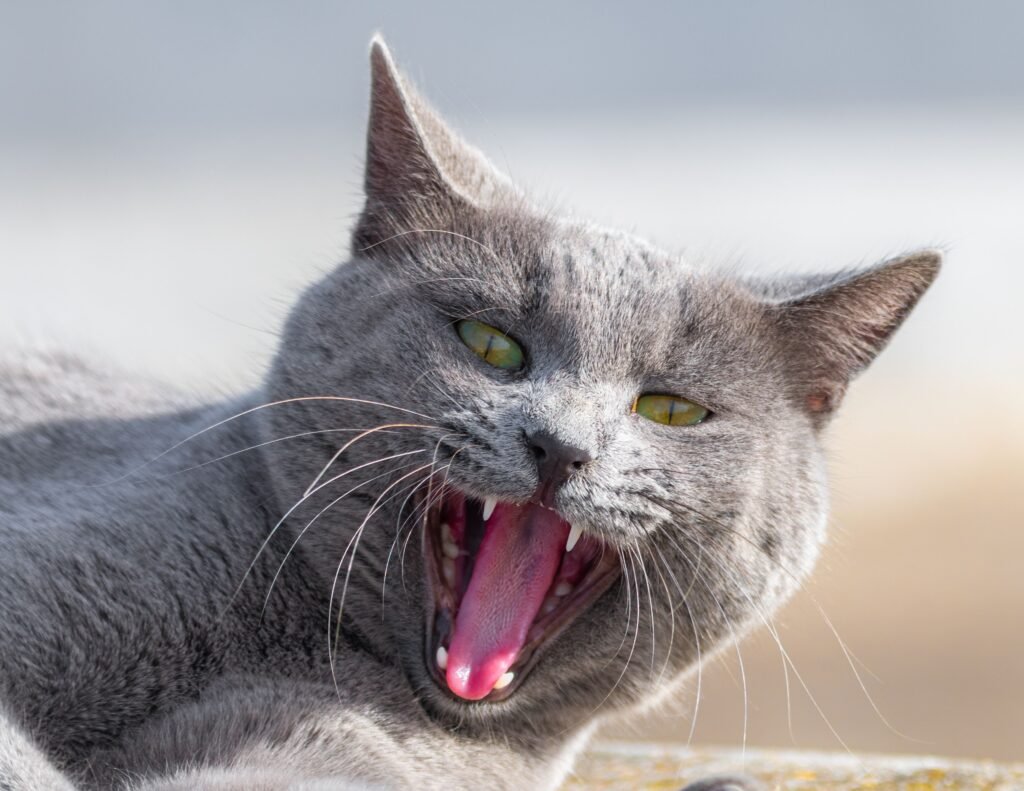
Unlike kittens, who lose their baby teeth just like human kids do, adult cats are supposed to keep their permanent teeth for life. If your older cat is losing teeth, it is not just a natural part of growing old. It is almost always a sign of an underlying dental problem.
The biggest culprit here is gum disease. Over the years, plaque and bacteria build up on a cat’s teeth. If it isn’t cleaned, it causes painful, inflamed gums.
Eventually, the infection destroys the bone holding the tooth in place, causing it to fall out. Another common issue is tooth resorption, in which the cat’s body literally breaks down and absorbs its own teeth.
While tooth loss is common in senior cats, it is always a red flag. According to medical research, about 90% of cats develop dental and gum diseases during their lives. Only 10% of cats live their entire lives without any major dental problems. It usually means your cat is in some level of discomfort and needs a quick visit to the vet to get their mouth feeling better.
Do Older Cats Really Lose Their Teeth? Why does this happen?
While many people think cats lose teeth just because they are getting old, science shows it is actually caused by a painful dental disease called Feline Tooth Resorption (FTR).
This is incredibly common, affecting anywhere from 20% to 75% of all pet cats, and it becomes much more likely as they age. In fact, more than half of all cats over the age of five have at least one tooth affected by it.
Unlike human cavities, which are caused by bacteria and sugar eating away at the outside of a tooth, FTR is an “inside job.”
When cats are kittens, these odontoclast cells naturally dissolve the roots of baby teeth so they can fall out and make room for the adult cat’s teeth.
In adult cats, these cells accidentally turn back on. They start attacking the permanent adult teeth, eating away at the tooth’s root and inner structure from the inside out.
Since the cat’s body is basically destroying its own teeth, the problem gets worse as they grow. In fact, the risk increases by 1.78 times for every year a cat gets older. It is a hidden, really painful process, and you’ll definitely need a vet’s help to fix it.
What Teeth Old Cats Lose?
An adult cat has 30 permanent teeth, which are specialized for carnivory. Among them, the first and second premolars of the lower jaw and the first premolars of the upper jaw are naturally absent.
Not all teeth are affected by disease in the same way, but certain teeth are more prone to disease. When examined by veterinarians, the third premolars of the lower jaw (Triadan 307 and 407) are considered “superficial” or indicator teeth for this disease.
If any abnormalities are found in these teeth, the doctors should immediately take a digital X-ray of the whole mouth, as all other major teeth are also at high risk of resorption.
In addition, upper fourth premolars and lower first molars also fall due to periodontal disease caused by severe plaque and tartar build-up. A unique condition known as canine extrusion is seen in the front incisors (canines) of older cats.
This problem is caused by chronic inflammation of the gums and bone (Chronic Alveolar Osteitis). As a result of this inflammation, the gum bone bulges out, and the canine tooth is pushed out of its place (socket), making the tooth appear abnormally long, and its grip weakened.
Is It Normal for Old Cats to Lose Teeth?

Medically and biologically, tooth loss in older cats is by no means a common or normal process. It is always an indication of a deeper pathological disease in the mouth that, if not treated in time, can lead to tooth loss.
The biggest obstacle in diagnosing oral diseases in cats is their extraordinary ability to hide pain. Since cats are predators from the wild, they do not show weakness so as not to become a target for another predator.
As a result, cats continue to eat despite severe toothache and gum inflammation, giving owners the misleading impression that the cat is completely healthy.
External symptoms are not obvious until toxins and bacteria released from the gums and bones spread through the bloodstream to other organs, causing systemic complications.
Practical Dental Care Tips to Keep Healthy Teeth in Older Cats
Older cats need a special, regular approach to keeping their mouths healthy and protecting them from dental disease. Here are some simple and practical methods:
The scientific method of daily tooth brushing
The best way to care for your cat at home is to brush its teeth regularly to prevent plaque from forming into hard tartar.
Maintain regularity: brush at least 2 to 3 times a week, and if possible, once a day.
Cat toothpaste: Always use chicken- or fish-flavored toothpaste specifically made for pets. Never use human toothpaste, as the fluoride and xylitol in it can be extremely toxic and fatal to cats.
Get used to it gradually: First, apply the paste to your finger and let your cat taste it. Then apply the paste to a cotton bud and gently brush the gum line (where the teeth and gums meet) in a circular motion. Once your cat is used to it, use a soft-bristled toothbrush
Alternative solutions for water intake and oral bacteria
Older cats often do not allow their mouths to be touched or brushed due to joint pain or nerve weakness. Alternative methods for them are:
Increase water flow: Cats’ saliva naturally contains plaque-fighting enzymes. To give your cat more water, install a water fountain at home and mix a little bone broth into the water.
Oral Probiotics: Add a flavorless probiotic powder to your cat’s diet daily. These increase beneficial bacteria in the mouth, eliminate plaque-causing bacteria, and improve gastrointestinal health.
Professional treatment at a veterinary clinic
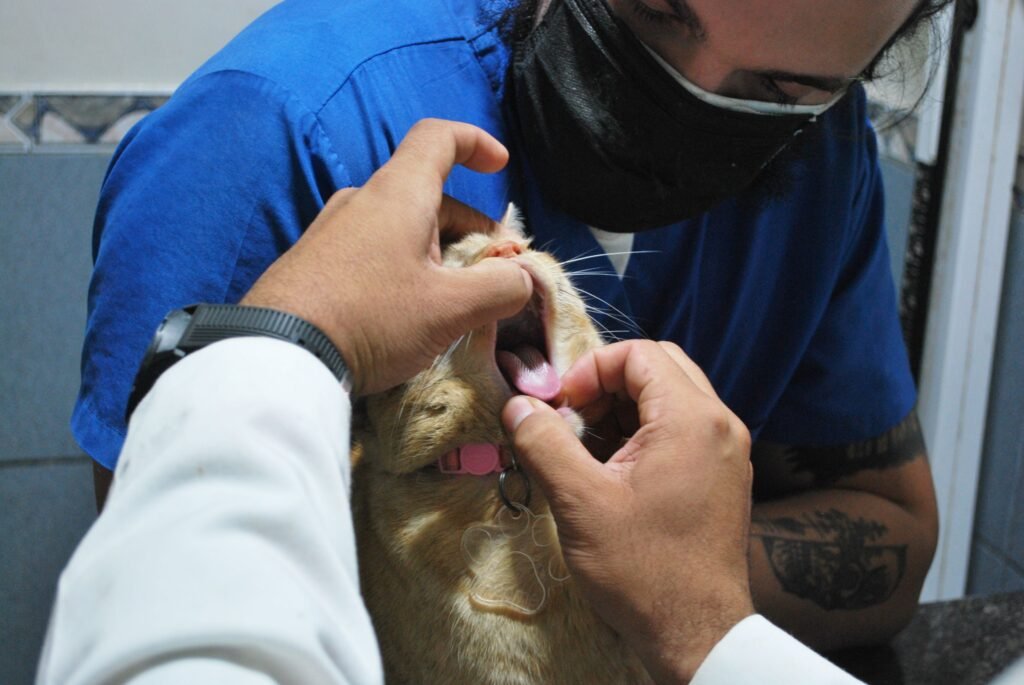
Home cleaning can never remove plaque and tartar hidden under the gums, so a cleaning by a veterinarian is essential.
Detailed examination under anesthesia: For deep cleaning of the teeth (scaling), polishing, and examination of the gums, it is necessary to safely anesthetize the cat. Pre-anesthetic bloodwork is performed before this procedure to determine the health of the cat’s liver and kidneys.
X-ray screening: More than 50 percent of diseases in the cat’s mouth are hidden in the roots below the gums. Annual full-mouth digital X-rays help catch tooth resorption early.