
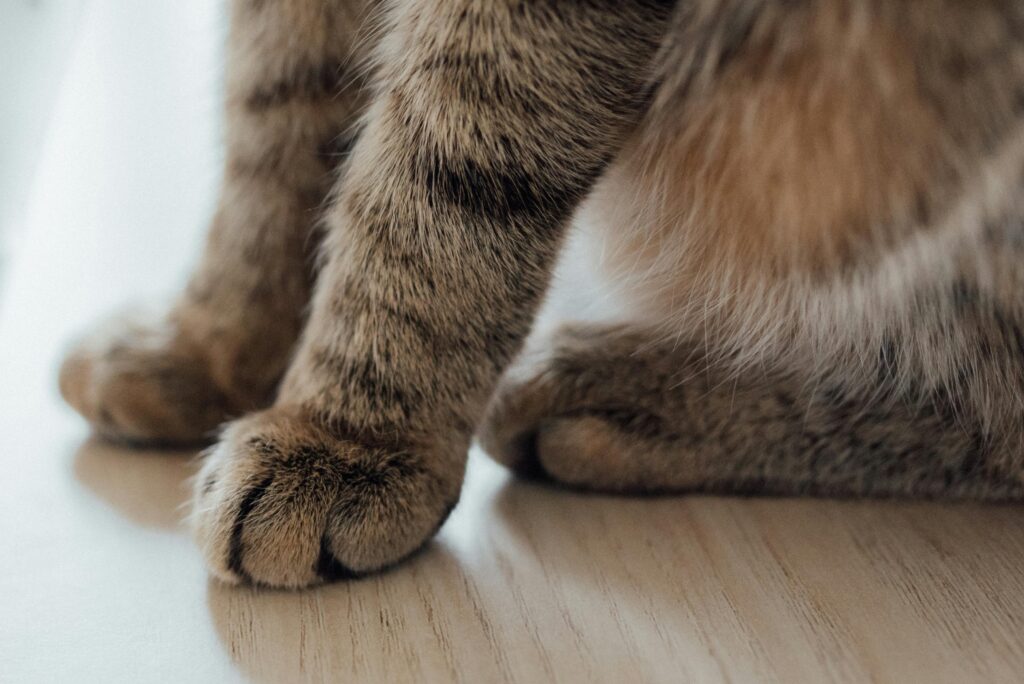
Most cat owners spend years loving their pets without knowing one simple thing about them. They pet the paws, they watch them walk, but they never actually count the toes. It may seem like a small detail, but missing it means missing a significant part of how cats work.
Cat paws are not just cute. They are built for hunting, balance, and survival. Each toe plays a role in how a cat moves, climbs, and lands.
If you ignore paw health because you don’t understand the anatomy, you might miss early signs of problems like overgrown nails or joint pain.
Most cats have 18 toes, with five on each front paw and four on each back paw, as confirmed by veterinarians at PetMD.
Knowing how many toes a cat has helps you give better care, spot abnormalities faster, and understand your cat’s behavior more clearly.
Some cats break this rule entirely. A condition called polydactyly causes certain cats to have extra toes, and it is more common than most people think.
By the end of this article, you will know exactly what to look for on your cat’s paws.
The Standard Toe Count in Cats

Most people assume all four paws are the same. They are not. Front and back paws have different toe counts, and there is a real reason for it.
Total Number of Toes a Cat Has
The normal number of toes in a cat is 18. That number stays the same across almost all domestic breeds, from small kittens to large adults. If you count and get a different number, that is worth paying attention to.
Most cats have 18 toes, with 10 in front and eight in the back. That uneven split is completely normal and by design. It is not a defect or a quirk; it is just how cats are built.
How Many Toes Does a Cat Have on Front Paws
Each front paw carries five toes. Four of them sit forward, and one sits slightly higher and to the side. That higher toe is called the dewclaw, and it works almost like a thumb for gripping and holding.
The dewclaw helps the cat hold on to prey or toys and acts as a feline thumb of sorts. It does not touch the ground when a cat walks, but it is very active during climbing and catching. Skipping nail trims on the dewclaw is a common mistake since it can curl and grow into the skin.
How Many Toes Does a Cat Have on Back Paws?
The back paws each have four toes. There is no dewclaw on the hind feet in a standard cat. This is completely normal and expected.
Cats usually have five toes on their front paws and four on their back paws, and having five toes is actually the normal number for most four-legged animals with backbones. The back legs of a cat are mostly built for power and push-off, so fewer toes with more focused contact works better for jumping.
How Many Toes Does a Cat Have on Each Paw?

It is one thing to know the total, but understanding each paw individually helps you check for injuries, infections, or nail problems more carefully.
Front Paw Toe Breakdown
The front paw has five toes, each with its own retractable claw. The four main toes point forward and carry most of the gripping work. The fifth sits back and up, separate from the rest.
Each front paw typically has five toes, including a dewclaw, while back paws have four toes, each with its own distinctive toe bean. When checking your cat’s front paws, always make sure to inspect the inner dewclaw. It is easy to miss because of where it sits.
Back Paw Toe Breakdown
The back paw has four toes, all pointing forward and close together. There is no raised or separated toe like on the front. These paws are built tight and compact for powerful jumps and stable landings.
Most cats have four toes on each back paw, and each toe has an embedded claw as its last bone. Even though the back paws seem simpler, they still need regular nail checks. Overgrown claws can catch on carpet or furniture and cause painful tears.
Cat Toe Beans and Toe Pads Explained
Those soft little bumps on the bottom of a cat’s paw are not just for looks. They have real jobs, and most cat owners have no idea how much work they actually do.
How Many Toe Beans Does a Cat Have
Each of a cat’s paws has four digital pads, meaning a cat has 16 toe beans in total, along with two dewclaws, one on each front foot. If you ever sit and count while your cat is relaxed, you will find exactly that. The dewclaw pad sits slightly apart from the rest.
Most people think there are more because the paws look full and round. But the number is fixed, and each little pad has its own purpose in how the cat feels and moves through the world.
What Are Toe Pads and What Do They Do
Toe pads do much more than cushion a cat’s steps. One of the most important functions of toe beans is acting as natural shock absorbers, helping distribute impact when cats leap, climb, or land from heights, protecting their bones and joints from potential damage.
Toe beans also help cats move silently since the paw pads absorb the shock of their footsteps and prevent noise from being made. This is why cats can cross a room at night, and you hear absolutely nothing. It is not luck, it is anatomy doing exactly what it was designed to do.
Toes by Breed: Does Breed Affect Toe Count?

For most breeds, the answer is no. The standard is 18 toes regardless of size, coat, or personality. But a few breeds come up often in conversations about paw differences, so it is worth addressing each one directly.
How Many Toes Does a Maine Coon Cat Have?
A standard Maine Coon has 18 toes, the same as any other cat. But this breed is one of the most well-known for carrying the polydactyl gene. Maine Coons have a slightly higher chance of developing extra toes compared to other breeds.
Maine Coon paws are large, round, and tufted, and some Maine Coons are polydactyl, meaning they have extra toes, which many families call double paws or Maine Coon thumbs. Polydactyl Maine Coons are considered purebred when they come from registered lines, and the trait is part of the breed’s actual history.
How Many Toes Does a Bengal Cat Have?
Bengal cats follow the standard count. They have five toes on each front paw and four on each back paw, giving them 18 total. There is nothing in the Bengal breed that makes extra toes more or less likely than in a typical domestic cat.
Bengals are athletic and active, so their paws take a lot of wear. Checking the nails and pads regularly matters more with this breed simply because of how much they move, climb, and play.
How Many Toes Does a Manx Cat Have
Manx cats also have the standard 18 toes. The Manx breed is famous for being tailless or having a very short tail, but the paws are completely normal in structure and count.
Their missing or shortened tail shifts how they carry weight and balance, which means their paws and toes actually work a bit harder. Paying attention to paw health in a Manx is even more important because their legs and paws compensate for what the tail usually handles.
How Many Toes Does a Himalayan Cat Have
Himalayans are another breed that follows the standard 18-toe rule. Their thick coat can sometimes hide the paws and make them look bigger, but the toe count underneath is the same as any other domestic cat.
Because of their long fur, Himalayan owners sometimes miss matting between the toes or overgrown nails until it becomes a problem. Checking between the toes regularly is a good habit for this breed specifically.
Polydactyl Cats and Extra Toes
This is where things get genuinely interesting. Some cats are born with more toes than normal, and the science and history behind it is worth knowing.
What Is a Polydactyl Cat
A polydactyl cat is a cat born with extra toes due to a genetic mutation. The word comes from Greek, where “poly” means many and “dactyl” means digit. It is not a breed; it is a genetic trait that can appear in any breed.
Polydactyly refers to the presence of extra digits, even if it is just one additional toe or an extra dewclaw, and extra toes can be found on the front or hind limbs. Most of the time, the extra toes appear on the front paws. Finding them only on the back paws is rare.
How Many Toes Does a Polydactyl Cat Have
There is no single answer because it varies from cat to cat. Polydactylism can cause a varying number of extra digits, with the front paws more often affected, and in rare cases, all four paws can have extra toes.
The Guinness World Record for most toes on a cat is held by a Canadian tabby named Jake, who has 7 toes on each of his four paws, for a total of 28. Most polydactyl cats have far fewer extras, usually one or two per paw. But the range is wide, and every polydactyl cat is a little different.
Hemingway Cats: The Famous Polydactyl Colony
The connection between polydactyl cats and Ernest Hemingway is one of the most well-known stories in cat history. Novelist Ernest Hemingway acquired a six-toed cat named Snow White, who bred and passed on the polydactyly genes, and today his estate in Key West is home to over 60 polydactyl felines.
About half of the cats at the Hemingway Home and Museum are polydactyl, continuing the legacy of his six-toed companions, and the cats have become a major attraction for visitors. The cats roam the property freely and are well cared for. Visiting Key West and seeing these cats in person is a genuinely memorable experience for any cat lover.
What Causes Extra Toes in Cats
Extra toes come from a dominant genetic mutation. It only takes one parent with the extra-toe gene to pass the trait to their kittens, which is why polydactyl cats can pop up even in litters where only one parent carries the gene.
Polydactyly in Maine Coon cats is caused by a single point mutation called the Hemingway mutation within the regulator gene ZRS, which is responsible for determining digit formation in paws. This mutation is harmless in most cases. The only real care difference is that polydactyl cats need their claws trimmed more often since extra nails can grow into the skin if left too long.
Why Do Cats Have the Toe Count They Do?
The number 18 is not random. It is the result of millions of years of evolution, fine-tuning an animal that needed to hunt, climb, and survive.
The Evolutionary Purpose of Cat Toes
There is no single dramatic reason cats have five toes on the front and four on the back. It is simply how evolution worked out, and it has not been evolutionarily disadvantageous, so it stayed. Evolution keeps what works and removes what does not, and 18 toes kept working.
The front paws needed that extra toe for gripping and controlling prey. The back paws needed compact, powerful contact for jumping and pushing off. The difference in count reflects a difference in job.
How Toes Help Cats Hunt, Climb, and Balance
Every toe on a cat’s paw contributes to something specific. The soft skin between a cat’s toes is extremely sensitive, giving them exceptional proprioception, which is the ability to sense the body’s position and movement, enabling lightning-fast reflexes.
Paw pads act as shock absorbers during movement, provide traction, and protect the internal structures of the paws from injuries, while the muscles in cat paws facilitate precise movements and powerful leaps. When your cat lands silently from a high shelf, every single toe is doing its job exactly as nature intended.
FAQ,S
How many toes does a cat have in total?
Most cats have 18 toes total, with five on each front paw and four on each back paw. Polydactyl cats can have more, sometimes up to 28, in extreme cases.
Why do cats have more toes on their front paws?
Front paws need the extra toe for gripping, catching, and climbing. The dewclaw on the front paw acts like a thumb, helping cats hold onto things. Back paws are built for jumping and pushing, so fewer toes work better there.
Do all cat breeds have the same number of toes?
Yes, the standard count of 18 applies to all breeds, including Bengals, Himalayans, and Manx cats. The exception is polydactyl cats, which can be any breed and carry an extra-toe gene.
Are polydactyl cats healthy?
Generally yes. Extra toes do not cause pain or health problems on their own. The main concern is that extra claws need more frequent trimming to prevent them from curling into the skin.
What are toe beans exactly?
Toe beans are the soft, round pads on the bottom of a cat’s paw. A standard cat has 16 toe bean pads plus two dewclaw pads. They absorb shock, provide grip, and even help cats mark their territory through scent glands in the skin.