
I’ll tell you about the first time I truly messed this up. I wanted to indulge my scrappy little rescue tabby, Biscuit, who I had just brought home.So I did what every new cat owner does. I felt like the greatest cat parent alive as I filled his bowl to the brim with wet food and watched him jump right in. He dumped the entire thing back onto my kitchen floor ninety seconds later.
I became terrified. I assumed that I had already ruined my new cat, that the food was terrible, or that he was ill. As it happened, he was alright. He had just consumed too much food too quickly, and his small stomach refused to accept it.
You are already familiar with that silent concern if you have ever stood over a bowl and wondered how much wet cat food to feed a cat each day. Too much seems untidy and useless. Too little feels awful.
The truth is, your cat’s age, weight, and daily activity level determine the right amount.I’ve been feeding cats of all shapes and sizes for years, and I’ve learned this the hard way—one spilled bowl at a time. So you don’t have to go through the trial and error I did; let me show you what really works.
First, Let’s Talk About What’s Actually In That Can
I neglected this section for far too long. I bought whatever was on offer and crossed my fingers. Feeding made much more sense after I started reading labels.In essence, wet food is cat food that still contains a significant amount of water. The U.S. Food and Drug Administration states that dry kibble contains just 10 to 12 percent moisture, but canned pet food contains between 75 and 78 percent.
That water is really important. I’ve never seen Biscuit willingly complete a bowl of water, and most cats are indolent drinkers. They get that moisture from wet food, which subtly supports the kidneys and bladder for a lifetime.
The meal is sealed in a container or pouch after being cooked over high heat. An unopened tin will therefore remain in your cabinet for a very long time.You’ll also see a variety of textures on the market, including mousse, flaked, shredded, and pâté. Miso, my current cat, doesn’t like pâté, but she goes crazy for anything torn.
The flavor often matches the main protein. Tuna is the main ingredient in a tuna recipe; chicken is the main ingredient in a chicken recipe, along with extra fat, vitamins, and taurine. This is the part I wish someone had told me earlier. Good wet feeds are designed to satisfy FEDIAF or AAFCO nutrient requirements.
This means the balancing is already done for you. It’s a nightmare to try to measure out calcium, zinc, and taurine at home, and doing it incorrectly might deprive a cat of essential nutrients.
Why Your Neighbor’s Cat Eats More (Or Less) Than Yours

I used to believe that everything was determined by breed. Waffle, my friend’s enormous softie Maine Coon, eats a lot more than my Miso, so I thought it was a breed issue. Not precisely. A cat’s food needs aren’t really determined by breed. Body size and weight are what matter most.
The waffle weighs about sixteen pounds. Miso weighs roughly eight pounds. To keep that frame moving, the huge guy obviously needs more fuel.I’ve also seen that busy breeds eat differently. Bengals and Abyssinians are lean, restless cats that burn energy all day, so they can tolerate a little more without getting agitated.
The opposite is true for chunkier, calmer breeds. Persians and British Shorthairs typically perform better on a bit less because they gain weight if you even look at them incorrectly.After all these years, my advice? Feed the animal, not the breed.Two cats from the same litter can weigh significantly different. Rely on your hands and eyes rather than an internet chart.
The Things That Quietly Change Your Cat’s Portion
Weight is a good place to start, but it’s only the beginning. A few factors influence that figure, and once I figured them out, my feeding became much more precise.I’ll dissect the ones that truly make a difference.Instead of feeding the cat she is, feed the cat she should be.
Feed the Cat She Should Be, Not the Cat She I
As a result, I now feed my heavier cats differently.You can identify where she is right now by looking at her weight. You can determine where she should be based on her ideal weight.Let’s say your cat weighs 7 kg, but her healthy weight is actually closer to 5 kg. Her portion is based on that 5 kg target rather than the 7 kg.
Instead of white-knuckling through a crash diet, she can safely and gradually lose weight this way. It also functions in reverse. I fed an underweight stray till she reached her goal weight, giving her a little more until she reached her ideal weight. A Body Condition Score is another tool veterinarians use.
To determine whether a cat is too thin, just right, or carrying extra weight, they rub their hands over the ribs, waist, and general contour.At home, you can learn to do a rough version. She’s probably heavier than she should be if you can’t even feel her ribs behind a soft covering.
Age Rewrites The Whole Menu
I’ve fed grouchy old-timers, grownups, and kittens, and each stage is a whole different animal.Kittens are tiny engines. They require significantly more calories and protein per pound than an adult cat since their muscles and bones are still developing.
Adult felines settle down. For the most part, they don’t require much—just enough to maintain a stable, healthy weight.People trip over older pets. Conventional wisdom says seniors always need less, but that is only partially true.
My elderly rescue Pippin began to lose weight rather than gain it when he reached his teens. His veterinarian told me to feed him more and switch to a softer, easier-to-digest food.Therefore, don’t assume that “old cat means less food.” Watch each cat and adjust as needed.
How Much She Actually Moves?
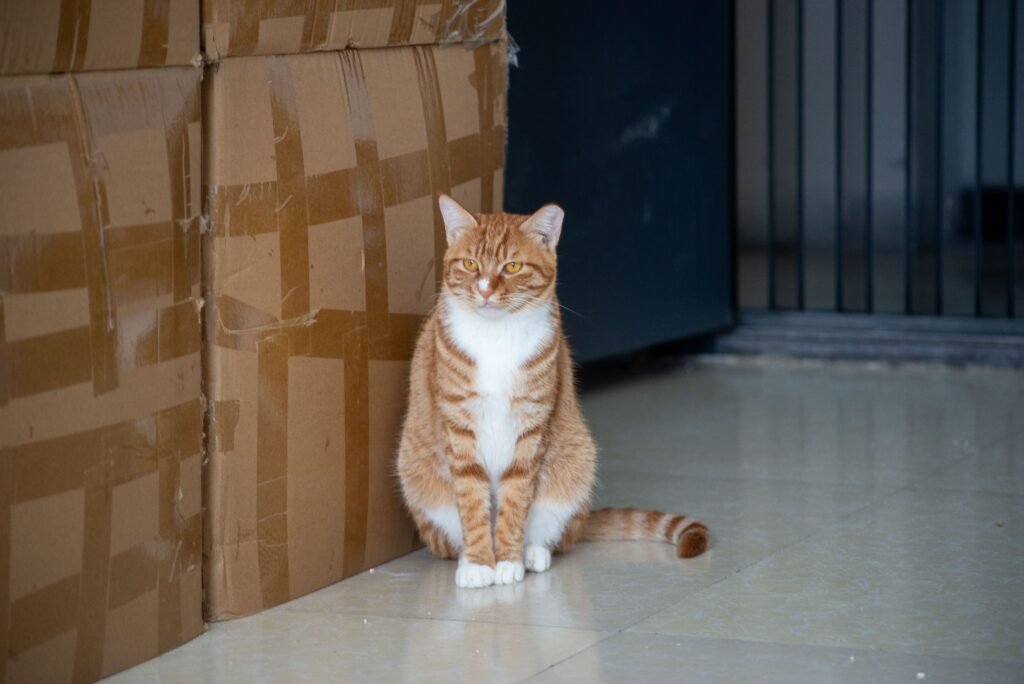
Miso uses the couch as a full-time job and naps 18 hours a day.An outdoor explorer burns far more than a cat like that. Generally, indoor couch potatoes need fewer calories, and any excess food turns into belly.
Outdoor cats use a lot more energy to climb, hunt, and patrol the yard. They burn even more to maintain their body temperature in chilly conditions.I remember this as the seasons change. I’ve seen outdoor cats naturally lose weight in the summer and eat more in the winter, but my indoor cats always consume the same diet.
After The Snip, And During Motherhood
Many cat owners don’t realize that neutering or spaying your cat subtly changes the math.According to veterinary sources, following surgery, a cat’s baseline metabolism may decrease by about 30%. Her hunger frequently increases at the same time.If you’re not paying attention, that’s a surefire way to gain weight. After a cat is corrected, I always double-check the sections, typically making minor adjustments.
Nursing and pregnancy swing sharply in the opposite direction. A nursing mother may require much more food than usual because she is essentially operating a milk factory.During that stretch, many veterinarians, including mine, switch nursing moms to calorie-dense kitten formula. It’s one of the few times you can eat a lot without feeling guilty.
After The Snip, And During Motherhood
Everything you know about your cat’s appetite may change due to health issues. Some that I’ve encountered or learned about:Cats with an overactive thyroid eat constantly but keep losing weight.Chronic kidney disease: frequently requires a phosphorus-controlled renal diet suggested by a veterinarian.
A veterinarian may recommend low-carb, high-protein meals if you have diabetes.Veterinarians recommend rich recovery meals because cancer or infections cause hunger to decline.
Please don’t simply change the bowl if your cat’s eating habits abruptly change and you can’t explain it. Give your veterinarian a call. I’ve found that a change in appetite is often the first sign of a more serious issue.
How Much Wet Cat Food To Feed A Cat Per Day?
Okay, so this is the number you were looking for.Most healthy adult cats need about 20 to 30 calories per pound of ideal body weight daily. The AAHA and WSAVA nutrition guidelines repeatedly mention that range.
A typical 3-ounce can has between 70 and 100 calories. It becomes cans that you can really scoop and measure after you know the calorie target.fuikolp;’Every time I eat, I keep this math loose in my mind. When Miso gives me the dejected look, it prevents me from overflowing with remorse.
A Simple Chart By Body Weight
Let’s make this a reality. This is the approximate daily image using a 90-calorie can as a baseline:
5 to 6 pounds: around 1 to 1.5 cans
7 to 9 pounds: around 1.5 to 2.5 cans
2.5 to 3.5 cans per 10 to 12 pounds
13 to 15 pounds: roughly 3.5 to 4.5 cans
More than fifteen pounds: about five cans, divided across mealsPlease don’t take these as gospel, but as a starting point. After feeding the chart amount for a few weeks, I always monitor the cat and make adjustments.
How Life Stage Bends The Number?
Kittens can destroy the chart. They may need two to three times as many calories per pound as an adult, spread across several tiny cans each day.Nursing or pregnant cats also need a significant increase. According to PetMD, the additional requirement is 25 to 50 percent higher than that of a typical adult female.As they slow down, senior cats typically settle a little lower. I never took it away from Pippin because they still enjoy the moisture and easy digestion of wet food.
Let’s Calculate Your Cat’s Exact Number Together
This is simpler than it seems, I assure you. Once you do it, you’ll be good for weeks. If your cat is overweight, weigh her at her optimal weight Add 20 to 30 calories to that weight in pounds. Check the label for calories per can. Divide the daily goal by the number of calories in each can. Divide that amount over two and four meals.
Every several weeks, reevaluate her body shape and adjust by 10%.I’ll give you an actual example because that’s how numbers make more sense. Let’s say your cat is a proud member of the couch-potato club and her ideal weight is ten pounds. You get 200 calories per day when you multiply 10 by 20. If each can of her food contains 90 calories, that’s a little more than two cans split between two meals. That’s all. No stress, no fancy calculator. I hardly touched the number since I completed this for Miso years ago.
How To Tell If You’re Getting It Wrong?
This is the reality that I keep returning to. Your cat’s body is a better guide than a label.Every few weeks, I assess my cats, usually while I’m cuddling them, and let my feelings guide the next adjustment.
Signs You’re Feeding Too Much
A few glaring indicators that she is receiving more than she requires:
Steady weight gain without a discernible waist from above.
Reluctance to jump, more napping, and less play.
An unsettled stomach or loose stools following meals.
Food is frequently left in the bowl.
I spent weeks ignoring the last one with Biscuit. Instead of cutting back, I worried he was starving because he kept leaving food. He wasn’t. I was giving him too much food.
Signs You’re Feeding Too Little
Her body quickly lets you know when food is inadequate:
Weight loss that’s easy to see in the hips, ribs, and spine.
Constantly hungry: sobbing, picking up trash, stalking the kitchen.
She doesn’t play with any enthusiasm or vigor.
Increased shedding, flaky skin, or a dry, lackluster coat.
That dull coat is concerning. When a cat doesn’t get enough excellent fat, it gradually loses its healthy sheen, and most people blame the weather rather than the bowl.
How Often Should You Actually Feed Wet Food?
Two to three wet meals a day are ideal for most healthy adult cats. With every cat I’ve had, I’ve been accustomed to that rhythm.
This is the reason it works. Because a cat’s stomach is so small, about the size of a ping-pong ball, it can take smaller, more frequent meals far better than a single, enormous portion.
Additionally, this is the remedy for my old pal “scarf and barf.” Smaller quantities prevent a fast eater from overindulging and regurgitating food.
My first vomit machine, Biscuit, stopped almost instantly once I divided his meals into smaller portions. I felt foolish for delaying trying it.
An approximate age-based timetable looks like this:
Kittens younger than six months: three to five little meals a day.
6 to 12 months: two to three meals as they approach adulthood.
Seniors and adults: two to three meals, typically in the morning and evening.
Adjust senior quantities to suit health and appetite.
Don’t worry about exact timing if you have a busy schedule. Consistency is more important to cats than timing.
Little Habits That Save You Grief
Most of the struggle is figuring out the right amount. However, a few minor handling practices protect the rest, and I learned each one the hard way.
Wet food spoils quickly at room temperature. In warm weather, bacteria multiply faster than you might think.
Thus, always have these basic guidelines on hand:
Do not leave wet food out for more than .30 minutes 2 hours.
Before serving, allow chilled food to reheat for approximately 15 minutes.
Dry in the morning and wet is a good combination for a mixed diet.
To help fast eaters keep their food down, raise the bowl a few inches.
That final tip took me aback. For a gulper like Biscuit, lifting the bowl just a little makes it easier for the food to go down and actually reduces the mess.
Once it becomes a habit, none of this requires much work. All it does is spare you the cleanup and spare your cat a sour stomach.
The Bottom Line, From One Cat Person To Another

Here’s what it boils down to after all the spilled bowls and anxious veterinarian calls. Compare the calories to your cat’s actual weight, not the average listed on the container. Start at about 20 to 30 calories per pound of her target weight. After adjusting for age, activity, and health, divide the total over two or more meals.
Every few weeks, run your hands over her waist and ribs and adjust the portion by roughly 10%. If you do that, the guessing will stop, I swear. You look away from the bowl with trepidation and focus on something more pleasant: a cat with bright eyes, a stable weight, and obvious signs of well-being. That’s the whole goal. Not perfect numbers, just a happy, healthy cat curled up next to you, well fed and content.