
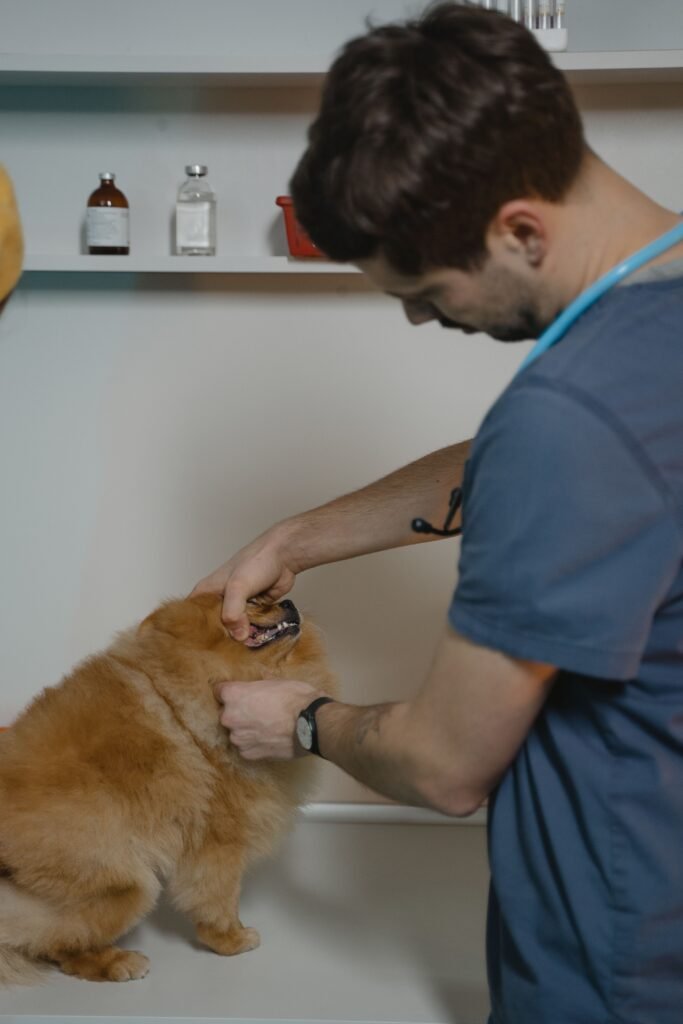
Most of us have smelled our dog’s foul breath by noon, wrinkled our noses, and moved on. However, that odor is typically the mouth raising a tiny red flag. One of the most subtle health issues that dogs encounter is gum disease. Only 2% of dog owners brush their dogs’ teeth every day, even though 80% of dogs show symptoms by age three, according to the American Veterinary Medical Association.
You don’t need a veterinary degree or an expensive kit to stay ahead of gum disease. A couple of times a week, ten quiet minutes, dog toothpaste, and a toothbrush can really help. This article covers the entire process, including how to clean your dog’s teeth at home, where a groomer fits in, what a groomer should never try, and when a veterinarian should handle the task.
Why a Dog’s Mouth Is Worth the Trouble
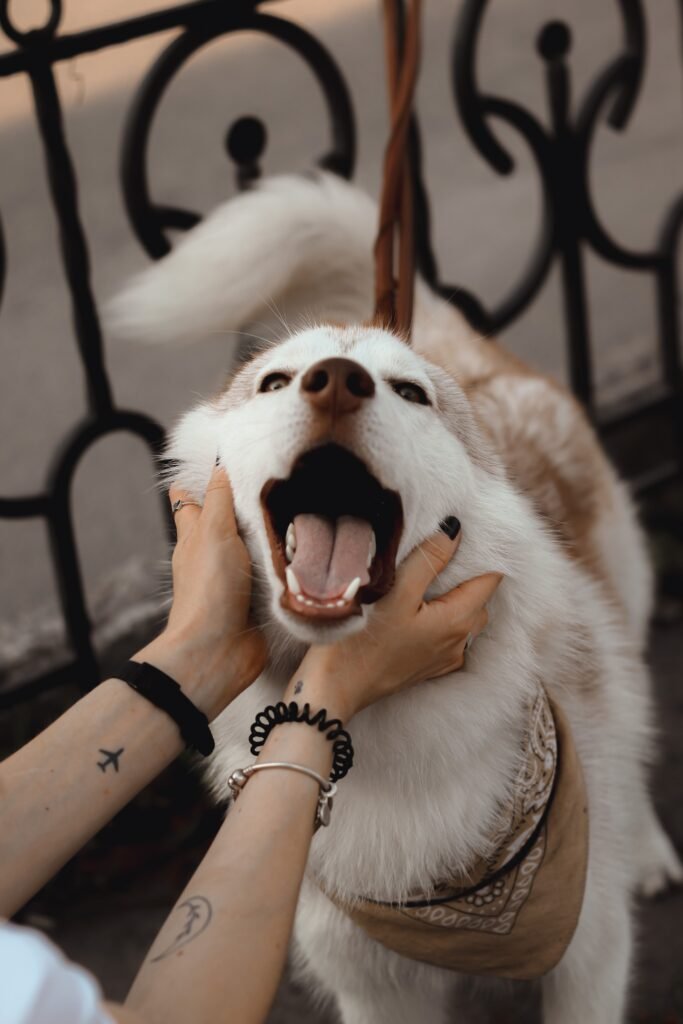
More important than fresh breath is having clean teeth. The mouth is a portal, and problems that begin there seldom remain there.
Gum disease starts subtly. A thin film of germs accumulates on the teeth, solidifies along the gum line, and gradually erodes the tissue that supports each tooth. If left unchecked, that process can cause pain, gum enlargement, and eventually tooth loss.
Additionally, the harm may extend outside of the mouth. The American Veterinary Medical Association links long-term gum disease to changes in the liver, kidneys, and heart.
Because it’s often hidden, gum disease is easy to overlook. A dog’s mouth may look healthy as issues develop underneath, since most damage occurs under the gums, out of sight. Early detection of gum disease is much more cost-effective for you and your dog than late treatment.
Plaque Is the Real Problem, Not Tartar
Owners often mistake the crusty yellow deposit for a dog’s teeth. The real issue is an invisible, sticky layer of germs called plaque that develops on teeth daily.
After a few days, plaque hardens into tartar that a toothbrush can no longer remove. Tartar looks unattractive and smells unpleasant, but the real damage comes from the plaque and germs under the gums.
That’s why brushing is so effective. Daily brushing removes plaque before it turns into tartar. Once tartar has developed, you can’t remove it at home; only a veterinarian’s equipment can.
Spotting Trouble Early
Dogs are good at hiding oral pain, so you have to keep an eye out for the symptoms yourself. Some indicators are clear, but others are hard to spot.
The following are indicators of dental issues to be aware of:
- Your dog’s breath has become truly foul instead of just doggy.
- Gums that bleed readily, seem red, or are swollen.
- Crust buildup on the teeth that are brown or yellow.
- Drooling more than normal.
- Dropping food or chewing on one side.
- Teeth that chip, wobble, or disappear.
Some symptoms may wait until your dog’s next exam. Others are not. Visit a veterinarian right away if you notice sore or very red gums, heavy tartar, or wobbly or broken teeth. Also, treat your dog’s behavior as an obvious sign of suffering if it starts clawing at its face or refuses food it once enjoyed.
Brushing Your Dog’s Teeth at Home
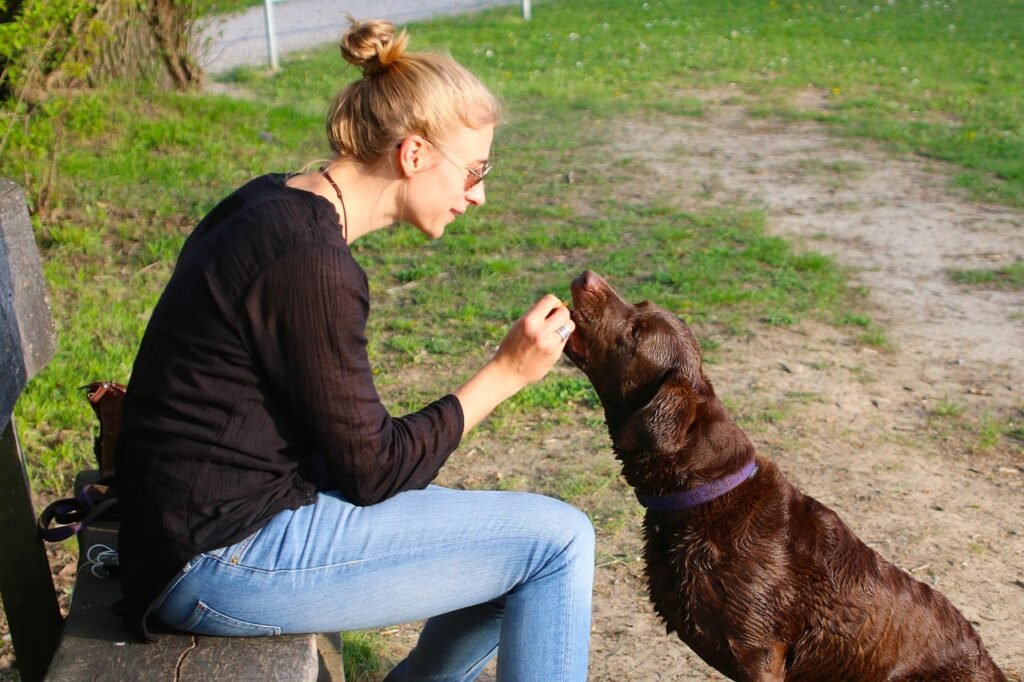
The best instrument for a dog’s teeth is a toothbrush. The only major difficulty is convincing your dog to accept it, but it’s the most economical and efficient solution in this entire book. Brush every day. Even so, brushing a couple of times a week is really beneficial. The most important thing is to maintain the habit.
Don’t rush it; ease into it.
Avoid putting a brush in your dog’s mouth first. That teaches a startled dog to stay away from the brush. Thus, start away from the actual brush. I let a dog suck some dog toothpaste off my finger for the first few days. I then gently massage the gums with my fingertip until the dog no longer finds the sensation odd. Once the dog tires of that phase, it’s easy to introduce the brush.
Ease Into It, Don’t Rush
All you need is dog toothpaste and either a dog toothbrush or a slip-on finger brush. Never treat dogs with human toothpaste. Human toothpaste can contain fluoride and xylitol, both of which are hazardous to dogs. Dog toothpaste does a lot of the convincing for you because it doesn’t include those substances and comes in flavors like chicken or beef.
The Only Tools You Need
Tilt the brush at a 45-degree angle toward the gum line while lifting your dog’s upper lip. Because it reaches where plaque accumulates along the gums, that angle matters.
Hard scrubbing is less effective than short, gentle strokes. Since your dog’s tongue keeps the inner surfaces of its teeth pretty clean on its own, focus on the outer faces. For your dog’s comfort and to prevent an unintentional nip, try to keep your fingers away from the back teeth.
How to Actually Brush
When you brush for the first few times, especially if your gums are already irritated, a small amount of blood may occur; this normally goes away as your gums become healthier. However, cease brushing and contact your veterinarian if you see severe or persistent bleeding.
Praise and give a treat at the end of each brushing session. Your dog stops viewing brushing as an ambush when it anticipates something positive.
When Your Dog Flat-Out Refuses
When a dog refuses to cooperate, you both get frustrated. Although they don’t replace brushing entirely, a few backups can help. A little green VOHC seal is present on the most reliable items. The seal cuts through the marketing clutter because the Veterinary Oral Health Council awards it only to product seen shown to be effective in appropriate trials.
The following backups are worth taking into account:
Dental chews that remove plaque while your dog chews.
Kibble with a certain shape is used in prescription dental diets.
Water additives that reduce your dog’s oral bacteria.
Wrap your finger with plain gauze or use dental wipes.
Wiping your dog’s teeth with gauze is still preferable to doing nothing at night when they refuse to brush. View all of these products as supplements, not substitutes. While chewing can reduce plaque and a healthy diet can help eliminate some tartar, daily brushing is still the best way to remove plaque.
Dental Care at the Grooming Salon
As part of a session, several grooming salons include dental care, which is actually beneficial for minor maintenance. The problem is that dentistry and grooming are two distinct skills, and skilled groomers understand the boundaries between them.
What a Groomer Can Handle
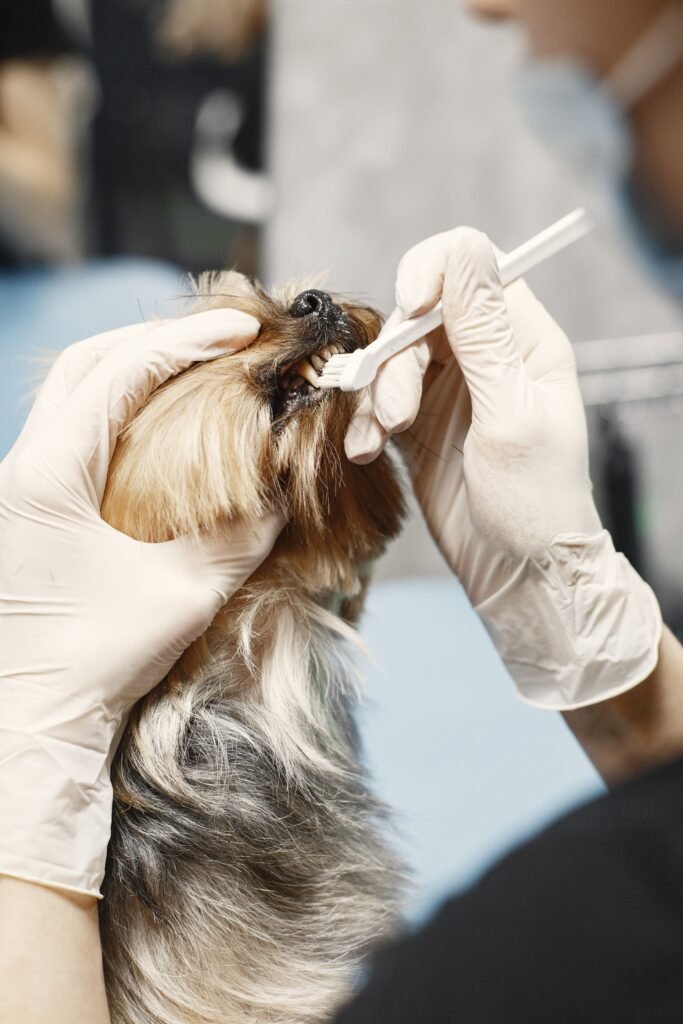
Basic surface-level maintenance is acceptable as long as a groomer is qualified and local regulations permit it. In practice, this care includes administering a dog-safe dental spray, gently brushing or wiping, using a finger brush or gauze, and recommending healthy dental chews.
This type of care knocks back light plaque and freshens breath. Consider it maintenance rather than therapy.
Where a Groomer Should Stop
Using a metal instrument to scrape tartar off can appear incredibly fast, but that speed is a trap. The instrument never reaches the tartar below the gum line, which is the most important area, and in inexperienced hands it can damage the gums and chip the enamel.
A veterinarian’s job is to remove that hidden tartar or cure any gum disease. A reputable groomer will refer you to a veterinarian rather than a scaler if your dog has significant buildup, swollen gums, or an obviously hurting mouth.
A Word on “Anesthesia-Free” Cleanings
Cleanings without anesthesia are promoted as the delicate, drama-free choice, and they appear to be the part. However, these treatments only clean the visible portions of the tooth. They can’t reach beneath the gum line, where gum disease begins.
Even healthy-looking teeth can hide a serious issue developing underneath. Because of this, veterinary dental organizations, such as the AVMA, argue that anesthesia-free cleanings don’t truly replace a thorough cleaning.
What a Real Vet Cleaning Involves
The veterinarian does much more than scrape off the obvious tartar when a dog’s mouth requires significant treatment. Since anesthesia is the only technique to clean and look underneath the gums without causing discomfort or stress, the dog is put under general anesthesia and attentively watched.
The cleaning is meticulous after that. In addition to checking each gum for hidden pockets and removing tartar above and below the gum line, the veterinarian takes full-mouth X-rays that can reveal underlying issues a visual checkup would miss. The veterinarian then polishes healthy teeth to prevent further plaque buildup and extracts any teeth that are too damaged to save.
The clinic and the amount of dental work required determine the price. A regular cleaning typically costs $300 to $700, and it increases if the veterinarian needs to extract teeth.
Home Care and Vet Care Do Different Jobs
Because they do different things, home care and veterinary care aren’t rivals. Brushing at home is your daily line of defense because it eliminates soft plaque, doesn’t require anesthesia, and prevents issues before they arise.
The deep reset is a veterinary cleaning. To safely remove hardened tartar and treat disease below the gum line, anesthesia is required. Your dog needs both because brushing is maintenance and a vet cleaning is repair. If you ignore either one, bacteria will have a chance.
How Often Is Often Enough?
If your schedule permits, brush your dog’s teeth every day. If daily brushing isn’t feasible, brushing a few times a week still makes a big difference and is better than the all-or-nothing mentality that leads to quitting.
After I added a little brushing before bed to my dogs’ routine, the resistance subsided within weeks. As long as you keep an eye on your dog as it chews, VOHC-approved chews and the occasional toy can help bridge the gaps between brushings.
Expert cleanings follow their own schedule. Let your veterinarian assess your dog’s mouth and determine how often it needs one, as little breeds typically need them earlier and more often.
FAQs
Can I really clean my dog’s teeth myself?
Indeed. A dog toothbrush and dog toothpaste are all you need. Give your dog time to adjust by starting slowly.
Can dental chews replace brushing?
No, chews don’t cover enough tooth surfaces on their own, although they do help reduce plaque. Brushing is still the cornerstone of at-home dental care.
Is anesthesia really necessary for a vet cleaning?
Nearly every time. Gum disease lies below the gum line, which the veterinarian can safely clean and X-ray with anesthesia.
What about a dab of human toothpaste?
Don’t ever use it. Human toothpaste can contain fluoride and xylitol, both of which are hazardous to dogs. Instead, use pet-safe toothpaste.
My dog’s gums bled a little. Should I worry?
It’s usual to see some blood at the beginning. Stop brushing and contact your veterinarian if the bleeding is heavy or persistent.
When should I start brushing a puppy’s teeth?
As soon as you are able. As an adult, a puppy raised on brushing hardly responds to it.
Summary
It’s easy to neglect a dog’s teeth until something goes wrong, and then the problem is more serious. Almost any dog’s mouth can be kept healthy with a little brushing most days, a VOHC chew sometimes, and a veterinarian for the thorough work.
The brief guideline is that if you work as a groomer, you should know the boundaries of your work. Wiping and brushing are acceptable. Veterinarians treat gum disease and remove tartar beneath the gum line.
Brushing every day is worthwhile for one reason. Veterinarians rate gum disease on a scale of 0 to 4, and only the initial stage of simple gum inflammation can be completely cured. If you catch gum disease early, you can fully repair the damage; if you wait too long, it can become irreversible.