
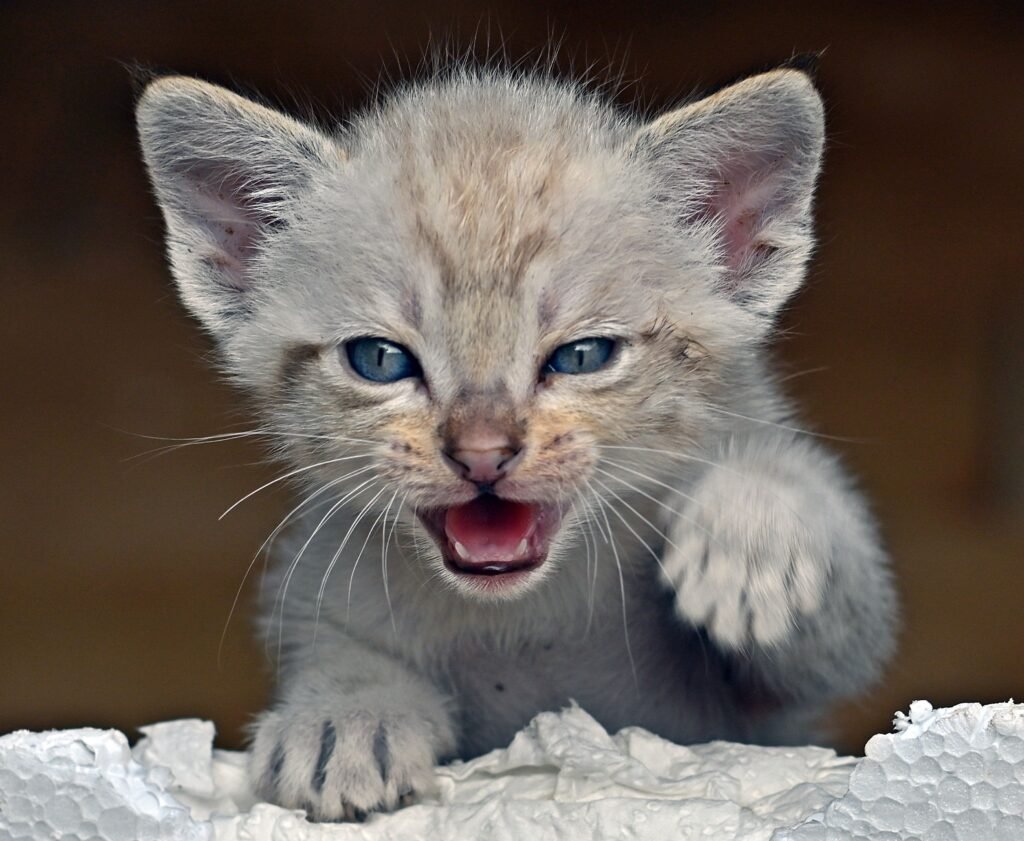
If you have just brought a kitten home or want to learn about cats, you must have wondered, “How many baby teeth do cats have?” This is a natural question. In this article, we will explain everything in very simple language, right from the beginning.
Kittens have a total of 26 baby teeth, also known as milk teeth or deciduous teeth. These temporary teeth begin to emerge when kittens are about 2 to 4 weeks old and help them transition from nursing to eating solid food.
A kitten’s baby teeth include 12 incisors, 4 canines, and 10 premolars. Unlike older cats, kittens do not have molars during the baby-tooth stage. According to Greenies, baby cats don’t have molars, and it’s true, sometimes if you look at your baby cat closely, you will find 0 molars.
How many milk teeth do kittens have?
Now, as you also know, your baby cat has 26 milk teeth; you may also be wondering what “milk teeth” mean. Of course, just like humans have baby teeth that later fall out and are followed by permanent teeth, kittens also have temporary teeth called milk teeth or baby teeth. These teeth are not permanent but fall out after a few months.
These 26 teeth are of three types, each with a different function. You will find these types in different numbers in adult cat teeth. Let’s understand each one.
Types of a Cat’s Baby Teeth
Incisors: Small front teeth
These are at the front of the mouth and look small. The kitten uses them to cut food into small pieces. There are 12 incisors in total, 6 on the upper jaw (3 from each side) and 6 on the lower jaw (3 from each side).
Canines: long, sharp, pointed teeth
These are the long, sharp teeth on either side of the incisors. They are also often called “fangs.” These are the strongest teeth in a cat and are used to catch prey. Kittens have only 4 canines: 2 in the upper jaw (1 from each side) and 2 in the lower jaw (1 from each side).
Premolars: Sharp Chewing Teeth
Baby cats have 10 premolars in total, strategically arranged like the incisors and canines: 6 on the upper jaw (3 from both sides)and 4 on the lower jaw (2 from both sides). These teeth are typically wider and located behind the canines.
Why Do Baby Cats Don’t Have Molars?
As I’ve told you in the intro, baby teeth don’t have premolars. Have you ever thought, what’s the reason behind it? First of all, you little kitten has small jaws that do not fit your molars. Nature does everything strategically, because initially the diet of your baby’s teeth also doesn’t need molars, so if you see only 26 teeth in your little kitten’s mouth, don’t panic, this is completely normal.
When Do a Cat’s Baby Teeth Come In?
You all may know that, like human babies, baby cats are born with 0 teeth, because their mother’s milk is the sole source of their diet, and this is, of course, normal and natural. But as a beginner pet owner, you must ask the question, “When do baby teeth actually appear?”
Before you see the following table, which actually describes when baby cats teeth appear, let me tell you that they don’t come all at once; they appear gradually until your baby’s teeth also grow day by day, month by month, and year by year.
| Kitten’s Age | What Happens |
| At Birth | Kittens are born without any teeth, and their mouths are completely toothless. |
| 2 to 3 Weeks | The first baby teeth, called incisors (front teeth), begin to emerge after 2 to 3 weeks. |
| 3 to 4 Weeks | The canine teeth, also known as fangs, start to grow after 3 to 4 weeks. |
| 4 to 6 Weeks | The premolars (back teeth used for chewing) begin to appear after 4 to 6 weeks. |
| 6 to 8 Weeks | All 26 baby teeth have usually erupted and are fully developed after 6 to 8 weeks. |
Now it is not necessary that this timing is fixed for every type of cat. It depends on the cat’s health and genetic variations. If kittens don’t get their mother’s milk properly or are very weak, then baby teeth may appear late. It also depends on the breed; some breeds may appear to have baby teeth early, while others may have them late. Baby cats with health issues also face these problems, which is why their teething process is delayed.
How Does a Kitten Feel When Teething?
What if you knew how your baby cats feel during teething, and you could take better action at the right time? Of course, you should know this!
This is also very important to know, especially for those who have a little kitten at home. Just as human babies experience teething pain, crying, irritability, and itchy gums, kittens also experience this stage.
During cat teething, cats feel restless and uncomfortable; actually, their teeth start to grow back through their gums, and they feel all of this:
When a kitten is teething, you may notice these signs:
Gum Irritation: Their gums feel irritated, and they begin chewing to relieve the irritation. You may have seen your baby cats hewing on their toys, blankets, your fingers, and anything else they can find.
Drooling: The pain of teething may also make the kitten more irritable than usual. Baby cats may meow more than usual or appear to sleep longer due to pain and discomfort.
Less interest in eating: Due to sore and sensitive gums, your kitten may have difficulty chewing hard food. During this time, your baby cats may eat less than before or prefer soft food because it is easier and less painful to chew.
Other Similar Symptoms and Their Solution
You may also notice other minor symptoms during teething, such as excessive chewing, biting on toys, slight gum oozing, slight gum redness, or occasional light bleeding.
These symptoms are usually nothing to worry about, as they are part of the natural teething process. During this time, provide your kitten with soft food, safe chew toys, and clean water at all times to help him relax.
However, if there is a lot of bleeding, the kitten stops eating altogether, there is severe swelling or pus, a strong odor from the mouth, or the baby teeth have not fallen out by six to seven months of age, consult a veterinarian immediately.
FAQ’S
Do Cats Have Baby Teeth at 1 Year Old?
No, cats normally do not have baby teeth at 1 year old. Their baby teeth usually fall out between 3 and 6 months of age and are replaced by permanent adult teeth.
How Many Baby Teeth Do Cats Have?
Kittens have 26 baby teeth, also called deciduous or milk teeth. These teeth are temporary and help them eat until their adult teeth develop.
When Do Cats Get Baby Teeth?
Kittens begin getting their baby teeth at about 2 to 3 weeks of age. The incisors appear first, followed by the canines and premolars.
When Do Cats Get Their Full Set of Baby Teeth?
Most kittens have all 26 baby teeth by the time they are 6 to 8 weeks old. At this stage, the baby tooth set is fully developed before the teething process begins.