
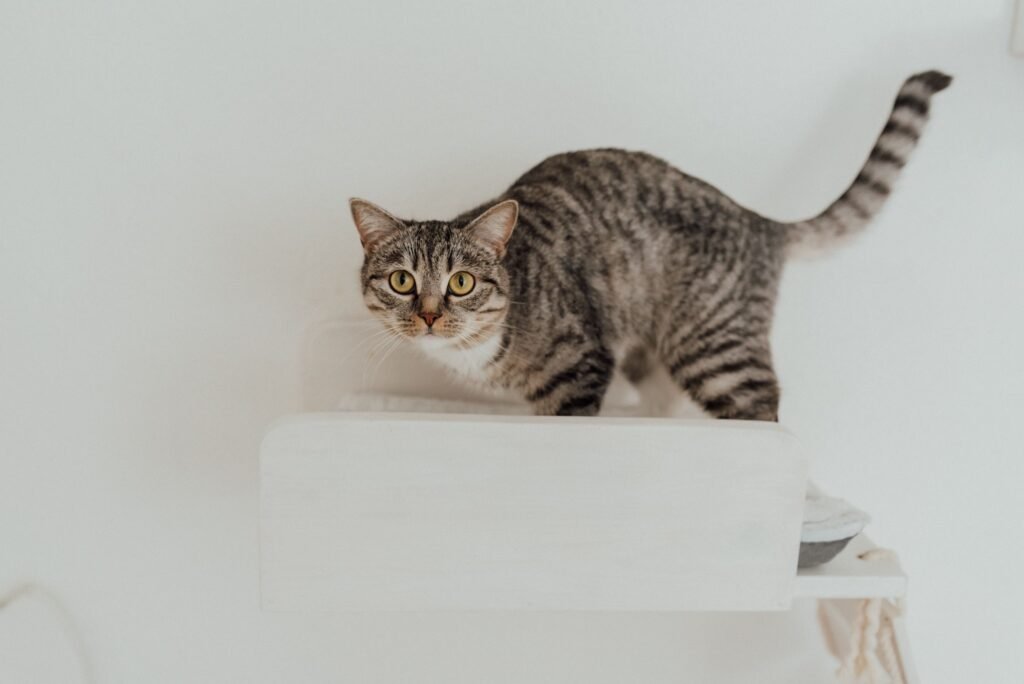
Cats may not be able to speak, but their tails can. That unexpected twitch, flick, or quiver you keep seeing isn’t random; it’s your cat expressing its exact feelings in real time.
Whether your cat is greeting you, becoming a little irritated, or locked onto a toy, a twitching tail is mostly harmless, normal communication. Occasionally, however, the same movement can indicate pain, skin problems, or a nerve issue that needs investigation.
Learning to tell the difference is the whole skill, and it’s not as hard as it seems. The mystery largely vanishes once you understand the significance of each movement and what to observe surrounding it.
This guide outlines the medical causes and the obvious indicators that it’s time to visit a veterinarian, provides a quick reference for each typical tail movement, and explains how to interpret the twitch in context.
Cat Tail Movements at a Glance
Here’s a quick method to compare what you are seeing to what it often signifies before delving into the why. The rest of your cat’s body always adjusts the message, so use this as a starting point.
| What the tail is doing | What it usually means |
| Straight up, tip quivering | Happy, excited greeting |
| Up with a hooked “question mark” tip | Friendly, curious, up for play |
| Just the tip flicking, body still | Focused on something, or mild irritation |
| Whole tail lashing or thrashing fast | Agitated, overstimulated, “back off” |
| Thumping on the floor while lying down | Annoyed or irritated |
| Puffed into a bottlebrush | Startled, scared, or highly aroused |
| Tucked low or wrapped around the body | Anxious, insecure, or unwell |
| Flicking while fast asleep | Dreaming, completely normal |
As we go, keep this image in mind because, depending on what is going on around it, the same twitch can signal either cheerfulness or annoyance.
The Two Faces of a Tail Twitch
A twitch at the tip of the tail might indicate two nearly opposing things, which is what most owners find frightening. Before you read anything else, it helps to know both.
Pure attention is the first. The tip of a cat’s tail often twitches or quivers as it enters “prey mode,” preparing to pounce, whether it fixes on a toy, a bug, or a bird at the window. Bright, focused eyes and a motionless, hunched torso characterize this type of twitch.
Low-level irritation is the second. The first indication that your cat is becoming agitated or overstimulated may be that same tail flick a subdued “I’m starting to lose patience.” The remainder of the cat is different: instead of a hunter’s focus, an agitated tail typically corresponds with flattened ears or a tight body.
What Faster, Bigger Tail Movements Mean
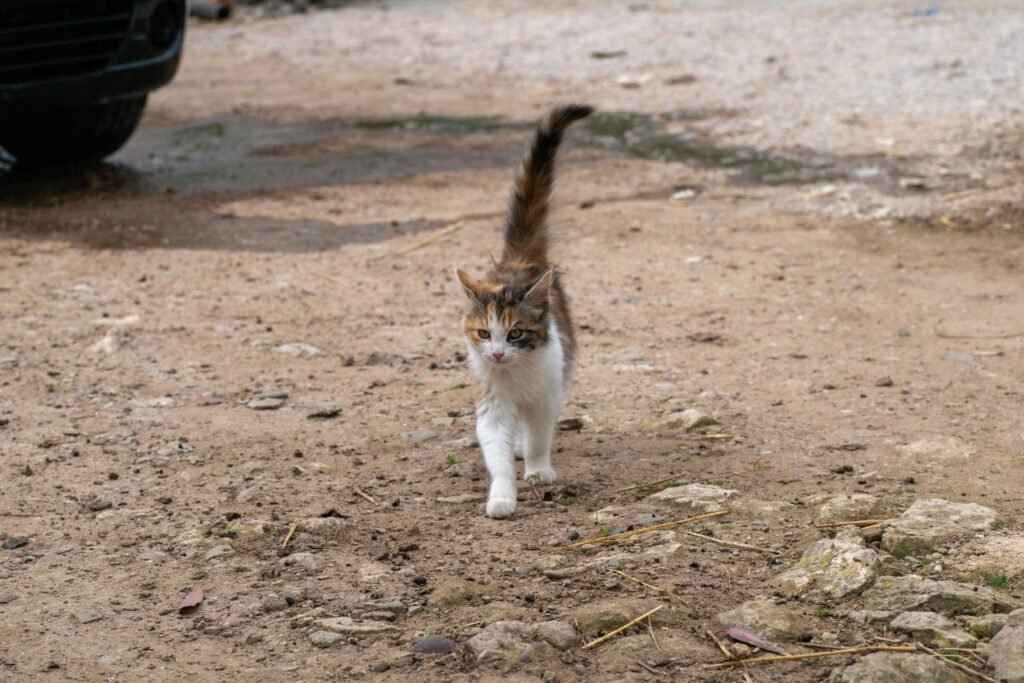
The message becomes louder and nearly always more negative when the movement extends beyond a tip twitch. You can tell how your cat feels by observing the motion’s magnitude and pace.
A clear sign of excitement is a tail that whips or thrashes rapidly from side to side. A fast-moving cat tail, unlike a dog’s joyful wag, is a direct appeal to stop whatever is happening and signals annoyance, overstimulation, or a sense of threat.
The same “I’m annoyed” message comes through when a cat lies down and thumps the floor more slowly and forcefully, though at a lower volume. The bottlebrush comes next.
Your cat responds to a sudden fright or a surge of strong enthusiasm when its fur stands on end, and its tail swells to two or three times its size, often with an arched back. It usually wants the thing that scared it to disappear and tries to look bigger.
The Happier Tail Signals
Naturally, not every active tail is a warning. Your cat can convey how happy it is to meet you with some of the most expressive tail gestures.
The most obvious is an upright tail with a small quiver at the tip, raised high as your cat approaches you. This sincere greeting comes from the way kittens approach their moms.
The “question mark” tail, with a soft hook at the top, is essentially an invitation to play or interact. But with a trembling, upright tail, one thing is certain. Posture and position matter:
An unneutered cat backs up against a wall or piece of furniture. At the same time, its tail stands up and vibrates; that is typically urine marking rather than affection.
Why the Rest of the Body Matters So Much
The tail is never the whole story, since a single tail movement can convey opposing ideas. Posture, eyes, ears, and the situation complete the picture.
With soft, slow blinks, slack muscles, possibly some purring, and a head rub on your fingers, a contented, relaxed cat backs up its peaceful tail. It appears simple and accessible in every way.
The opposite occurs when a cat is scared or furious: the body crouches or tenses, the ears flatten sideways or back, the pupils widen even in bright light, and you might hear a growl or hiss.
So, take a quick look at the whole animal and its environment if you notice a twitch but aren’t sure what it means. A tail flick while your cat is pursuing a toy and a tail flick when a stranger looms over it are two very different signals.
Reading the Tail During Petting
Your own lap is one area where this truly pays off. The tail serves as a decent warning before a swat, and many cats only like to be caressed to a certain extent.
Once you know the pattern, it is easy to recognize. A quiet, contented tail eventually changes to a twitching tip, followed by a wider, quicker swishing. When it escalates, your cat is saying it has had enough, and you should respect that by stopping at the first tip twitch before it bites.
Learning this one signal can do more than save money. Over time, many cats become more at ease and endure longer petting sessions because they know you will pay attention to them. Respecting the warning fosters trust.
Medical Reasons Behind a Twitching Tail
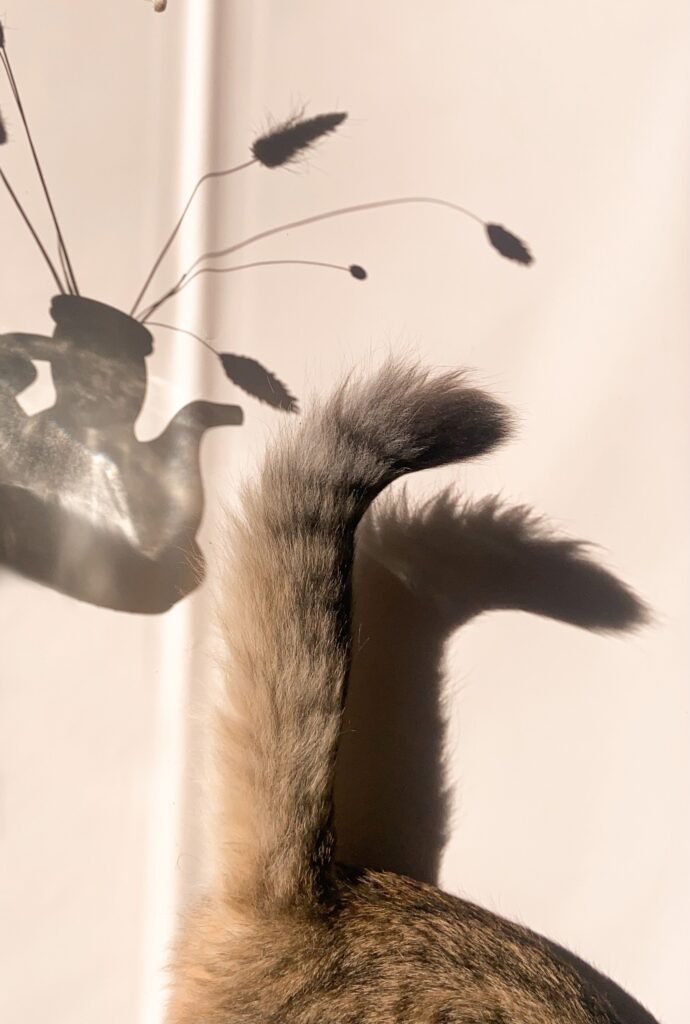
Most tail twitching is emotional; however, occasionally the body speaks louder than the mood. Regardless of your cat’s emotional state, a few health problems can cause tail twitching, and these are the ones you should watch for.
Feline Hyperesthesia Syndrome
Twitch-skin syndrome, a poorly known nerve disorder, usually affects the base of the tail and lower back. It can cause abrupt tail twitching, apparent skin rippling down the spine, and extreme sensitivity to touch.
During an episode, a cat may groom, bite, or even pursue and attack its own tail in a panic, typically for less than a minute at a time. Discuss with your veterinarian whether touching your cat’s lower back causes extreme tail twitching and odd behavioral outbursts.
Fleas, Allergies, and Itchy Skin
One of the most prevalent and often ignored causes is itching. The base of the tail and the rump, which a cat finds difficult to reach, are particularly prone to flea-allergic dermatitis, and the ongoing discomfort may show up as twitching.
In addition to twitching, frequent biting, licking, or excessive grooming at the tail base are common. Don’t ignore persistent chewing there, because it usually resolves once you remove the fleas or control the underlying sensitivity.
Tail Injuries and Nerve Damage
An injury may manifest as aberrant movement because a cat’s tail is a direct extension of its spine and is full of nerves. A famous example is a tail-pull injury, which damages the nerves at the base of the tail when it is pulled, trodden on, or shut in a door.
This is the only issue that truly qualifies as an emergency. A tail that suddenly drags or hangs limp indicates nerve injury and requires a same-day vet visit, especially if any loss of bladder or bowel control accompanies it. That’s also why you should never grab someone by the tail.
Pain and Stress
Tail twitching, often accompanied by a flinch when touched, can stem from spinal pain, the anal glands near the base of the tail, or an old injury. If your cat looks painful in that area, rule out pain.
Stress also has an impact. When stress levels rise, a cat startled by a new pet, a move, or a chaotic environment may twitch its tail more, but this usually goes away once things settle down again.
When a Twitching Tail Needs a Vet
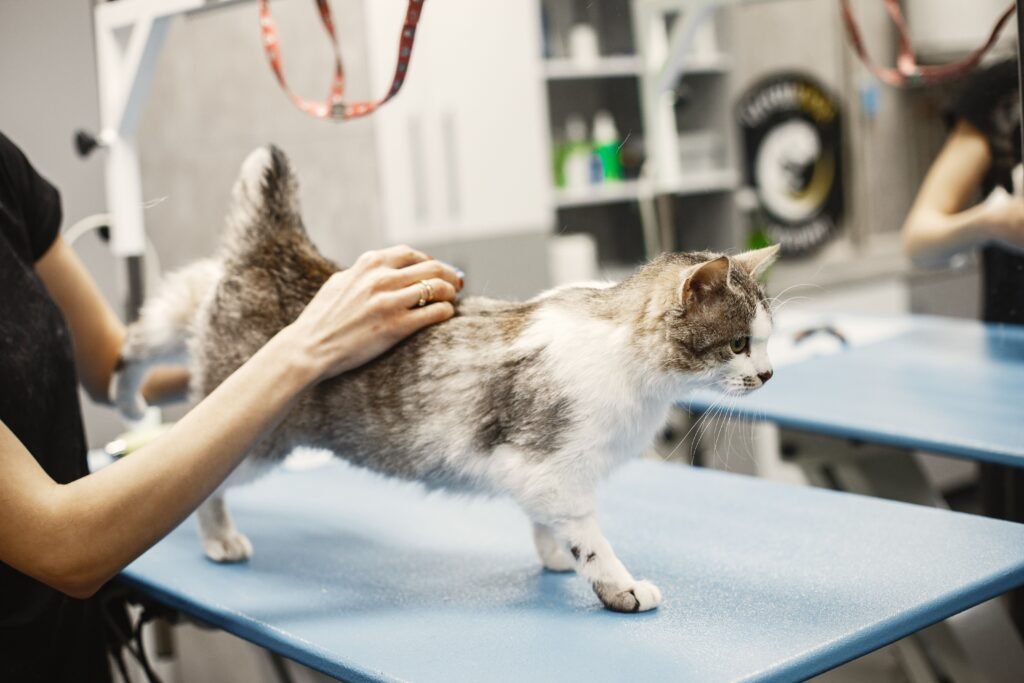
If a cat is eating, playing, and behaving normally, an odd twitch isn’t a reason to act. However, some patterns indicate that you should schedule an appointment.
See a veterinarian if any of the following accompany the twitching:
Biting, pursuing, or assaulting the tail. Overgrooming, bald patches, or inflamed skin at the base of the tail.
When you touch the tail or back, they may recoil or feel pain.
Skin ripples combined with unexpected fits of panic—a noticeable, persistent shift from your cat’s typical behavior.
One situation can’t wait. A tail that suddenly becomes limp or drags, especially if there is any pee leaking or loss of bowel control, indicates nerve injury and requires same-day care. Catster maintains a useful, vet-reviewed guide that provides a more detailed explanation of each tail position.
Frequently Asked Questions
Why does my cat twitch only the tip of her tail?
A twitching tip typically indicates that your cat is very focused on something, such as a toy or prey, or that they are a little irritated. The flip can mean either, but the rest of her body shows which.
Is a twitching tail a good or bad sign?
Both are feasible. Fast lashing or beating indicates irritation, whereas a high tail with a trembling tip symbolizes a joyful greeting. The kind of movement, not just the twitch, determines the meaning.
Why does my cat’s tail move while she sleeps?
That is a harmless form of dreaming. If she wakes up without any problems, a slight tail twitch is normal because cats are intellectually engaged during some periods of sleep.
Can fleas cause tail twitching?
Indeed. The base of the tail is often where flea-allergic dermatitis itches the most, causing twitching and chewing there. Usually, treating the fleas resolves it.
When is a twitching tail an emergency?
When the tail abruptly goes limp or drags, especially if there is a lack of control over the intestines or bladder. That suggests nerve injury and requires a veterinarian visit that same day.
The Bottom Line on Tail Twitching
Your cat can communicate by twitching its tail, and most of what it says is common, such as concentration, excitement, annoyance, or daydreaming. You’ll understand your cat much better if you learn a few common motions.
The real skill is reading that twitch in context and combining it with the eyes, hearing, posture, and circumstances until the meaning becomes clear. Also, the twitch stops being body language and becomes a reason to consult the veterinarian when it is accompanied by biting, excessive grooming, pain, or a sudden limp tail.
Pingback: Why Is My Cat Twitching While Awake? - Eachpetscare
Pingback: Why Does My Cat’s Back Twitch? - Eachpetscare
Pingback: Is It Normal for Cats to Twitch in Their Sleep? - Eachpetscare