
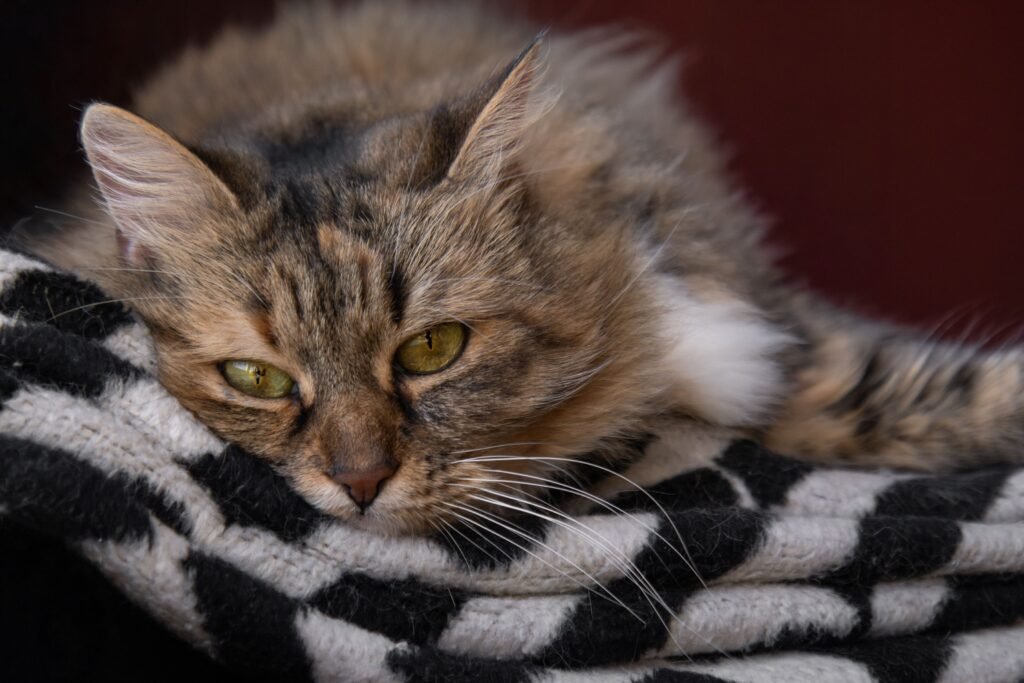
When you first notice that abrupt ripple across your cat’s back, like a little wave moving beneath the fur, it can be shocking. A patch of skin twitches and rolls on its own while your cat lies peacefully, occasionally causing her to look back or lick the area.
This is, for the most part, a perfectly normal reflex and a very smart one at that. Without conscious effort, a cat’s skin twitches to shrug off dust, bugs, and mild touches.
However, skin twitching might occasionally indicate a different illness, such as nerve disorders or itchy skin. The key is to distinguish between normal ripples and those that come with other warning signs.
To help you decide when to rest and when to call the veterinarian, this guide explains what skin twitching is, its typical causes, the abnormal causes to watch for, and how to tell the difference.
What Skin Twitching Actually Is
Most owners don’t know which part of the anatomy causes rippling skin. The cutaneous trunci, a tiny sheet of muscle just beneath the skin of a cat’s back and sides, is solely responsible for skin twitching.
Similar to a ripple on water, this muscle contracts when the skin is touched or stimulated, causing a wave to roll across the surface. Because it functions as a reflex, the skin’s nerves send the signal directly to the spinal cord, which fires it back to the muscle without waiting for the brain; it is swift and automatic.
Because of that shortcut, your cat can’t truly control it, which is what makes the response so quick. Simply put, a skin twitch is the nervous system’s way of responding before the cat has a chance to consider.
Normal Reasons Your Cat’s Skin Twitches
Skin twitching is harmless for most cats and happens for normal reasons.are the common causes of a typical ripple.This is what typically triggers it.
The Fly-Shooing Reflex
A physical trigger on the skin is the most common cause. The classic example is a fly or other insect landing on the back, and the twitch is the cat’s natural way of flicking it off without getting up or turning around.
Numerous other light stimuli have the same effect. For a brief moment, the skin may ripple due to a delicate stroke along the back or sides, a passing breeze, a slight tug on the fur while brushing, or even a crackle of static in dry weather.
Excitement and Hunting Focus
Pure arousal can also cause twitching of the skin and muscles. A cat’s body may jitter slightly as it coils into hunting mode when it locks onto a laser dot, a bird at the window, or a toy.
This is the same instinct that makes a cat’s tail tip flick before a pounce, excitement and concentration at work. It goes by as quickly as the moment does.
Dreaming During Sleep
Dreaming is almost always the reason your cat twitches while sleeping or resting. During the dreaming stage of sleep, small bursts of brain activity reach the muscles and show up as twitches in the skin, paws, whiskers, or tail.
These sleepy ripples aren’t significant as long as your cat wakes up peacefully and behaves normally. Compared to adults, kittens typically exhibit them even more.
How to Recognize Normal Skin Twitching
The comforting part is that natural skin twitching follows a clear pattern. Once you know what it looks like, it’s easy to distinguish it from the worrying kind.
A typical twitch usually starts as soon as the trigger is removed and stays in one spot, like where the skin was touched or a fly landed. Your cat doesn’t lick, bite, or chase the area afterward; instead, it remains quiet and relaxed throughout.
It’s also helpful to know that some cats twitch more than others. Naturally sensitive or anxious cats tend to react more strongly, and short-haired cats make it easier to see, neither of which alone indicates a problem.
Abnormal Causes: When Skin Twitching Signals a Problem
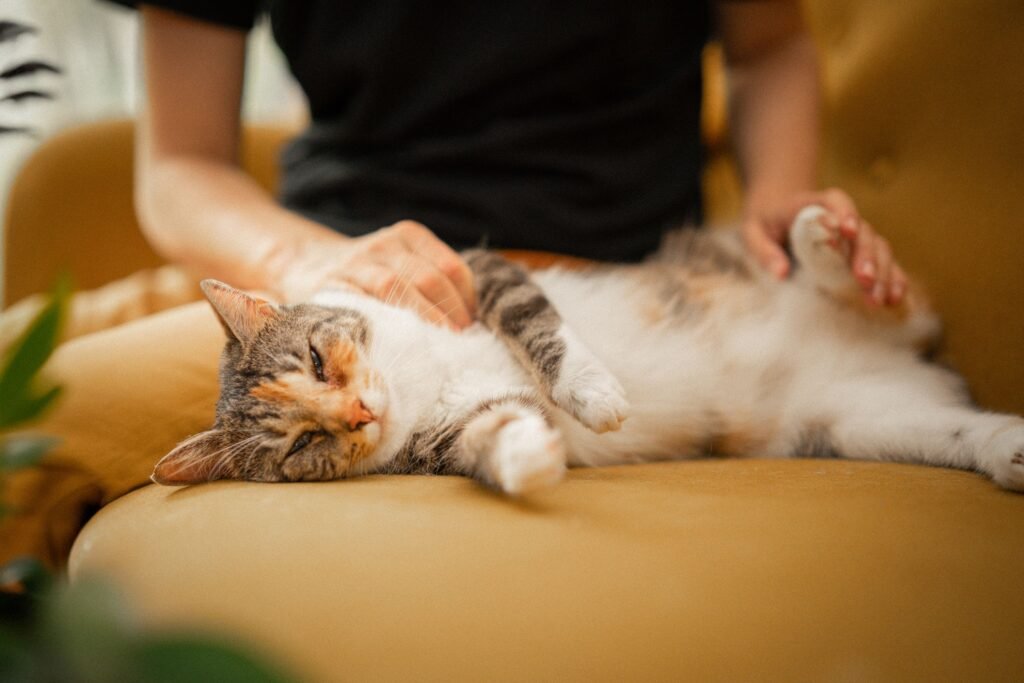
Sometimes your cat’s skin twitching signals an issue rather than a fleeting reflex. These reasons may require a veterinarian and often come with additional signs. Here are several indicators of aberrant twitching.
Feline Hyperesthesia Syndrome
Dramatic skin twitching is most commonly associated with feline hyperesthesia syndrome, also known as twitchy cat illness. It makes the skin on the back and base of the tail extremely sensitive, causing it to roll and ripple far more than a typical reflex would.
During an episode, a cat may abruptly bite its own skin, pursue or attack its tail, make loud noises, and run around the room, often in response to a gentle tap on the lower back. A veterinarian should examine frequent bouts since, as the EveryCat Health Foundation points out, this ailment has a wide range of symptoms and remains poorly understood.
Fleas, Allergies, and Skin Irritation
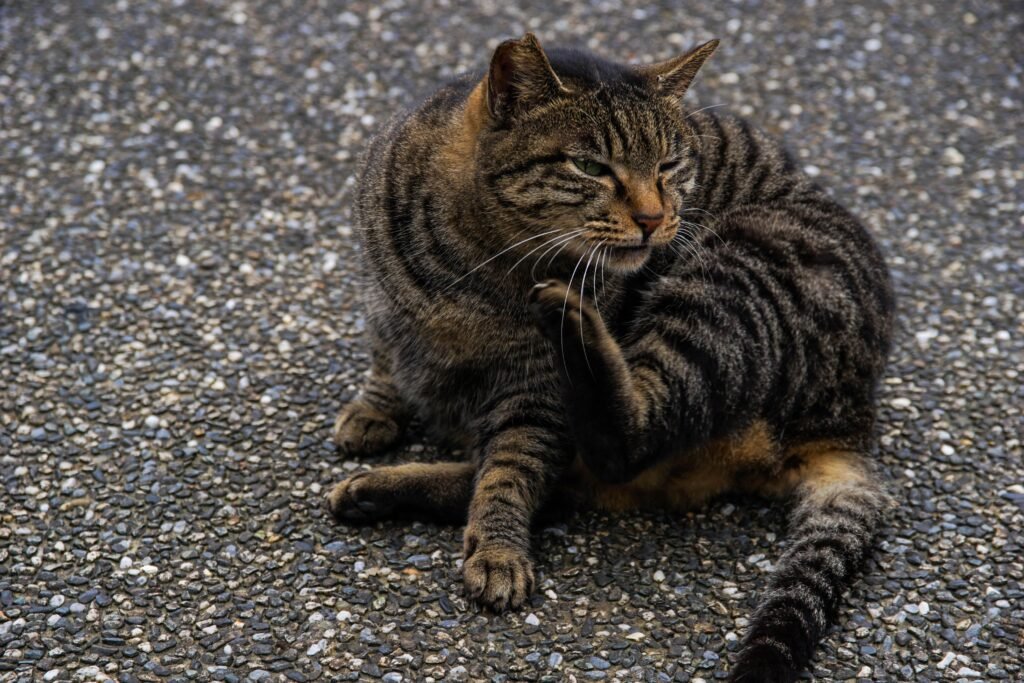
One of the most frequent causes of recurrent twitching is itchy skin. Skin irritation, particularly along the rear and base of the tail, can be caused by fleas, mites, and food or environmental allergies.
The telltale signs of twitching include redness, scabs, hair loss, or flea dirt specks in the coat, as well as scratching, licking, or biting at the affected area. Keep in mind that cats remove fleas, so their absence doesn’t rule them out.
Pain or Nerve Problems
Twitching concentrated in one area may occasionally indicate pain in the muscles, spine, or nerves beneath it. When you touch it, a cat protecting a sensitive spot may twitch and flinch.
Also, watch for other signs of discomfort, such as a stooped posture, limping, reluctance to leap, or changes in your cat’s gait. Any of these, combined with localized twitching, warrants a veterinary examination.
Toxins and Poisoning
One cause that can quickly become serious is twitching of a cat’s muscles and skin caused by certain poisons. Permethrin, an insecticide used in many dog flea products that cats cannot safely digest, is the most frequent offender.
Twitching, tremors, drooling, and seizures can result from even a small amount, such as what rubs off a dog that has just received treatment. Call your veterinarian or a poison hotline immediately if you have twitching following a flea treatment or any potential exposure.
Seizures and Neurological Disorders
In the worst case, severe twitching can signal a seizure or another neurological issue. A passing ripple is not the same.
Warning symptoms include whole-body stiffness or convulsions, drooling or foaming, loss of balance, subsequent confusion, loss of bladder or bowel control, or persistent, severe twitching. Any of them require immediate emergency veterinary attention.
Stress and Anxiety
Lastly, some cats may twitch their muscles when stressed. A cat may become anxious enough to twitch after moving, getting a new pet, hearing loud noises, or having their routine disturbed.
Twitching brought on by stress typically manifests around the distressing event and is accompanied by other symptoms such as hiding, decreased eating, or excessive grooming. Once the cat calms down and the stressor is removed, it usually gets easier.
Normal vs. Abnormal Skin Twitching at a Glance
The table below summarizes when skin twitching is probably okay and when to consult a veterinarian. Use it as a quick guide, not a diagnostic tool.
| Cause | Common signs | What to do |
| Normal reflex | Localized, cat stays calm, stops with the trigger | Nothing needed |
| Feline hyperesthesia | Skin rippling, tail chasing, self-biting | See a vet |
| Fleas or skin irritation | Scratching, redness, scabs, hair loss | Treat fleas; vet if severe |
| Pain or nerve issue | Twitching in one spot, pain when touched | Schedule a vet exam |
| Toxin exposure | Twitching after a flea product, drooling, tremors | Emergency vet now |
| Seizure or neurological | Stiffening, drooling, loss of balance | Emergency vet now |
| Stress or anxiety | Twitching during stress, hiding, less appetite | Reduce stress; vet if it persists |
If there are multiple rows for your cat’s twitching, choose the most urgent one, because serious causes always take priority.
When to See the Vet, and When It’s an Emergency
For most skin twitching, a quick look is enough to make sure your cat is relaxed and at ease. However, some circumstances require a veterinarian, and some cannot wait.
If the twitching becomes severe or frequent, persists without a trigger, or comes with pain, hair loss, scratching, or a noticeable behavioral shift, schedule an appointment. Also investigate any twitching combined with flea or skin irritation symptoms.
If your cat shows whole-body stiffness or convulsions, loses consciousness, drools while confused or disoriented, can’t calm down, appears to be in excruciating pain, or bites itself hard enough to cause wounds, treat it as an emergency and get to a veterinarian right away.
This also applies to twitching immediately following a flea treatment. Because many human medications are hazardous to cats, you should never give them on your own, regardless of the reason.
Frequently Asked Questions
Is it normal for a cat’s skin to twitch?
Yes, in most cases. The skin’s natural reaction to brush off a fly or a gentle touch often causes a ripple over the back or sides. It’s only cause for concern if it happens frequently or is accompanied by other symptoms.
Why does my cat’s skin ripple when I pet her?
The cutaneous trunci response, which shakes off insects, activates when you pet along the back. Strong rippling with agitation can indicate hyperesthesia, while a short ripple in a calm cat is normal.
What is twitchy cat disease?
This is a moniker for feline hyperesthesia syndrome, a condition in which the skin on the tail and back becomes extremely sensitive. It requires veterinary care and can lead to extreme rippling, self-biting, and abrupt, frenzied behavior.
Can fleas make a cat’s skin twitch?
Indeed. Fleas and flea allergies irritate the skin, especially around the tail base, causing twitching and scratching. Because cats groom fleas away, you might not see them.
My cat’s skin twitches and she bites at it. Should I worry?
Yes, a visit to the veterinarian is worthwhile. Repetitive biting or licking that causes twitching typically results in itching, pain, or hyperesthesia and can eventually cause skin damage.
When is emergent twitching?
When stiffness, spasms, or confused drooling follow a flea product. These require rapid attention since they indicate a seizure or poisoning.
Telling a Harmless Ripple From a Red Flag
The majority of skin twitching is ultimately a tiny marvel of feline design, an innate reaction that enables your cat to shrug off a fly without raising a paw. In most cases, a small ripple in a peaceful, cozy cat isn’t something to worry about.
The subtleties around the twitch are what make a difference. It’s normal if it passes quickly, stays local, and leaves your cat at ease. It becomes a concern when it becomes regular or severe, is accompanied by biting, scratching, or pain, or shows severe symptoms like drooling or rigidity.
You’ll know when to pick up the phone and when to enjoy the ripple if you keep that picture of normal versus abnormal. Any doubt is resolved with a little film of an odd occurrence and a visit to the veterinarian.
Pingback: Why Is My Cat Twitching While Awake? - Eachpetscare
Pingback: Cat Leg Twitching: Causes, Symptoms, and What to Do - Eachpetscare