
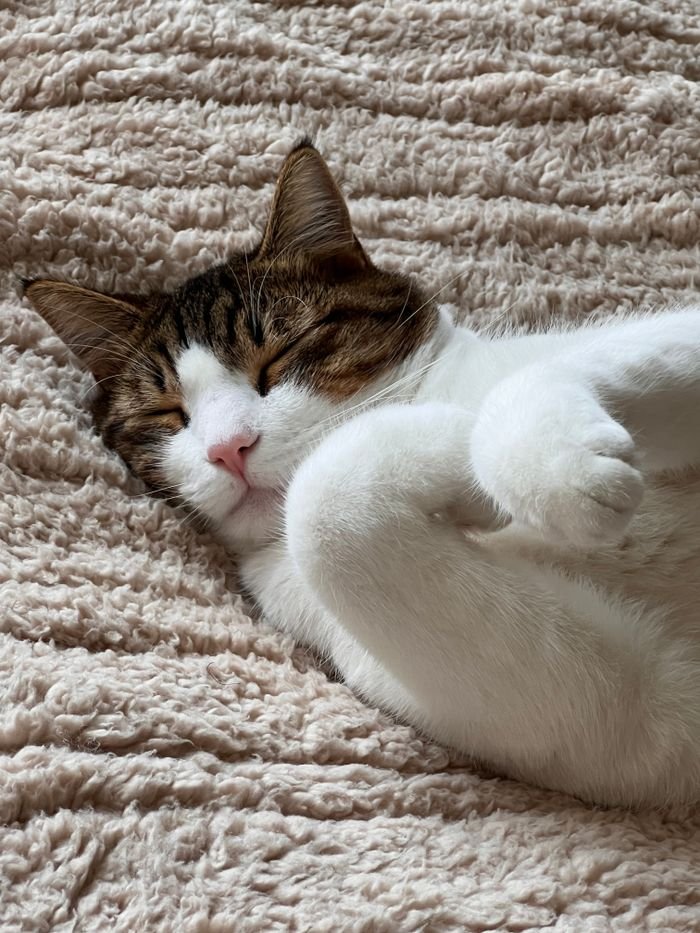
You glance over at your cat curled up on the couch, and suddenly his paw jerks. His whiskers flutter, and his tail gives a quick flick, almost as if he is chasing something only he can see. For a second, you wonder if something is wrong.
Should you wake him up, or watch? If you’ve ever felt your own body suddenly jerk while falling asleep, you may recognize this behavior. Have you ever been in a deep sleep and suddenly felt as if your foot slipped or you were falling, only to wake up with a strong jerk?
It can happen to people as they drift into deeper sleep, and it can happen to cats too. Just as your body may make an involuntary movement during sleep, your cat may also suddenly twitch a paw, flick a whisker, or move its tail while sleeping.
In many cases, these little movements are completely normal and are linked to dreaming or natural muscle activity during sleep. However, some types of twitching can be associated with pain, illness, or neurological problems. Below, we’ll explain why cats twitch in their sleep, what is considered normal, and which signs mean it’s time to pay closer attention.
Why Does My Cat Twitch in His Sleep?
Most of the time, a twitching cat is simply a sleeping cat experiencing normal muscle movements. During certain stages of sleep, the brain remains active while the body is deeply relaxed. This can lead to small, involuntary movements in the paws, whiskers, face, or tail.
Twitching does not always have the same cause. It can happen during dreaming, while a cat is falling into deeper sleep, or because of a minor muscle reflex. Less commonly, repeated or unusual twitching may be related to discomfort or a neurological problem.
The important thing is to look at the overall pattern. A few gentle movements during sleep are usually nothing to worry about, while strong, repeated movements or twitching accompanied by other symptoms deserve closer attention.
Normal REM Sleep Twitching While Dreaming
Cats, like people, move through different stages of sleep. One of these stages is REM (rapid eye movement) sleep, which is strongly associated with dreaming.
During REM sleep, the body becomes deeply relaxed, but small muscle movements can still occur. This is why you may notice your cat’s paws moving, whiskers flicking, face twitching, or tail making small movements while he sleeps.
Some cats may even make a quiet chirp or soft meow during sleep. These movements can sometimes look as though your cat is running, playing, or chasing something in a dream.
Kittens may show these movements more often because they spend a significant amount of time sleeping while their bodies and nervous systems are still developing.
Minor Muscle Spasms and Myoclonic Jerks
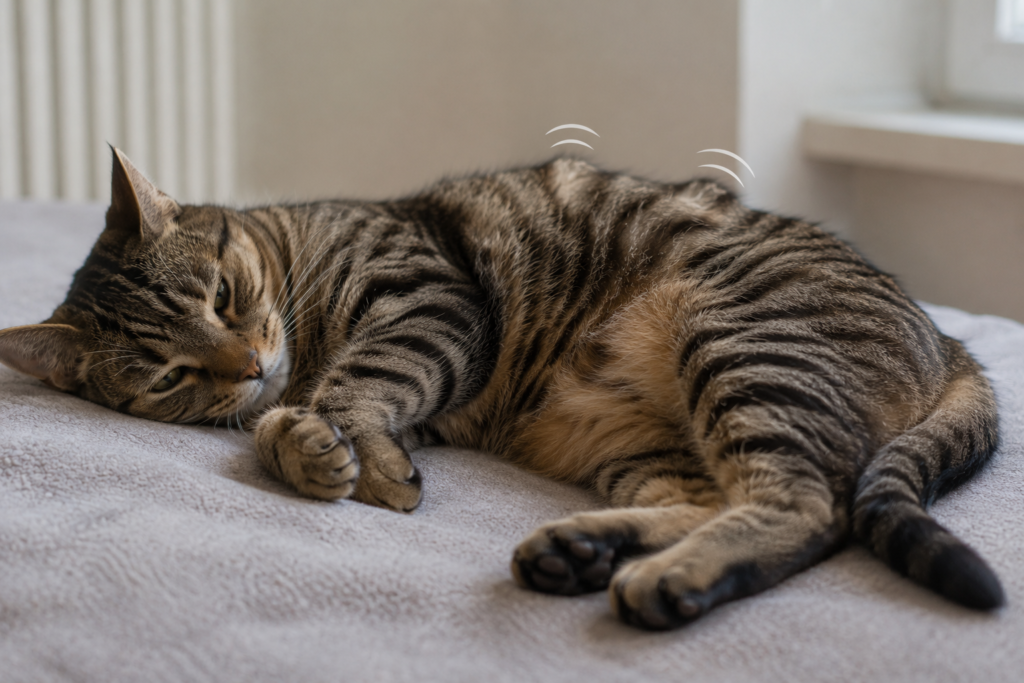
Not every sleep twitch is necessarily related to dreaming. Cats can also experience brief, involuntary muscle movements known as myoclonic jerks.
These movements are usually quick and short-lived. You may notice a sudden movement in one part of the body, or an occasional brief jerk as your cat is falling asleep.
Unlike movements associated with dreaming, a myoclonic jerk does not necessarily mean your cat is acting out a dream. It can simply be a brief involuntary muscle contraction as the body transitions into deeper relaxation.
Occasional, mild movements of this kind are generally not concerning when your cat wakes normally and behaves as usual afterward.
Pain or Discomfort-Related Twitching
Sometimes twitching can be related to physical discomfort rather than normal sleep activity.
For example, a cat with an injury, sore muscle, joint problem, or another painful condition may move or twitch when lying in one position. You may notice that the movement repeatedly affects the same area.
Other signs may appear alongside the twitching. Your cat might keep changing sleeping positions, avoid being touched in a particular area, have difficulty getting comfortable, or behave differently when moving around.
If your cat is older, recovering from an injury or surgery, or showing other signs of pain, repeated twitching should be discussed with your veterinarian.
Neurological Issues Behind Sleep Twitching
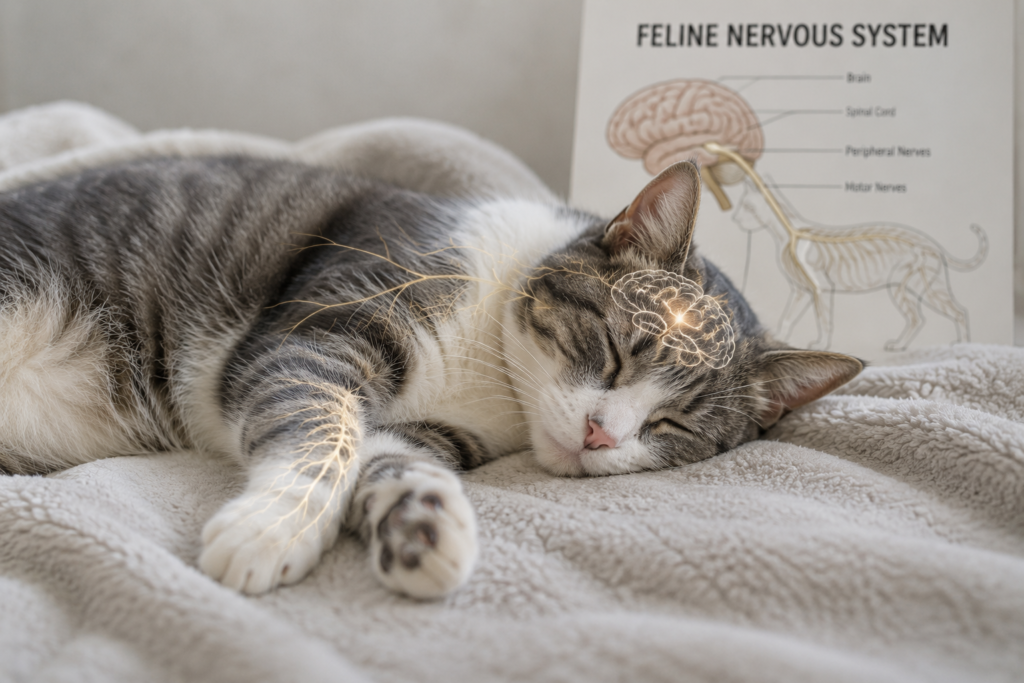
In uncommon cases, unusual movements during sleep can be associated with a neurological problem. Conditions affecting the brain, nerves, or normal muscle control can sometimes cause abnormal movements.
This type of twitching is more concerning when it is strong, persistent, happens repeatedly, or continues after your cat wakes up. Other changes, such as difficulty walking, unusual behavior, weakness, loss of coordination, or episodes that happen while the cat is awake, can also provide important clues.
If your cat repeatedly shows unusual movements or develops other neurological signs, contact your veterinarian for an examination rather than assuming the movements are simply dreams.
Is It Normal for Cats to Twitch in Their Sleep? What You Need to Know
Yes, occasional twitching during sleep is generally normal. Small movements of the paws, whiskers, face, or tail can occur while cats are dreaming or moving through different sleep stages.
A cat that twitches gently, wakes normally, and behaves completely normally afterward is usually not showing a cause for concern.
However, twitching becomes more concerning when it is severe, prolonged, happens while your cat is awake, or occurs together with other unusual symptoms. In those situations, it is better to have your cat checked by a veterinarian.
Cat Twitching in Sleep or Seizure: How to Tell the Difference
Because seizures and normal sleep movements can sometimes look similar, knowing the differences can help you decide when to seek veterinary care.
Pay attention to these signs the next time your cat twitches during sleep:
- Waking normally: A cat experiencing ordinary sleep movements should wake and respond normally. A cat having a seizure may be difficult to rouse or may not respond normally during the episode.
- Body movement: Normal sleep twitching is often limited to small movements of the paws, whiskers, face, or tail. Seizures can involve stronger or more widespread movements.
- Breathing: Normal sleep twitching generally does not significantly affect breathing. A seizure may cause changes in breathing.
- Duration: Ordinary sleep movements are usually brief. A seizure can last longer and may involve repeated or sustained abnormal movements.
- Other symptoms: Drooling, loss of bladder or bowel control, unusual vocalization, weakness, or confusion after an episode can be warning signs.
A cat with a seizure disorder may also have episodes while awake, although seizures can occur in different circumstances. If you are unsure whether an episode is a normal sleep movement or something more serious, record a short video and show it to your veterinarian.
Cat Twitches a Lot in Sleep: When Frequency Becomes a Concern
An occasional twitch during sleep is usually not a problem. However, if your cat suddenly starts twitching much more often or the movements become stronger, it is worth paying attention to the change.
Keep track of how often the twitching happens, how long each episode lasts, which parts of the body move, and whether your cat behaves normally afterward.
Also watch for other changes, such as twitching while awake, difficulty walking, changes in appetite, unusual behavior, pain, weakness, or trouble waking.
If the episodes are becoming more frequent or intense, share your observations or a video with your veterinarian. This can help your vet understand whether the movements are likely to be normal sleep activity or require further investigation.
Watching Your Cat’s Sleep Twitches with Confidence, Not Worry
By now, the picture should feel a lot less mysterious. Twitching itself is not necessarily a warning sign; the pattern, intensity, duration, and other symptoms matter more.
A cat who occasionally twitches gently while sleeping, wakes normally, and acts completely fine afterward is usually experiencing ordinary sleep-related movements. These little paw kicks, whisker flicks, or tail movements can be part of normal feline sleep.
The movements worth watching more closely are those that are strong, prolonged, happen while your cat is fully awake, or occur alongside symptoms such as difficulty waking, abnormal behavior, weakness, loss of coordination, or loss of bladder or bowel control.
If you are ever unsure, recording the episode on your phone can give your veterinarian a much clearer picture of what is happening.
Once you understand the difference between normal sleep twitching and concerning movements, those little midnight paw kicks become much less worrying and simply another interesting part of living with a cat.