
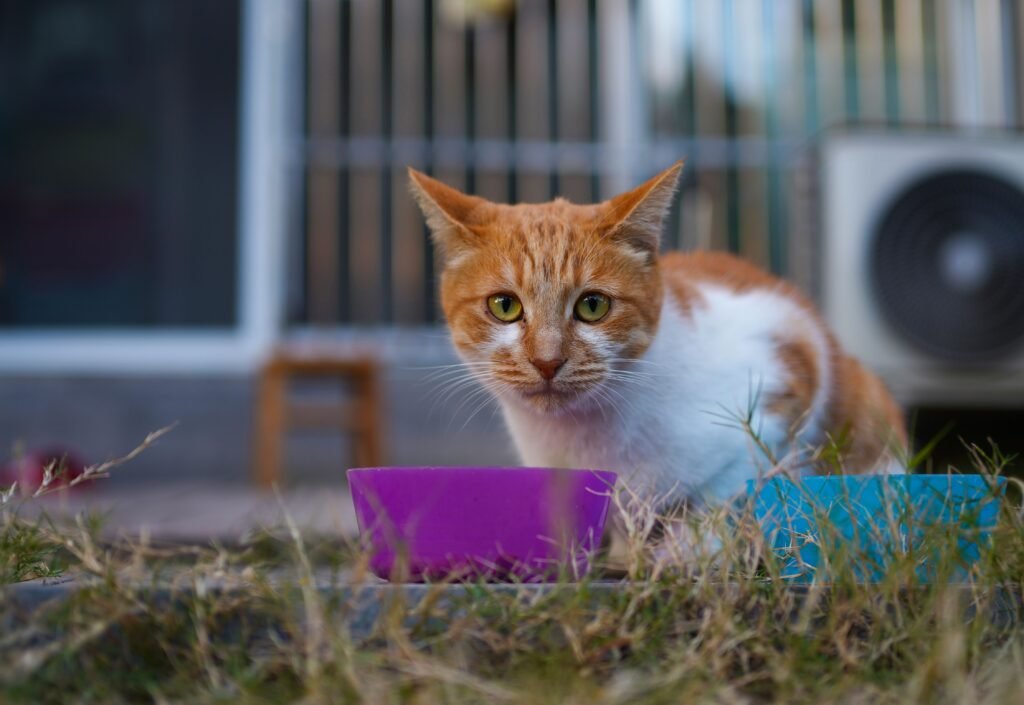
Cats have both “Neophilia” (love of new things) and “Neophobia” (fear of new things) when it comes to food.
If a cat is raised on dry food (kibble) in the early stages of its life, its brain becomes “sensory imprinted” to the texture and specific taste of that food. Dry food is often sprayed with animal digest or fat, which makes it very palatable.
In contrast, the texture of wet food, which has a moisture content of 70% to 80%, is completely alien to it.
Cats that have been eating dry food for a long time often do not recognize the soft and moist texture of wet food as “food” because, for them, “food” is anything that has a specific crunch or crispness.
Reasons Why won’t my cat eat wet food?
1) Sudden Change in Diet
Cats have a very sensitive digestive system and sense of taste. If you suddenly change their diet completely, it can cause gastrointestinal upset. Cats can also perceive changes in their diet as a threat.
Suddenly introducing wet food can cause a cat to develop “food aversion,” meaning they associate the new smell or taste with an experience that makes them feel sick after eating it.
This is an evolutionary mechanism so that they don’t eat something that has been proven to be toxic to them again.
Not making a gradual change creates stress in the cat, which further reduces their appetite.
2) Doesn’t Like the Texture
Cats have a greater sense of smell and texture than taste. Wet food on the market comes in a variety of forms, such as pâté (like a paste), chunks in gravy, shreds, or mousse.
Some cats prefer pâté because it doesn’t require chewing, while others prefer a texture that has visible shreds of meat so they can feel the sensation of “hunting” it. If your cat likes chunks, they will reject pâté because the mouthfeel is completely different.
3) Doesn’t Like the Flavor
Each cat has its own taste preferences, depending on their individual microbiome and family habits.
Cats do not have taste buds on their tongues that detect sweetness, but they are highly sensitive to the flavors of amino acids and certain proteins. Some cats prefer strong-smelling seafood like tuna or salmon over chicken, while others are only attracted to the taste of beef or turkey.
If the protein source used in wet food is not to the cat’s liking, she will refuse to eat it.
4) The Food Is Too Cold
Cats’ digestive system and sense of smell are linked to their natural hunting behavior. In the wild, a cat’s prey (such as a rodent or bird) is freshly killed and has a body temperature of around 38°C to 39°C.
When you serve wet food straight from the fridge, its temperature is too low, which does not release its aroma. Since cats first use their nose to decide whether food is edible, cold food is tasteless and unappealing to them.
5) Food Has Been Left Out Too Long
Wet food has a high moisture content, which causes it to oxidize very quickly at room temperature and can lead to bacterial growth.
Within a few hours, the top of the food dries out, and its aroma disappears. Cats have a much sharper sense of smell than humans; they can detect even the slightest chemical changes in the food, and when the food loses its freshness, they will discard it as “unfit for consumption.
6) Food Is Spoiled
If the can of wet food is damaged or its seal is broken, the fats and proteins inside it deteriorate when exposed to air.
Spoiled food not only smells bad, but it can also produce “bacterial toxins”. Cats are very smart animals, and they will never touch spoiled or rotten-smelling food as part of their natural defense system.
If the can is not properly closed and stored in the refrigerator after opening, it can also deteriorate within a few hours.
7) Dental Problems
If the can of wet food is damaged or its seal is broken, the fats and proteins inside it deteriorate when exposed to air.
Spoiled food not only smells bad, but it can also produce “bacterial toxins”. Cats are very smart animals, and they will never touch spoiled or rotten-smelling food as part of their natural defense system.
If the can is not properly closed and stored in the refrigerator after opening, it can also deteriorate within a few hours.
8) Mouth Pain or Oral Disease
Mouth ulcers or “Stomatitis” (acute inflammation of the lining of the mouth) can make it very difficult for a cat to swallow food.
These problems are often caused by infections or autoimmune reactions. If a cat has mouth pain, it will also feel pain when trying to lick or swallow wet food, making it reluctant to go near the food bowl.
9) Illness or Reduced Appetite
Loss of appetite in cats is often an early warning sign of systemic illness. For example, during chronic kidney disease, “uremic toxins” accumulate in the cat’s blood. These toxins cause stomach ulcers, and the cat experiences constant nausea. A cat who is nauseous will also find the smell of wet food unpleasant.
Similarly, in cases of liver problems, such as “hepatic lipidosis” (fatty liver), the cat’s appetite is lost. Slow liver function causes toxins to accumulate in the body, affecting the appetite center.
During an infection, fever, or viral illness (such as Feline Herpesvirus), a cat’s nose may become congested. Since 80% of a cat’s appetite depends on its sense of smell, if its nose is blocked, it will not be able to taste wet food and will refuse to eat it.
Diabetes Mellitus is also a major cause. In this, despite the increased blood glucose levels, the cells do not get energy. Although some cats eat more during this time, many sick cats become “lethargic” and their willpower to eat decreases.
10) Stress or Anxiety
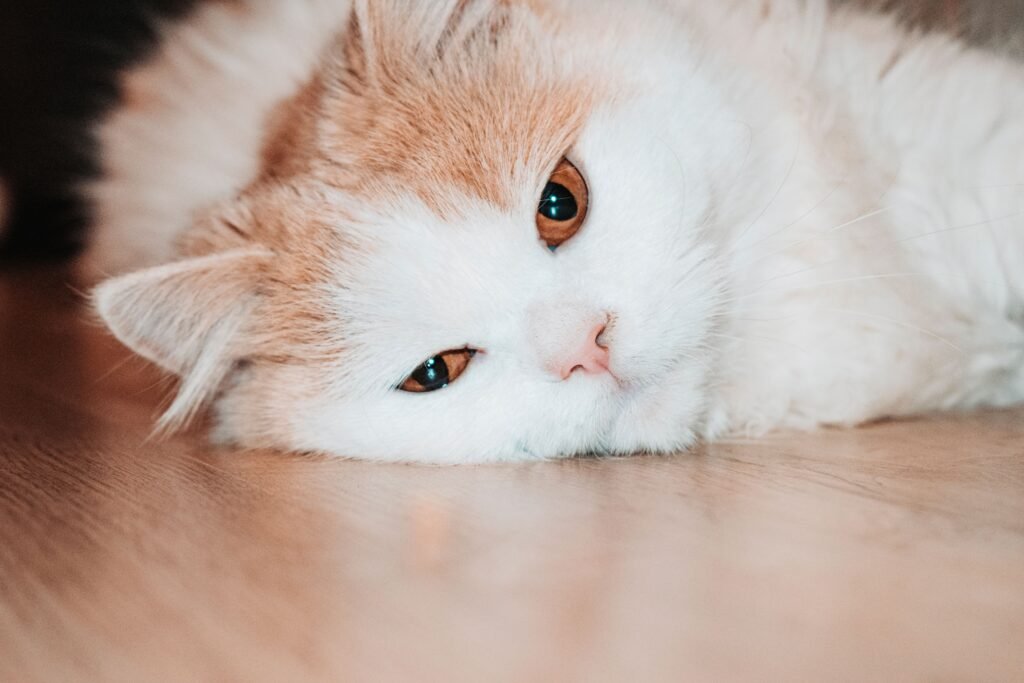
Cats are territorial animals. Their environment is everything to them. Any change in the home to a new guest, a remodel, a new pet, or a family member going on a long trip can cause severe stress for a cat.
During this stress, their body releases a hormone called cortisol, which temporarily suppresses appetite.
Another type of “environmental stress” is “social conflict.” If there is more than one cat in the house and one cat threatens or takes over the other’s food area, the stressed cat will stop eating.
Separation anxiety is also a common cause. If a cat is very attached to its owner and the owner is away from home, the cat may stop eating out of depression.
During stress, cats’ “fight or flight” response is activated. In this state, their body spends energy on survival rather than digestion.
Until the environment calms down, they even ignore their favorite wet food because their priority is to “stay safe” rather than “fill their stomachs.”
11) Sensitive Sense of Smell
A cat’s nose has over 200 million “olfactory receptors”, while humans have only 5 million. This makes them a very sensitive “chemical detector”. If a wet food contains certain types of “preservatives”, “artificial colors,” or “flavor enhancers” that seem unnatural to the cat, it will immediately recognize them.
Sometimes the smell of the can’s inner lining is absorbed into the food. The cat can smell it and feel that this food is different from “natural meat”.
Their sense of smell is so sharp that if you buy two different batches of the same brand, and there is even a slight change in one, the cat can smell it and reject it.
Their sense of smell is so acute that they can also smell the lack of “taurine” or poor-quality protein in the food. This is why when they find a food “suspicious”, they refuse to eat it because they consider it a threat to their health.
12) Whisker Fatigue
“Whisker Fatigue” is a scientific fact. A cat’s whiskers are not just hair but also highly sensitive “tactile sensors”.
They are connected to nerves in their cheeks and sense all kinds of movement, air pressure, and obstacles. When you feed wet food in a deep or narrow bowl, the cat’s whiskers repeatedly hit the edges of the bowl while eating.
With each bite, the whiskers are put under pressure (Sensory Overload). This pressure sends “Stress Signals” to the cat’s brain. It feels like it has hit an obstacle.
Some cats can tolerate this pressure, but sensitive cats will stop eating or will take it out of the bowl and drop it on the ground before eating it. If the bowl is deep, the cat has to crane its neck further to reach the food, which puts more pressure on its whiskers.
This process becomes a “painful experience” rather than a “meal.” That’s why experts always recommend using wide and shallow bowls.
13) Feeding Bowl Issues
Bowl material has a big impact on a cat’s preference. Plastic bowls are the most problematic. Over time, the plastic surface develops micro-scratches, which can trap food particles and bacteria.
No matter how much you wash it, the bacteria smell (which humans cannot smell) from these cracks will not go away. Cats can smell this smell, and their food will feel “dirty.”
In addition, plastic is prone to “chemical leaching,” meaning chemicals from the plastic can leach into the food.
Ceramic or stainless steel bowls are best because they are non-porous and do not absorb odors. If the bowl is dirty or has leftover dish soap on it, cats will run away from the strong odor. Their smell detector is very sensitive, and even a slight soapy taste can make them reject an entire meal.
14) Medication Side Effects
If a cat is taking medication for a medical condition (such as antibiotics or painkillers), one side effect may be loss of appetite (anorexia). Many medications have a bitter taste, which leaves a permanent “metallic taste” in the cat’s mouth.
If you give them wet food during this time, that bitter taste and wet food will become intertwined.
Some medications (such as antihistamines) can make a cat sedated, which can reduce their appetite. Similarly, gastrointestinal medications temporarily slow down the digestive system. While the cat is under the effects of the medication, it will not be interested in eating.
Often, owners are concerned that the cat is not eating, but this is actually a temporary effect of the medication. In this case, you should consult a doctor to see whether the medicine can be given with food, as some medicines can cause severe nausea in cats when given on an empty stomach.
15) Overfeeding Treats
Treats (snacks) are very palatable and salty. They often contain “fatty flavor enhancers” that are addictive to cats.
If you keep giving your cat treats throughout the day, she will get her daily calories from them. Then when you give her balanced wet food, she will not like its simple taste.
This is a major cause of “pick eating”. Treats have a much sharper taste than wet food. When the cat’s tongue gets used to this sharp taste, wet food will seem bland to her.
In addition, treats are often dry, which increases the proportion of carbohydrates in the cat’s digestive tract, which makes her not feel hungry at all. If a cat is accustomed to treats, it will reject wet food as a “boring food” because it knows that after a while, it will get treats again.
16) Feeding Schedule
“Free-feeding” (leaving food in the bowl all the time) is an unnatural way for cats. Wild cats operate on a “Hunt-Eat-Sleep” cycle. When you keep food in the bowl all the time, the cat never feels a “strong appetite”. It only eats a little at a time to relieve boredom.
When you give wet food, it also takes it in the same “bored” way, and because wet food must be fresh, it does not show interest in eating it. Giving food at fixed times (Scheduled Feeding) activates “Ghrelin” (the hunger hormone) in the cat’s body.
When she sees food at a certain time, her body has developed digestive enzymes. Thus, she eats wet food more eagerly because she knows that this is her only chance to fill her stomach.
17) Age-Related Changes
As a cat grows older, her “Sensory Acuity” begins to decrease. Olfactory Sensitivity decreases in cats over 10-12 years of age. Since their appetite depends on smell, they are less likely to taste wet food.
The number of their “Taste Buds” also decreases in old age. Furthermore, older cats often experience “Cognitive Decline”, which can cause them to forget meal times or have difficulty recognizing food. Their body’s ability to digest protein also decreases, so they need more “Highly Digestible” and “Aromatic” food. If their wet food is not suitable for their age (Senior Formula), they may reject it.
18) Food Packaging or Formula Changed
Companies often change their “Recipe”. Although the packaging says “Improved Recipe”, the internal ingredient ratio has changed. For cats, whose sense of smell is very acute, this change is a “completely new food”.
Even the slightest difference, such as using more “by-products” instead of meat or removing an artificial aroma, is enough for the cat to perceive it as different from the old food.
Often, when new packaging arrives after the old one, the cat will notice even a slight difference in the food’s freshness or moisture content.
This is a common cause of “Food Aversion”, where the cat feels that it is not the same food that it has always eaten. It recalls the old taste and rejects the new formula.
19) The Wet Food Is Low Quality
Low-quality wet food is often full of “fillers” such as wheat, corn, or soy. Cats are “obligate carnivores,” meaning they only need animal protein to survive. Plant protein is not complete for their bodies.
When a cat eats low-quality food, it doesn’t get all the essential amino acids (especially taurine) it needs.
Its internal system sends it a message that the food is “incomplete.” Cats can smell substandard meat (one that contains bones, hooves, or unnecessary particles).
If the diet contains more “meat by-products” than “meat meal,” the cat loses interest because it doesn’t get the “fresh meat aroma” it craves. Quality wet food has a clear meat ingredient, which is highly appealing to cats.
What to Do So My Cat Eats Wet Food?
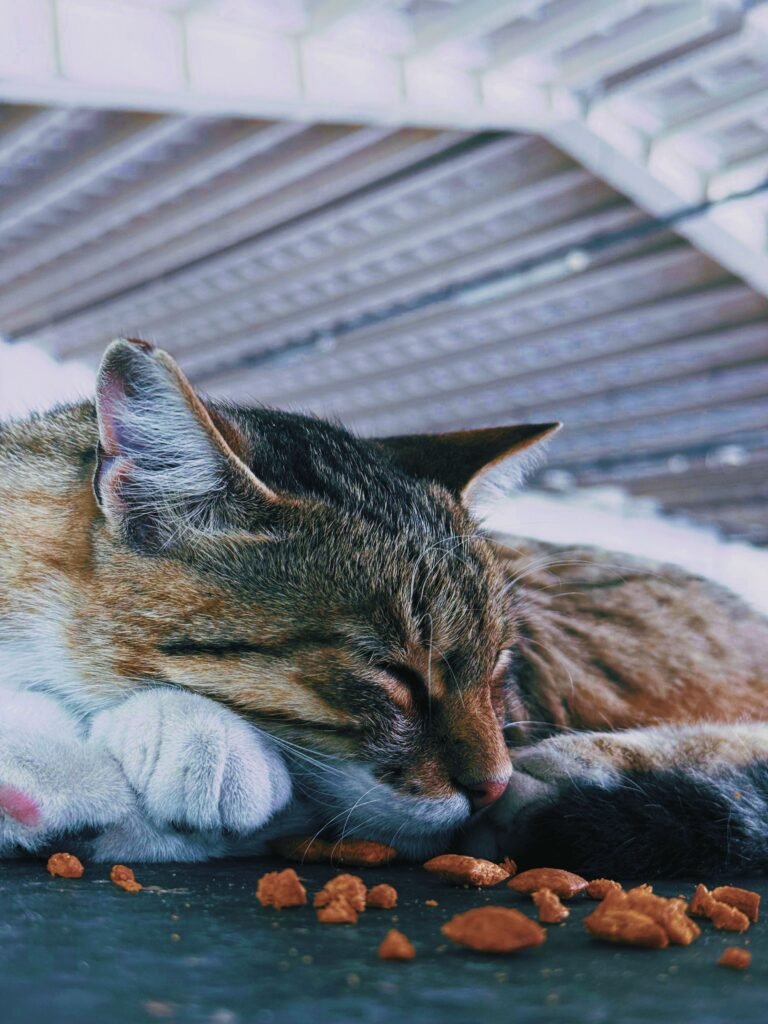
1) Transition Your Cat to Wet Food
The “Gradual Transition” principle is the most successful way to transition a cat from dry to wet food. You should spread this process out over 7 to 10 days. On the first day, add just one teaspoon of wet food to your cat’s regular dry food. Make sure not to mix the two thoroughly; keep the wet food on top so the cat can smell it separately.
As the days go by, gradually increase the amount of wet food and reduce the amount of dry food. If the cat stops eating one day, it means you are making the change too quickly. In this case, take a step back and return to the old ratio. The cat should not feel that its old food has “disappeared”, but rather that a “new and exciting” thing has come along with it. If the cat is very stubborn, you can use dry food as a “topper” on the wet food to encourage it to lick it.
2) Improve the Taste and Appeal of Wet Food
If your cat is not impressed by the taste of wet food, “Enhance” it. First, warm the food slightly. Microwave it for 5-10 seconds (be careful not to overheat it, just lukewarm). The heat releases the “Aromatic Compounds” of the food, which reach the cat’s nose and whet her appetite.
If she doesn’t like pâté, mix it with a little water to make it look like “gravy.” Also, try different flavors. If you’re giving her a chicken-flavored brand and she’s not eating it, she might like the taste of tuna or turkey. Using “Food Toppers” is a great strategy.
Sprinkling dried “Bonito Flakes” (dried fish flakes) or “Freeze-dried Meat” chips on the food gives the cat something to be attracted to that she can’t ignore. Use these toppers only when she’s hesitant to start eating.
3) Create a Better Feeding Routine
Establishing a feeding routine helps regulate your cat’s mental and physical systems. Offer wet food at set times twice a day.
Give your cat 20 minutes, and if it doesn’t eat, take the bowl away. This will teach your cat that “if I don’t eat now, I won’t get this food back.”
Play with your cat lightly 15 minutes before mealtime. Use a laser light or a feather wand to encourage her to repeat her instinctual “hunting behavior.” After play, your cat’s metabolism speeds up, and she starts to feel hungry.
When she sees wet food in this state, she is much more likely to eat it. Stop giving treats throughout the day, as they fill her calorie quota and she doesn’t have the appetite for real food.
4) Optimize the Feeding Environment
Make the feeding area “stress-free.” Always keep the bowl in a quiet place away from other household members, dogs, or noisy machines. Don’t let your cat be “self-conscious” when eating. Always choose a wide and shallow ceramic or steel bowl.
Remember, your cat should feel safe while eating. If they can see who is following them, they will eat more calmly.
Keep the bowl away from water and treats. Cats naturally like to keep their food and water separate. A clean, quiet, and open bowl is key to encouraging your cat to eat.
5) Keep the Wet Food Fresh and Safe
The freshness of wet food is essential for cats. Always open a fresh can. If you are feeding more than one cat, feed it immediately and store any leftovers in an airtight glass or plastic container in the refrigerator.
Leaving food in an open can can give it a metallic taste.
Remove the food from the refrigerator and let it come to room temperature. If you are in a hurry, put it in a bowl and place it over a bowl of hot water (Double Boiler method) to warm it slowly. Never mix new food with old food. Wash the bowl thoroughly with soap and dry it after each meal. A clean bowl can help restore your cat’s appetite.
6) Rule Out Medical Problems
If you have tried all the methods and your cat still isn’t eating wet food for 24-48 hours, don’t ignore it. This could be a medical emergency. Consult a veterinarian immediately.
The vet will examine your cat’s mouth and recommend dental cleanings or treatment for ulcers.
If the vet diagnoses a disease (such as kidney disease), he will give you a “Prescription Diet” specifically formulated for that condition and often more readily accepted by cats.
Never force-feed your cat, as this will exacerbate the “Food Aversion”. Strictly follow the medication and diet prescribed by the vet. Remember, the transition to wet food can take some patience, but once your cat gets used to it, its health, hydration, and urinary tract health will improve significantly.