
It can be frightening to see your cat’s eyes quiver, flutter, or dart. Your first reaction is probably to think a dust particle or stray hair got inside and that it will clear up in a moment.
That instinct is often correct. Cat eye twitches can be as small as a slight annoyance that goes away on its own. However, the same symptom may also indicate a more serious issue, such as an ear- or brain-based balance issue or a severe scratch on the eye.
The most important first step is to identify exactly what is twitching. An entire eyeball jerking back and forth is extremely different from an eyelid that flutters or squints, and the two typically have entirely distinct causes.
This tutorial explains what a cat’s eye twitch really means, the difference between aberrant eye movement and eyelid spasms, the common causes of each, additional symptoms to watch for, and when to see a veterinarian.
What People Mean by a “Cat Eye Twitch”
The key to understanding what is happening is to distinguish between the two very different things the phrase can refer to. Veterinarians typically divide eye twitching into two groups.
The first is called blepharospasm, an eyelid spasm in which the eyelid itself twitches, flutters, or squints shut. Like someone squinting against grit or bright light, this typically indicates the eye is painful or uncomfortable.
The second is nystagmus, which is a quick, rhythmic movement of the entire eyeball in a circular or back-and-forth pattern. Since aberrant nystagmus is usually associated with the inner ear or the brain’s balance system, this is a totally different signal.
Everything else makes sense when you keep this contrast in mind while you read. A fluttering eyelid typically indicates that you should glance at your eye, whereas a darting eyeball typically indicates that you should look at your ears and balance.
Eyelid Twitching and Squinting: Usually the Eye Itself
Movement limited to the eyelid is almost always local and boils down to one thing: the eye is inflamed or hurts. Cats protect their sore eyes by squinting and twitching. These are the typical causes of eyelid spasms.
Irritation, Foreign Objects, and Injury
A physical issue with the eye is the most basic cause. The lid may flutter as it tries to blink away a dust particle, a scratch from a claw during play, or a stray hair touching the surface.
Because stray hairs can easily reach the eye, long-haired cats are especially vulnerable. Sometimes, a condition known as trichiasis causes the lashes or lid hairs to grow incorrectly and rub the surface, prolonging the irritation.
Conjunctivitis and Feline Herpesvirus
One of the most common eye conditions in cats is conjunctivitis, an inflammation of the pink lining around the eye that often causes twitching, redness, and watery eyes. Feline herpesvirus commonly causes recurrent conjunctivitis in cats.
Some cats have recurring eye problems since this virus is very widespread and tends to flare up during stress or illness. It may also cause enough eye pain to trigger spasms and squinting.
Corneal Ulcers and Other Painful Eye Conditions
Squinting becomes more difficult, and twitching worsens with more severe eye problems. A corneal ulcer, a scratch or sore on the eye’s transparent surface, is extremely painful and often causes a cat to close one eye, cry profusely, and avoid light.
The same is true for other excruciating conditions like glaucoma, dry eye, and intraocular inflammation. These are not wait-and-see situations; a cat squinting and keeping an eye closed needs to be seen once, since, if untreated, some of these disorders can endanger the eye itself.
Whole-Eye Twitching (Nystagmus): A Balance Problem
The narrative switches to the nervous system when the entire eyeball flickers quickly instead of just the lid. The hallmark of vestibular sickness, an issue with the body’s inner ear and brain balance system, is this movement, known as nystagmus.
Vestibular illness is characterized by rapid, uncontrollable eye movements, a prominent head tilt, and circling or falling to one side, according to the Cornell Feline Health Center. When you see flashing eyes and a tilted, unstable cat, check the balance system.
Ear Infections
An ear infection that spreads to the middle or inner ear is the most frequent treatable cause. An ear infection can disrupt the entire system and cause the eyes to dart because the balancing organs are located inside the ear.
Cats with ear infections often paw at the affected ear, shake their heads, and emit an unpleasant odor or discharge from the ear canal. Early detection and treatment typically eliminate eye movement before it causes long-term damage.
Idiopathic Vestibular Disease
Unfortunately, idiopathic vestibular illness is the term used when no cause is ever discovered. Within an hour or so, a previously fine cat may tilt, stumble, and show nystagmus because the condition starts so suddenly.
It usually improves on its own, which is comforting. Most cats return to normal in two to three weeks, but a minor head tilt may occasionally persist. The greatest wobbliness and darting eyes usually go away in two to three days. Supportive care is usually all that’s needed.
Tumors, Polyps, and Cysts
The same symptoms can also come from growths that press on sensitive tissue inside the ear or near the balance nerves. Sometimes the first sign is twitching or an unusual eye posture.
Benign nasopharyngeal polyps can cause head tilt and eye twitching in younger cats. True tumors are more common in older cats. Imaging is typically required to locate these because they are hidden deep within the skull or ear.
Toxins, Medications, and Head Trauma
Some drugs can disrupt the nervous system enough to cause abnormal eye movement. Toxins like lead or dog flea remedies containing permethrin can cause tremors and twitching, and some drugs, particularly the antibiotic metronidazole and others, can cause vestibular signs if a cat consumes too much.
A recent fall or head injury can also affect the nerves that stabilize the eyes. Keep toxins out of reach, take medications exactly as prescribed, and contact your veterinarian or a poison hotline as soon as you suspect exposure.
Congenital Vestibular Problems
Some cats have an imbalanced system from birth. From a few weeks of age, these kittens frequently exhibit a head tilt, a wobble, and even nystagmus.
Hereditary vestibular problems have been linked to Siamese and Burmese cats, and many of these cats are deaf. The good news is that cats adjust quite well, and these situations typically remain stable rather than worsening.
Horner’s Syndrome: Droopy Lid, Small Pupil, Raised Third Eyelid
One pattern is worth understanding because it looks dramatic but has a simple explanation. Damage to a specific group of nerves, frequently from middle ear disorders, results in Horner’s syndrome, a set of ocular abnormalities on one side of the face.
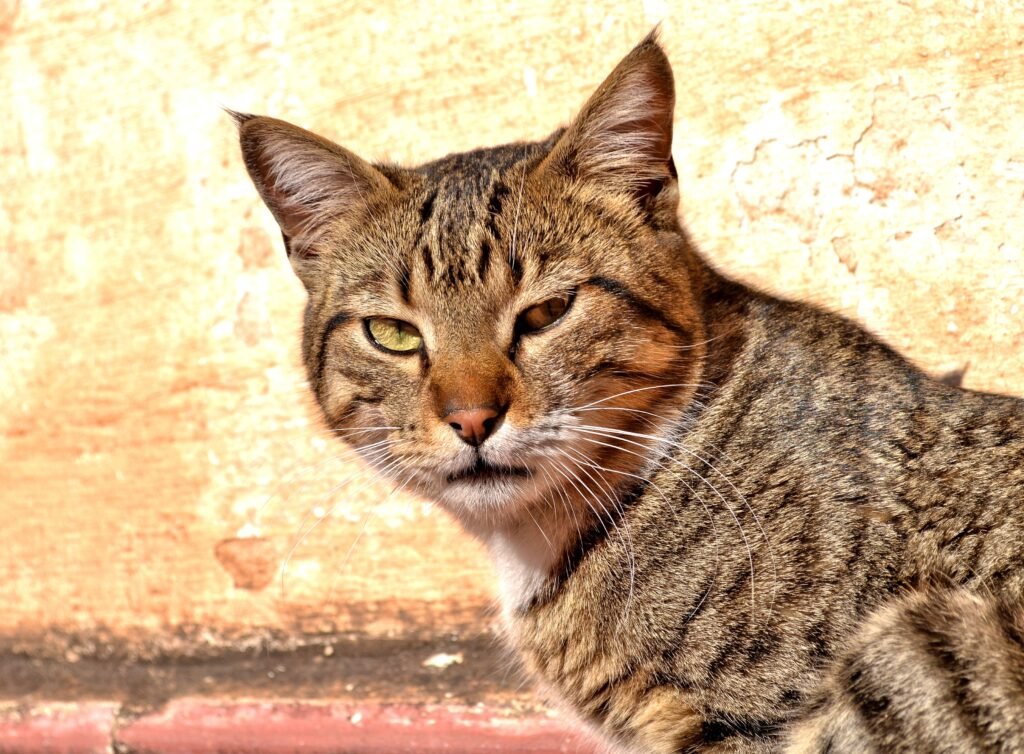
A notably smaller pupil, a raised third eyelid, a drooping upper eyelid, and occasionally a slightly sunken-looking eye on the same side are the telltale indicators. When the inner ear is affected, it often coexists with vestibular symptoms.
Horner’s syndrome isn’t unpleasant on its own. Still, it always requires a veterinarian’s examination to determine the underlying cause because it indicates damage to the neural pathway.
Along the pathway, eye twitching rarely tells the whole story. You can gauge severity by looking at surrounding symptoms, and a collection of symptoms matters more than a single twitch.
Watery eyes or discharge, redness, puffiness, hard squinting, or a cat pawing and rubbing at the eye are common signs of eye-level issues. Heavy tears suggest irritation or a herpes flare-up, while thick yellow or green discharge indicates a bacterial infection that requires treatment.
Associated symptoms are distinct and more noticeable when the cause involves balance. Vomiting or drooling from the dizziness, circling, stumbling or falling, and an abrupt tilt of the head to one side tend to occur simultaneously and quickly.
The brain is the most critical cluster. Your cat needs emergency care right away if they appear confused, unresponsive, or react much more slowly than usual.
Is It a Minor Twitch or Something Serious?
Not every eye movement is a warning sign. If a cat has watery eyes for part of the day or blinks strangely for a few minutes before returning to normal, it’s probably just a fleeting discomfort.
What counts is the pattern. A single flutter that goes away on its own is rarely indicative of illness; but a twitch that recurs frequently, worsens, or presents with additional symptoms is a totally different situation.
Another important signal is the speed of onset. While basic discomfort typically develops and subsides more gradually, vestibular and neurological issues typically manifest abruptly, frequently within an hour. It is always good to take a sudden, significant change seriously.
How a Vet Finds the Cause
A veterinarian takes a few steps to identify the reason because so many illnesses have similar symptoms. It begins with a comprehensive physical examination of both ears and eyes to check for discharge, ulcers, infections, or injuries.
If a balance or nerve issue seems likely, a neurological exam checks reflexes, coordination, and eye and facial responses. The veterinarian then selects tests based on their suspicions. These may include imaging tests like X-rays, CT scans, or MRIs to check for growths or assess the brain and ear, bloodwork for infection or illness, and microscopic examination of ear discharge.
Not every cat needs every test. Many vestibular diseases, particularly the idiopathic type, are diagnosed mostly based on clinical symptoms and the course of the condition.
How Cat Eye Twitching Is Treated
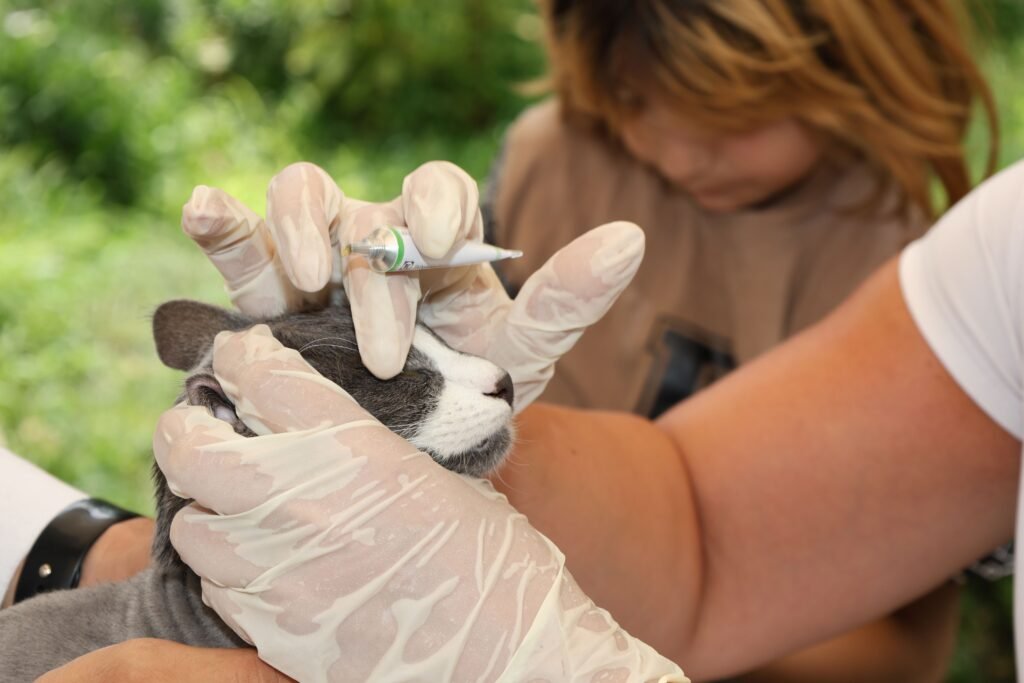
There is no one-size-fits-all solution because treatment depends on the cause of the twitch. Targeted eye medication is typically the solution for eye-surface issues, including irritation, ulcers, or conjunctivitis. Never use leftover human eye drops, as the wrong product can worsen the condition.
Antibiotics or antifungal drugs usually treat both the illness and the eye movement when an ear infection is the cause. There is no specific treatment for idiopathic vestibular disorder; the main goal is to keep your cat comfortable while the body heals over a few weeks, including anti-nausea medication and drinks if dizziness interferes with eating.
Surgery may be required to remove growths like polyps or tumors to ease pressure on the nerves. In every instance, the twitching stops permanently when the treatment is tailored to the actual cause.
When to See the Vet, and What Counts as Urgent
You don’t need a vet for a momentary twitch that goes away on its own. However, some circumstances do require attention, and some are true emergencies.
See a veterinarian if you observe any of the following:
- Twitching that doesn’t get better after a day or two.
- Twitching accompanied by a head tilt, circling, or stumbling.
- Eye or ear discharge that is thick or coloured.
- A hard pawing at the eye or a squinted eye.
- Any eye movement that keeps happening or gets worse over time.
However, if the twitch is accompanied by vomiting and extreme disorientation, a rapid loss of balance, or indications that your cat is confused, lethargic, or significantly less attentive than normal, treat it as an emergency. They need immediate attention because the issue may involve the brain or ear.
Frequently Asked Questions
Is a cat eye twitch serious?
Frequently not. If dust or mild irritation causes an eyelid flutter, it usually goes away on its own. If the twitch returns or worsens, the entire eyeball darts, or other symptoms like a head tilt appear, it can become dangerous.
Why is my cat’s eye twitching and watering?
Watering with a twitch typically indicates infection or irritation rather than a neurological problem. Common causes include conjunctivitis, feline herpesvirus flare-ups, and foreign objects.
What does it mean when a cat’s whole eye moves back and forth?
Nystagmus is the term for that fast, rhythmic movement, which often indicates vestibular illness, a balance issue in the brain or inner ear. It typically requires a vet visit and may involve head tilt or wobbliness.
Can a cat eye twitch go away on its own?
Occasionally. Idiopathic vestibular illness often improves within a few weeks, and minor irritation often goes away in a day or two. Without treatment, a twitch caused by infection, damage, or a growth won’t go away.
Should I use human eye drops on my cat’s twitching eye?
No. Numerous human eye products can exacerbate the issue and are neither suitable nor safe for cats. Use only the medication your veterinarian prescribed for your cat’s specific problem.
When is a cat eye twitch an emergency?
If the twitch is accompanied by vomiting, acute disorientation, a rapid loss of balance, or if your cat appears confused or unresponsive, you should seek immediate medical attention. These point to a brain or ear issue rather than just an eye problem.
Reading the Signs Behind the Twitch
A cat’s eye twitch might mean almost nothing or something that needs attention; the distinction usually comes down to the surrounding details. The most helpful thing you can do is watch whether the eyelid is fluttering or the entire eyeball is darting.
The nearby signs do most of the work. A darting eye combined with a head tilt and wobbliness points to the balance system, while a painful, squinting, watery eye points to the eye itself.
A little patience is usually enough if your cat is fine except for a tiny twitch. However, a quick visit to the veterinarian is the safest course of action if it persists, returns, or comes with other symptoms. Cats are good at hiding discomfort, and a quick exam often reveals an issue while it is still manageable.