
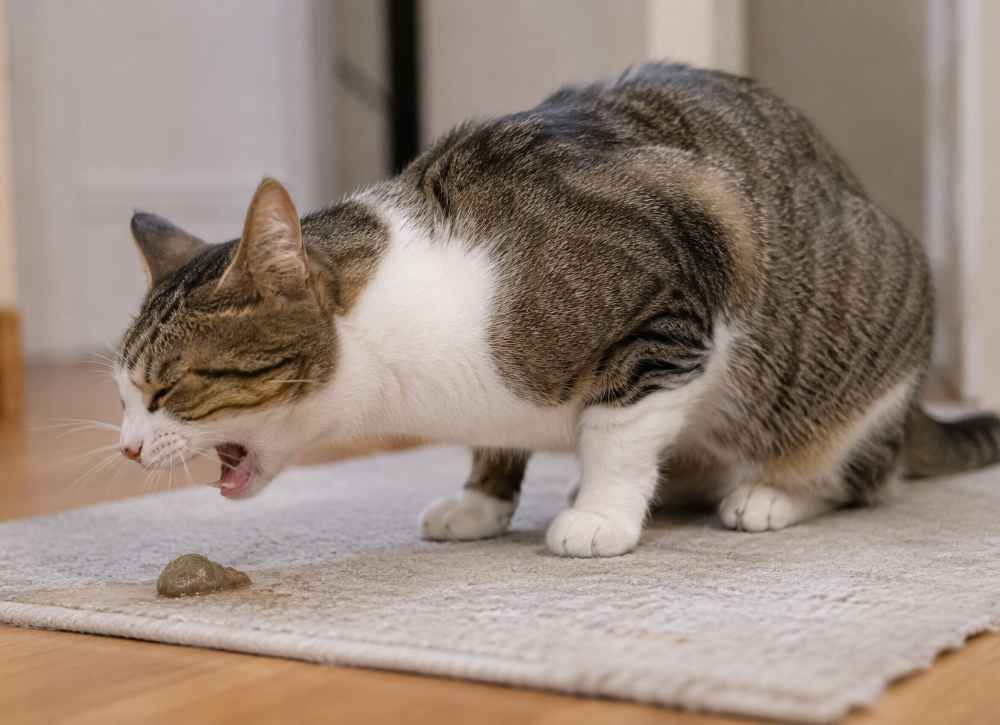
You hear that sound, that horrible retching noise, and your heart drops a little. Your cat is hunched over, neck stretched out, and nothing is coming up. It looks uncomfortable, and you have no idea if you should step in or just wait.
Gagging in cats happens more than most people think, and the cause ranges from something totally harmless to something that needs urgent help. While hairballs are the most common cause of gagging in cats, gagging can also be a sign of a serious medical condition, and if your cat is gagging more than once or twice a day, you should call your vet to find out what is going on.
If you ignore it and it turns out to be something serious, the situation can get much worse. Gagging caused by an obstruction, such as a slow-growing tumor, is often progressive and unlikely to resolve on its own without treatment. The longer you wait, the harder it becomes to treat.
According to PetMD, gagging is a reflex that allows the cat to quickly reject something from the throat, esophagus, or lungs, and the key is knowing when it is harmless and when it is not. That understanding can genuinely make a difference for your cat.
This guide breaks down every real reason why is my cat gagging, so you know exactly what you are looking at and what to do next.
What Gagging Actually Looks Like in Cats?
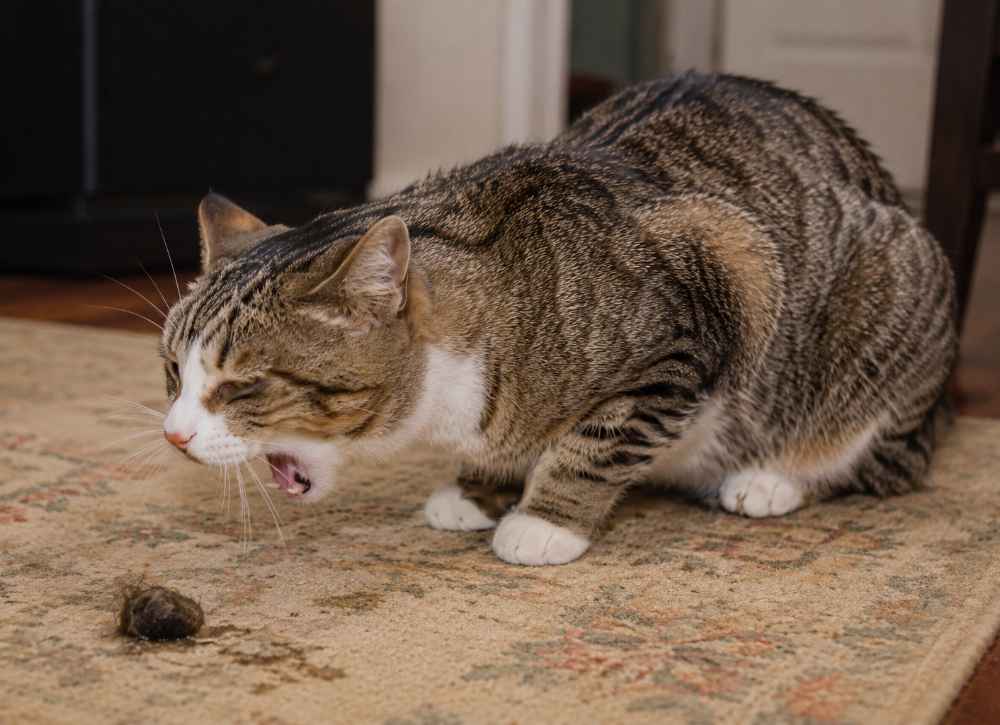
Gagging is not the same as coughing or vomiting, and knowing the difference matters. Gagging is disorganized and hurried, while a cat passing a hairball will sit low to the ground, extend their neck, and move rhythmically, without looking panicked.
If your cat looks distressed and nothing is coming up, that is closer to true gagging.
Gagging can be productive, where something comes out of the mouth, or non-productive, like dry heaving, where the cat may swallow or inhale the irritant back instead of expelling it.
Non-productive gagging is actually the more worrying kind because it means the body is failing to clear whatever is causing the problem.
Hairballs
Hairballs are the first thing most cat owners think of, and often they are right. Hairballs are clumps of fur that form in your cat’s stomach as they groom themselves, and since the digestive system cannot dissolve the fur, the cat removes it by vomiting, sometimes after several attempts. The gagging can go on for a few minutes before anything comes up.
If your cat has a lot of gagging fits before a hairball or is vomiting hairballs often, consult a vet to make sure nothing else is contributing to the problem, as they may recommend a specific food or prescription treatment to help. Frequent hairballs are not always just a grooming issue.
Eating Too Fast
This one is more common than people expect, especially in cats that are anxious around food. When cats consume food too fast, their bodies cannot tolerate it, which makes the cat gag until the food settles, and overeating on top of that only makes it worse. A simple slow feeder bowl can sometimes solve this problem completely.
A slow feeder dish with raised sections inside encourages cats to work through their food carefully instead of rushing, which reduces the chance of gagging after meals. If your cat gulps food down and then gags right after, this is almost certainly the cause. You can also check out how much wet food to feed a cat to make sure portion size is not part of the problem.
Foreign Object in the Throat
This one is always an emergency, even if your cat seems okay. If your cat is gagging but not throwing up, you should check the airway, look inside the mouth, and if you find something, do not try to pull it out yourself, but get to a vet immediately. Cats swallow strings, feathers, plastic pieces, and ribbon more often than owners realize.
Ingestion of a foreign object can produce a partial obstruction, and if something is stuck in the throat, the cat may gag repeatedly without producing anything, so you should never try to pull a string out from the throat or rear as it can cause serious internal damage. Call the vet first and follow their instructions.
Respiratory Issues and Asthma
What looks like gagging can sometimes actually be coughing, and that distinction matters a lot. Coughing in cats can be a sign of asthma, heartworm disease, heart failure, viral or bacterial infections, inhaled foreign objects, or cancer, and if the cough is persistent, severe, or productive, your cat should be seen by a vet as soon as possible.
Many people are unaware that cats can suffer from asthma, and respiratory issues that cause gagging may be due to something as minor as a cat cold or as serious as a lung condition, so if symptoms persist for more than a day or two, see your vet. If your cat is also breathing heavily while resting, that combination is a stronger reason to act quickly.
Heart Disease and Kidney Disease
Gagging is not always about the throat or stomach; it can come from deeper problems. Cardiomyopathy is the most common type of acquired heart disease in cats, and gagging is one of the most common indicators, because fluid from the lungs can travel up to the throat and trigger the gag reflex. This is not something that ever resolves on its own.
Kidney disease can lead to a buildup of waste products in the bloodstream, leaving your cat feeling nauseated and lethargic, which can cause gagging and vomiting, and acute kidney disease from toxin ingestion is considered a veterinary emergency. If the gagging comes with excessive thirst, weight loss, or a dull coat, kidney disease is worth checking for.
Nausea, Toxins, and Allergies
Sometimes the stomach is the problem, not the throat. Gastroenteritis is an inflammation of the stomach or intestine that causes gagging, dry heaving, and vomiting, and it can be triggered by bacteria, viruses, parasites, new foods, or medication reactions. A sudden change in diet is one of the most overlooked triggers.
Allergies that create inflammation in the throat can cause a cat to retch even if nothing comes up, and serious problems arise when the respiratory tract closes and causes breathing difficulties, with common triggers including dust, pollen, and mold. If the gagging happens at certain times of year or after being in a particular room, an allergy could easily be the cause.
When Gagging Is an Emergency?
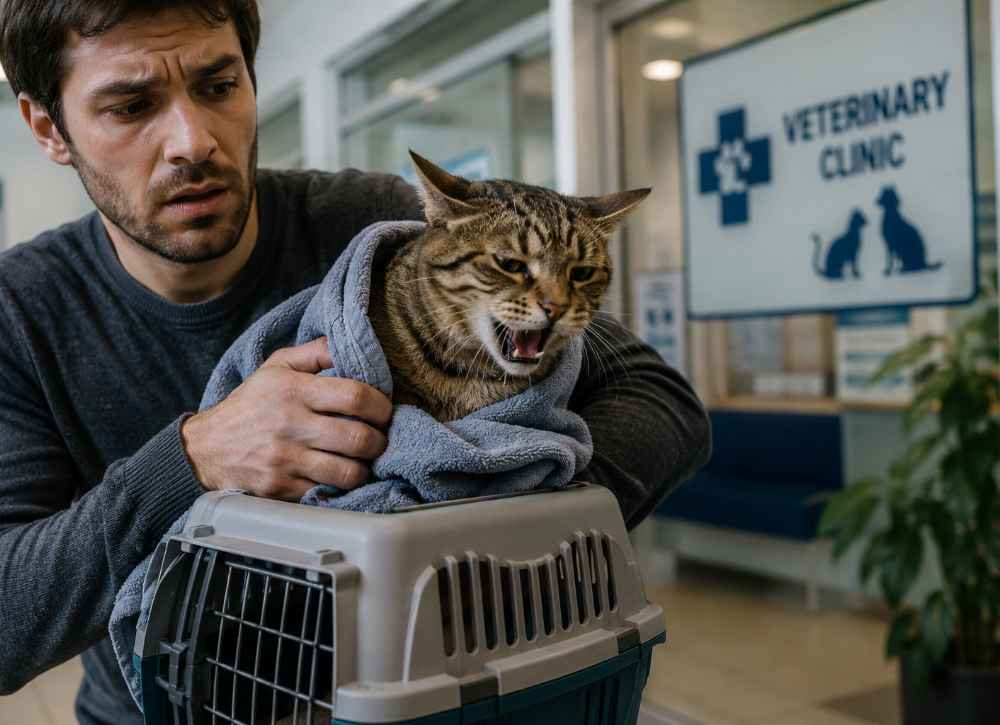
Some gagging you can monitor at home for a short while, but some you cannot. A cat that has not eaten in over 24 hours, or that is gagging, vomiting, or has diarrhea for over 24 hours, requires emergency treatment. Do not wait to see if it passes on its own at that point.
If gagging does not produce a hairball or increases in severity and frequency, consider it an emergency and contact the vet as soon as possible.
Blue gums, struggling to breathe, or collapsing alongside the gagging means you need to go right now, not after a phone call. If you notice your cat is also twitching while awake on top of gagging, that combination warrants urgent attention.
What You Can Do at Home?
If your cat is gagging and seems distressed, stay calm and check the mouth with a flashlight. If you see a foreign object and your cat can breathe okay, do not try to pull it out, and instead contact your vet right away and do not offer any food, as it may push the object further down or interfere with sedation if the vet needs to act.
For cats that gag after eating, try smaller, more frequent meals and a slow-feeder bowl. Keep toxic plants, strings, tinsel, and small plastic items well out of reach. These small changes at home can prevent a lot of unnecessary vet trips.
FAQs
Why is my cat gagging, but nothing is coming up?
This is called non-productive gagging, and it usually means the irritant is being swallowed back rather than expelled. If your cat is gagging without producing anything, and it keeps happening, it could be a foreign object, obstruction, or something more serious, so check the airway and get to a vet if it continues.
Why is my cat gagging after eating?
Most likely, they are eating too fast or too much at once. When cats eat too quickly, their bodies cannot handle it, and they gag until the food settles. A slow-feeder bowl or smaller meal portions can fix this quickly.
Why is my cat coughing and gagging?
Coughing and gagging together can point to asthma, a respiratory infection, or heart disease. Fluid from the lungs with conditions like pneumonia or heart failure can travel up to the throat during coughing and trigger gagging, so persistent symptoms should be checked by a vet promptly.
Why is my cat gagging and drooling?
Drooling alongside gagging often means nausea or that something is caught in the throat. It can also be a sign of toxin ingestion. Get to a vet quickly if you see this combination, especially if your cat also seems lethargic or confused.
How do I know if my cat’s gagging is serious?
Watch how often it happens and whether anything comes up. If your cat seems fine otherwise and goes right back to normal after gagging, it is probably okay, but if she stays hunched low to the ground while gagging for a long time or shows signs of pain, there may be a more serious problem.
Pingback: Why Is My Cat Breathing Heavily While Resting? - Eachpetscare