
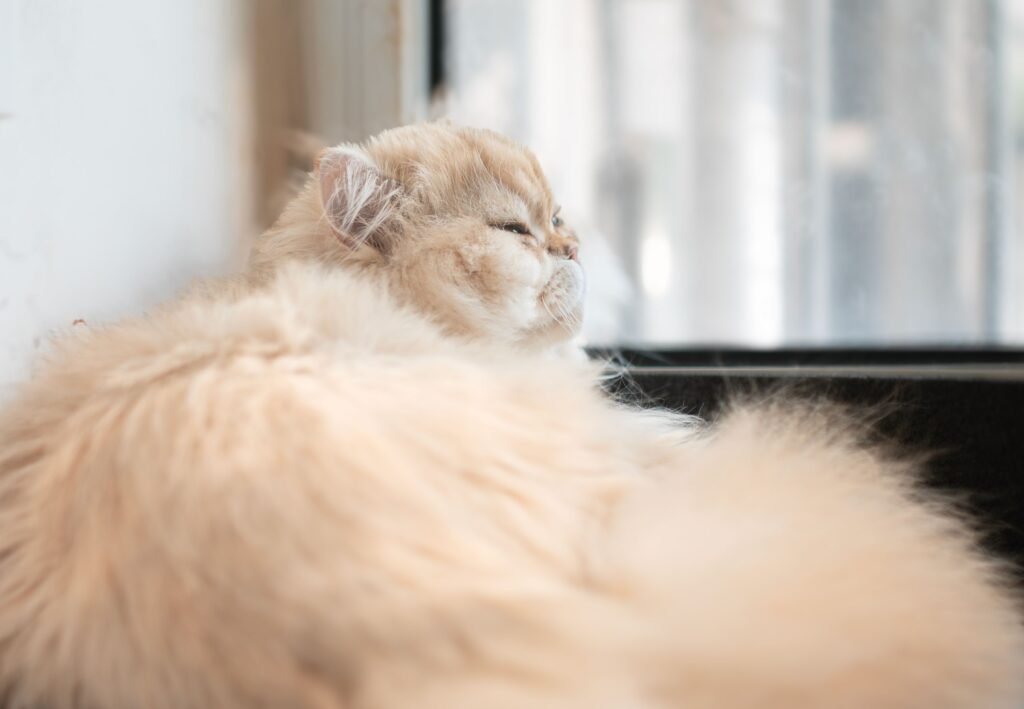
Your cat is sleeping nearby as you sit down to unwind, but something about its breathing seems off. Compared to the quiet, nearly undetectable breathing you usually notice, it seems harder and faster. Your stomach drops because of that mismatch, and you should follow your gut. As a survival tactic from their wild ancestors, cats are adept at concealing disease. Therefore, the issue is typically genuine and severe by the time breathing difficulties become apparent.
Cats typically do not breathe heavily at rest. Healthy cats seldom ever pant to cool themselves, while dogs do. A peaceful cat closes its lips and breathes softly through its nose. So wheezing, open-mouth breathing, or noticeable exertion at rest can indicate something is wrong.
Most of the time, PetMD treats breathing problems in cats as medical emergencies. Fortunately, you don’t have to feel powerless. You can act quickly once you understand what is typical, what warning signs are, and what causes them. This guide is designed to be your one-stop shop. Without visiting a dozen other websites, you should be able to locate what you’re looking for here.
What Normal Cat Breathing Looks Like
Understanding what healthy breathing looks like helps you identify a problem. A precise baseline matters because the change is often imperceptible at first. A cat that is asleep or at rest typically breathes 15 to 30 times per minute. The lower end, between 16 and 25, is where most genuinely laid-back cats settle.
A single complete cycle is one breath. This means that as the cat breathes in, its chest rises, and when it breathes out, it falls.
Small, simple, and fluid movements are ideal. You can hardly hear it, and the lips remain shut. A cat’s heart rate typically fluctuates somewhat throughout the day. Heat, activity, tension, and purring can cause kittens to breathe more quickly than adults for a brief period.
The resting rate, measured while your cat is relaxed or asleep, matters most. An increasing resting rate is such a helpful early signal because that number should remain relatively constant from day to day. A resting rate that remains above 30 is a warning sign, according to VCA Animal Hospitals. A complete emergency is indicated by a rate above 40 or rapid breathing, along with additional warning signs.
How to Count Your Cat’s Breaths at Home
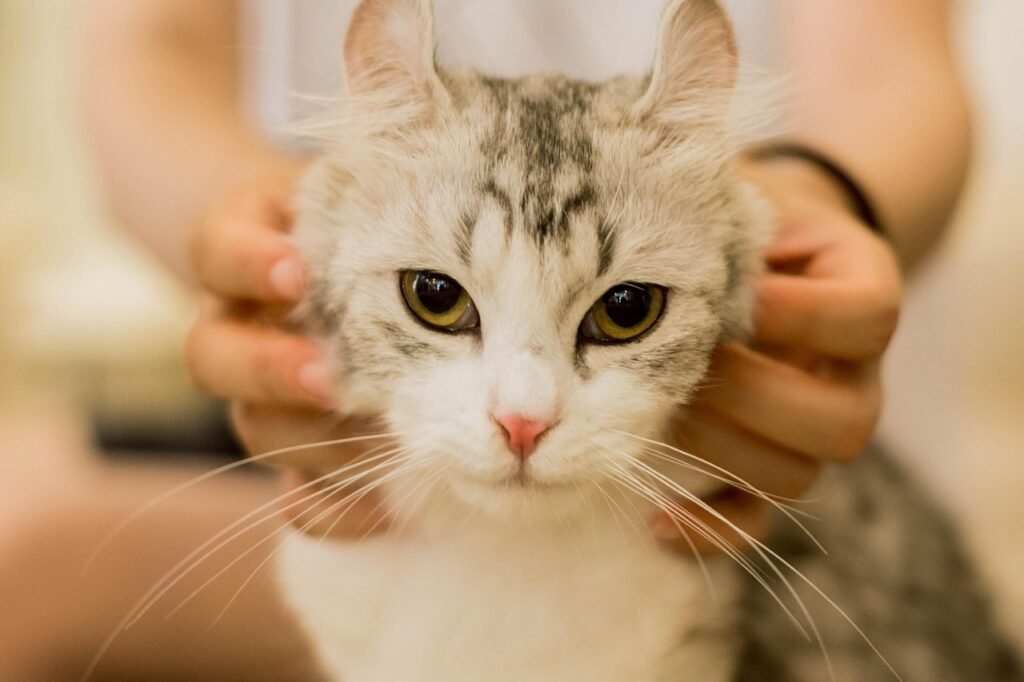
It only takes a minute to learn how to count your cat’s respiratory rate. Avoid purring, playing, or dreaming when your cat is sleeping or calm, as these activities increase the count. Observe the rise and fall of the side of the belly or the chest.
Next, apply this technique:
- Each complete rise and fall should be counted as a single breath.
- After 30 seconds of counting, multiply the result by two.
- For greater accuracy, count for a full sixty seconds.
- So that you can compare later, write down the number.
Make a quick phone video and expect it to be played back if your cat won’t stay still. Counting a wiggling cat in real time is much harder. To find your cat’s baseline, do this once a day for about a week. Any significant ascent will immediately stand out once you understand that baseline. For cats with a cardiac condition, this method is very effective. Even days before your cat becomes ill, a consistent rise may indicate fluid accumulation.
Fast Breathing vs. Labored Breathing
Understanding the distinction between rapid and difficult breathing is helpful. They may indicate many issues, and your veterinarian will want a precise explanation. Tachypnea is the term for rapid breathing. Simply put, your cat breathes too quickly and shallowly because they take too many breaths each minute.
Low oxygen, fever, pain, stress, or early heart or lung illness can all cause tachypnea. When used alone, it means “too fast,” not necessarily “in distress.” Dyspnea, or labored breathing, is more concerning. You can tell your cat is trying to move air.
You may see heaving sides, an open mouth, dilated nostrils, or a pumping belly.
Some cats also have trouble breathing while lying down, so they sit up straight with their elbows pushed out and their necks extended. That defensive, hunched position often indicates a cat struggling to breathe. Generally, the urgency increases with how much effort it takes and how strange the posture is.
Why Heavy Breathing at Rest Is So Serious
Because sick animals are easy pickings in the wild, cats have evolved to conceal weakness. That impulse remains in your house cat, and it will conceal illness as long as it can.
This is why obvious breathing difficulties are so concerning. It typically indicates that your cat has been struggling in silence for some time and can no longer conceal it.
There’s also a physical explanation. Cats have very little reserve when anything goes wrong since they are designed to breathe through their noses and operate in short spurts.
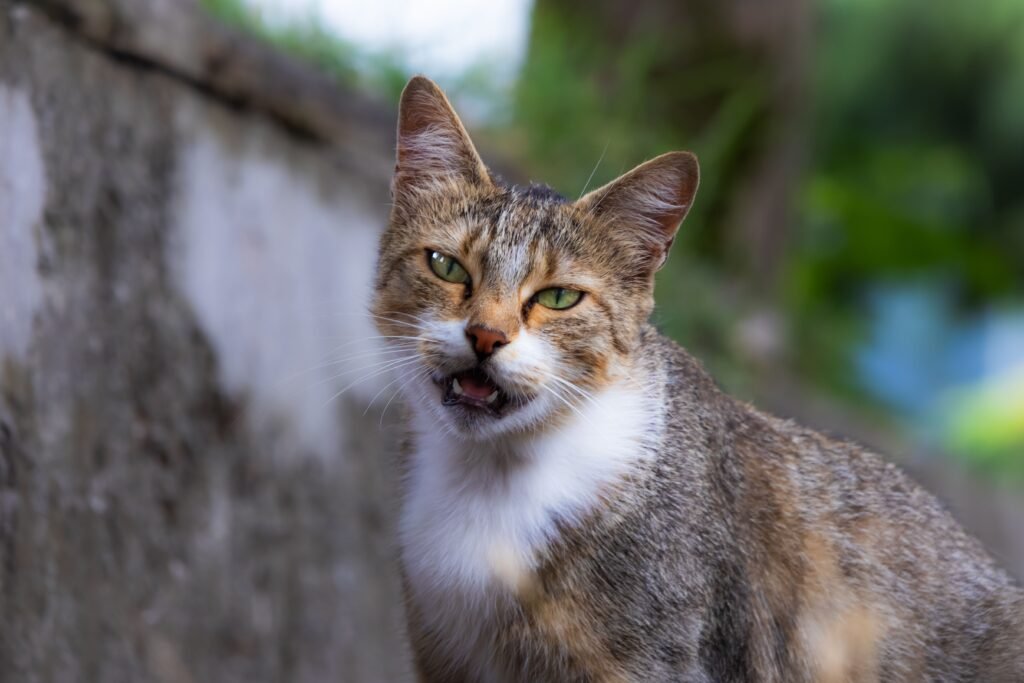
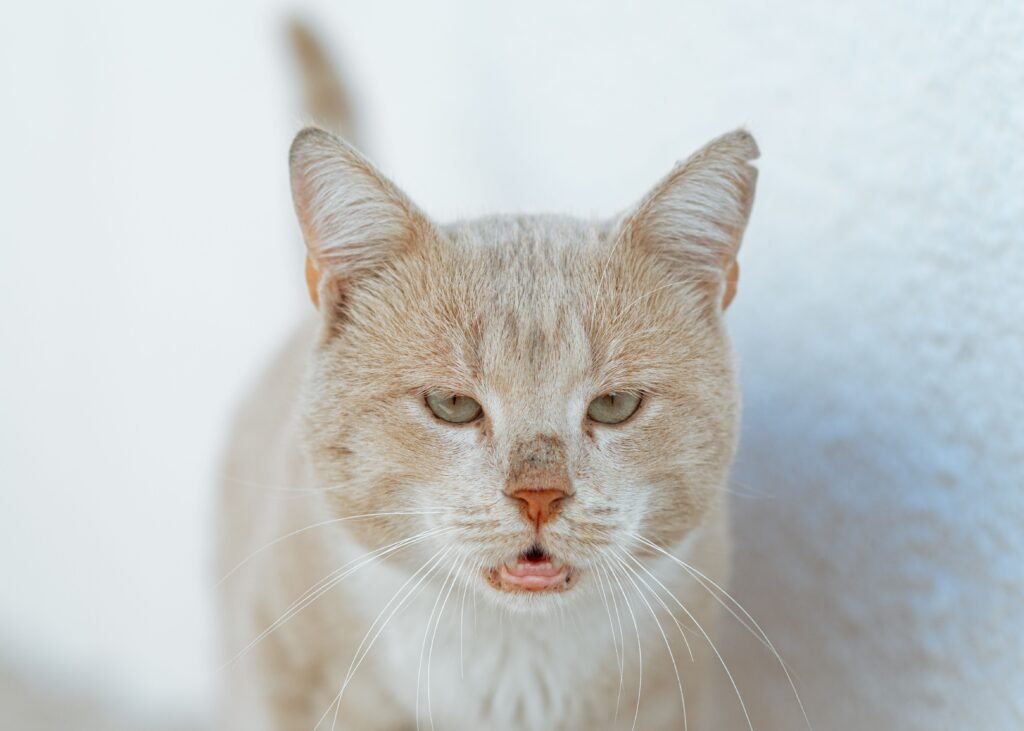
One of the loudest warning signs in feline medicine is open-mouth breathing in a sleeping cat. Cats use it only when they genuinely need oxygen. A cat with a failing heart or lungs can crash in minutes if it tips over the brink. This is why you should never ignore this symptom.
Common Causes of Heavy Breathing in Cats
There is almost always a legitimate reason for heavy breathing at rest, and most require veterinary attention. The problem is that, from the outside, these conditions can look very similar.
The most frequent offenders are listed below, along with their unique characteristics. Only a veterinarian can definitively distinguish between them.
Feline Asthma
Asthma is one of the most common breathing issues in cats. It is a chronic inflammatory condition affecting the lower respiratory tract. During a flare, the airways constrict, swell, and produce mucus. As a result, it becomes difficult to force air out.
When a cat has an asthma attack, it frequently crouches low, stretches its neck, and wheezes. It can also cough like a hairball that never comes up. Dust, smoking, perfume, air fresheners, pollen, and dusty litter are common triggers. Asthma appears to affect Siamese cats more often than other breeds.
Although there is no cure for asthma, it can be effectively treated. Veterinarians employ inhalers to clear the airways and medications to reduce inflammation, frequently with a cat spacer mask.
However, a serious attack can quickly become an emergency. If a cat is truly in distress, consult a veterinarian immediately rather than waiting at home.
Heart Disease and Heart Failure
One major and frequently undetected cause is heart disease. Hypertrophic cardiomyopathy, or HCM, is the most common type in cats.
In HCM, the heart’s muscular walls thicken. The heart finds it more difficult to relax and fill with blood as a result.
About 1 in 7 cats have HCM, which is shockingly frequent. Many cats don’t show symptoms until it is advanced, because it tends to stay silent.
When heart disease progresses to cardiac failure, problems arise. When fluid backs up into or around the lungs, breathing becomes rapid and difficult, often accompanied by weakness or coughing.
Blood clots within the heart might also result from HCM. It is a real emergency if a clot breaks free and lodges in the rear legs, causing abrupt, excruciating paralysis.
Veterinarians use echocardiography, or a heart ultrasound, to confirm heart disease. Veterinarians can also detect it with a blood test called NT-proBNP.
Veterinarians use furosemide and other water pills to treat heart failure by clearing fluid. To reduce the risk of a clot, cats may also receive additional heart medications and a blood thinner.
Fluid Around the Lungs (Pleural Effusion)
Sometimes, the issue is outside the lungs rather than inside them. Pleural effusion is the term for fluid accumulation in that area.
The fluid prevents the lungs from expanding by squeezing them.
As a result, your cat breathes quickly, shallowly, and laboriously.
Many of these cats refuse to lie down and instead sit up straight. Breathing becomes more difficult when you lie flat.
The fluid may consist of various substances. It could be milky lymph fluid, pus from a chest infection, watery fluid from heart failure, or fluid from cancer.
Pleural effusion is one of the most common breathing emergencies in cats. After draining it with a needle, which can provide relief within minutes, the veterinarian tests the fluid to determine the cause.
Respiratory Infections
A cat may also breathe heavily due to an airway infection. Most start in the upper airway as a virus. The two most common viruses are feline herpesvirus and calicivirus. They cause the classic cat cold, with sneezing, congestion, and noisy breathing.
A bacterial infection often piles on and makes things worse. If it reaches the lungs, it can become pneumonia, which is far more serious. Kittens, senior cats, and shelter cats are the most vulnerable. Crowded homes raise the risk too.
Mild cases sometimes improve with time and supportive care. But heavy breathing or a truly sick cat needs a vet, and bacterial infections usually need antibiotics.
Heartworm Disease
Many owners are shocked that cats can get heartworms. It only takes one bite from an infected mosquito. Even immature worms can inflame the lungs and their blood vessels. That can cause coughing, wheezing, and sudden breathing trouble.
The hard part is the treatment. There is no safe cure for heartworm in cats, because the drug used in dogs is too dangerous for them.
So care is limited to supporting the cat and easing symptoms. That is why prevention matters so much. A simple monthly preventive stops heartworm before it can start. Indoor cats need it too, since mosquitoes easily get inside.
Anemia
Anemia means your cat has too few red blood cells. Since those cells carry oxygen, a shortage leaves the body starved for it.
To make up for it, the cat breathes faster, and the heart beats faster. The cat may also tire easily and seem weak.
A key clue is pale or even white gums instead of healthy pink. You can check that color change easily at home. Anemia has many causes. These include heavy flea loss, feline leukemia virus, tick-borne parasites, kidney disease, and poisons like onion, garlic, or the painkiller acetaminophen.
Because the causes vary so much, anemia always needs blood tests. Severe cases may necessitate a blood transfusion to stabilize the cat.
Other Causes to Know
Several other problems can drive heavy breathing. Any of them can turn into an emergency. Trauma is a huge one. A fall, a struggle, or a car accident might bruise the lungs, rip the diaphragm, or let air seep into the chest. Growths are another. Tumors like lymphoma can form in the lungs or chest and crowd out the area for air.
A few more to bear in mind:
- Something inhaled and trapped in the airway.
- An overactive thyroid speeding up the body.
- Extra weight compressing the chest and heart.
- Pain, high temperature, or great fear.
Heatstroke and poisoning can also induce rapid respiratory problems. If the cause is unclear, treat it as urgent.
Emergency Warning Signs You Should Never Ignore
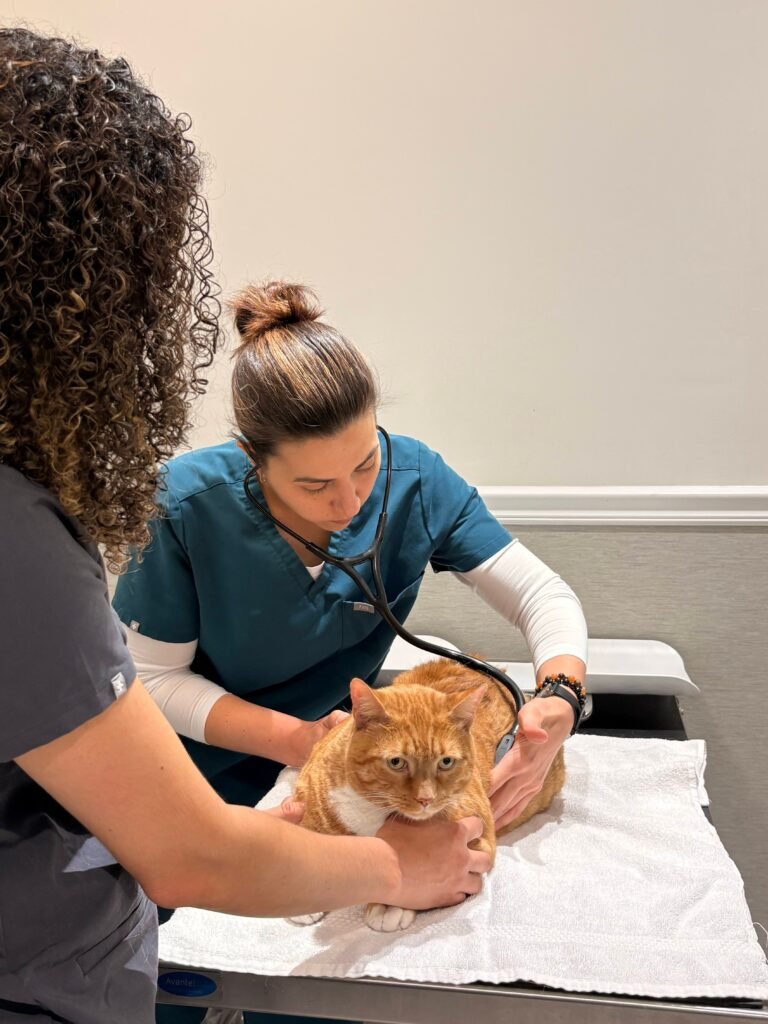
Some symptoms imply the situation is already critical. Do not wait to see if they pass.
See an emergency veterinarian immediately if you observe any of the following:
- panting or open-mouth breathing while at rest.
- Gums might be blue, gray, purple, or extremely light.
- Breathing very quickly, more than 40 times per minute.
- Collapse, severe weakness, or disorientation.
- A hunched cat that refuses to lie down, neck out.
Many owners also overlook a more subtle emergency sign. A cat may be hiding extreme sorrow if it suddenly hides, becomes motionless, and stops eating.
Above all, give a struggling cat as little assistance as you can. A cat that is already struggling can experience complete respiratory collapse due to the stress of being chased or grabbed.
How to Check Your Cat’s Gum Color
A quick indicator of your cat’s oxygen intake is the color of their gums. You can check it in a matter of seconds.
Gently lift your cat’s lip to see the gums above the teeth. A healthy cat’s gums are bubble-gum pink and juicy.
Other hues are cautionary:
- White or pale gums frequently indicate shock or anemia.
- Blue or purple gums indicate dangerously low oxygen levels.
- Yellow gums may indicate a liver issue.
- Brick-red gums may indicate heat sickness or shock.
A fast refill test is another option. Briefly press a fingertip against the pink gum, then lift it and watch the color return.
The pink returns in roughly two seconds in a healthy cat. Another red flag is a tardy return, which indicates weak circulation.
It’s an emergency if the color is pale, blue, or purple. When you call ahead, tell the clinic your gum color so they can prepare.
Is It an Emergency, or Can It Wait?
Not all respiratory changes are life-threatening. However, you should never take a chance with breathing.
For some indicators, treat it as an urgent emergency, day or night. These include collapse, blue or pale gums, open-mouth breathing, or a resting heart rate greater than 40.
For a less severe warning, schedule a visit for the same day or the following day. This means a resting rate that stays above 30 while your cat continues to eat, walk, and behave normally.Watching for a few minutes at a time is usually acceptable.
When your cat plays, feels tension, rides in a vehicle, or is on a hot day, they will breathe quickly before calming down.
Call your veterinarian if it doesn’t go away or if you’re not sure. Let them help you decide once you describe what you observe.
What to Do Right Now
First, stay calm if your cat is breathing hard in front of you. Your anxiety can worsen your respiration, and cats feed on your energy. Speak softly and move slowly. Let your cat sit in whatever position it finds most comfortable, even if it means hunching over.
Next, swiftly and carefully follow these steps:
- Take your cat to a cool, airy, peaceful room.
- Gently place it in a roomy, soft, and open carrier.
- Call an emergency facility or your veterinarian immediately.
- Before you come, ask them to get the oxygen ready.
- Go there quickly and calmly.
To examine your cat, do not turn it over or restrain it. Don’t put it in a small, closed box because both add stress that it cannot handle. Never administer medication by yourself. Let the veterinarian make the final decision because human painkillers and outdated medicines can be fatal to cats.
How Vets Diagnose the Cause
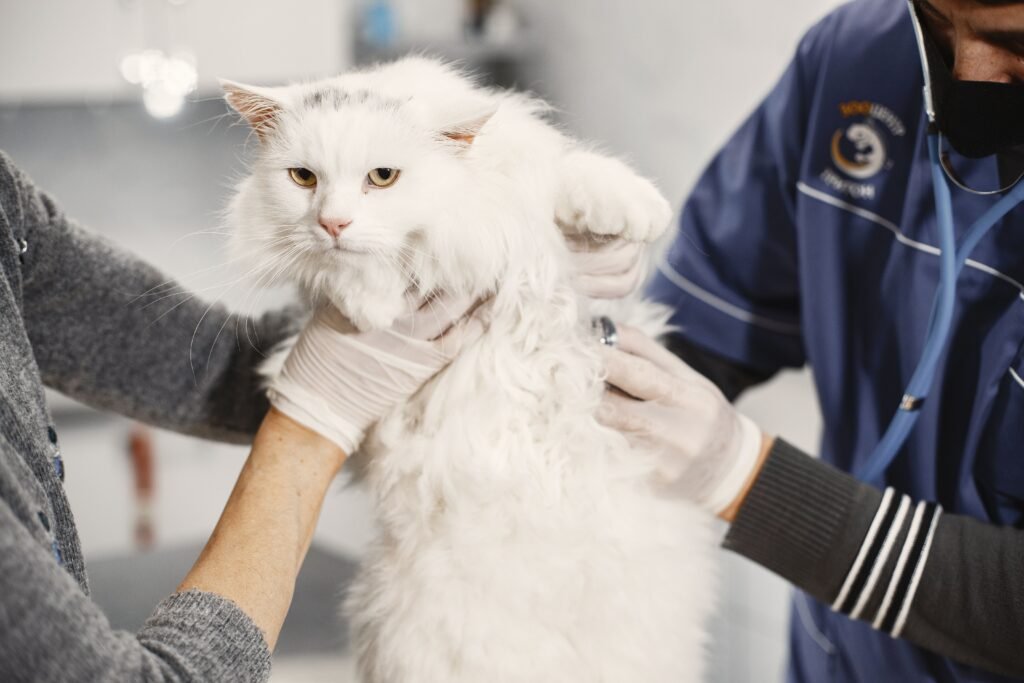
The veterinarian at the clinic works quickly but carefully. Stress alone can harm a cat that can’t breathe.
An oxygen cage is frequently the initial step. Before handling or testing, this allows the cat to stabilize.
The veterinarian then uses a stethoscope to listen to the heart and lungs. Crackles or wheezes can indicate lung problems, while muffled sounds may indicate fluid.
Imaging then does the heavy lifting. Chest X-rays show the heart, lungs, and any masses or trapped fluid.
An echo, often known as a cardiac ultrasound, reveals how well the heart is functioning. It is the most accurate way to diagnose HCM.
Blood tests look for organ issues, infections, and anemia. Heart strain can also be detected by a test called NT-proBNP.
The veterinarian drains a sample if fluid surrounds the lungs. This releases the pressure and makes the cause clear.
How Vets Treat It
The reason always determines the course of treatment. However, the initial goal is the same for all cats: more oxygen and less breathing effort. The most important things are rest and oxygen. Until a stressed cat is stable, handle it as little as possible.
The veterinarian uses a needle to remove any fluid that has accumulated around the lungs. In just a few minutes, this can make a gasping cat comfortable.
Furosemide and other water tablets treat heart failure by clearing fluid. Cats may also receive a blood thinner and other heart medications. Steroids and airway-opening inhalers treat asthma. Antibiotics are necessary for pneumonia and bacterial infections.
A blood transfusion may be necessary for severe anemia. Your veterinarian will tailor the plan to your cat’s specific diagnosis.
Caring for Your Cat After Diagnosis
The story doesn’t end with a diagnosis. Fortunately, many respiratory disorders can be controlled for months or even years.
The most important thing is taking medication consistently. Asthma and heart medications are only effective when taken as directed.
Your other superpower is home monitoring.
Keep monitoring your cat’s resting respiratory rate, as a gradual rise often alerts you first. Give your veterinarian those numbers, and save each follow-up exam. During these appointments, your veterinarian can adjust the medication before a minor change becomes an emergency. A healthy weight, a regular schedule, and a peaceful home are all beneficial. For a cat with heart or lung disease, they make daily life easier.
How to Lower Your Cat’s Risk
Not every issue can be avoided. However, you can improve the odds with a few consistent habits.
Pay attention to these fundamentals:
- Take your cat to the vet regularly.
- Check for thyroid and heart conditions in elderly cats.
- Keep your cat a healthy, trim weight.
- Use unscented, dust-free kitty litter.
- Keep up with immunizations and parasite avoidance.
Air quality is more important than most people realize. Keep smoke out of your house and keep powerful cleansers and sprays away from your cat. A peaceful home is also beneficial. A less stressed cat breathes more steadily and is generally healthier.
Frequently Asked Questions
Is it normal for a cat to breathe fast while sleeping?
No, it isn’t. A cat should breathe less than thirty times per minute while it is napping. If the rate continues to rise, it may be an early indication of heart failure and needs to be monitored right away.
Can stress cause heavy breathing in cats?
Yes, for a brief period, worry or fear can make breathing accelerate. Once your cat settles down, it should pass within a few minutes. Contact your veterinarian if it persists longer.
What do blue or pale gums mean?
They indicate that your cat’s blood or oxygen levels are dangerously low. Your cat needs to see a veterinarian right now because this is a real emergency.
Can I give my cat anything at home to help it breathe?
No. Since many human and pet medications are hazardous here, you should never administer medication on your own. Call your veterinarian, keep your cat calm, and relocate it to a quiet area.
Is fast breathing after playing or on a hot day normal?
Yes, for a little bit. After a few minutes of relaxation, a healthy cat’s breathing should return to normal. Breathing quickly at rest is abnormal.
Do indoor cats get breathing problems too?
Of course. Indoor cats are susceptible to infections, heart problems, asthma, and even heartworm. Some of them can be triggered indoors by things like smoke and sprays.
Can being overweight cause breathing trouble?
Although it rarely happens on its own, being overweight exacerbates the situation. A lean cat can breathe more easily, since being overweight stresses the heart and lungs.
How much does emergency breathing treatment cost?
Costs vary widely depending on the clinic, tests, and cause. Never put off emergency care because of cost; instead, ask your veterinarian for an estimate as soon as possible.
Conclusion
A resting cat’s heavy breathing is a genuine signal, not a minor oddity. It typically indicates an issue with the heart, lungs, or blood, and many of those worsen quickly. Asthma, infections, heart problems, chest fluid, heartworm, and anemia are among the reasons. Only a veterinarian can determine the real cause because they can look so similar.
While your cat is still healthy, the most effective thing you can do begins today. Find its typical resting breathing rate, then watch for a number approaching 30. And prioritize one rule over all others. See a veterinarian immediately if you have pale, blue, or purple gums or open-mouth breathing. Quick action is what saves lives when it comes to a cat’s breathing.