
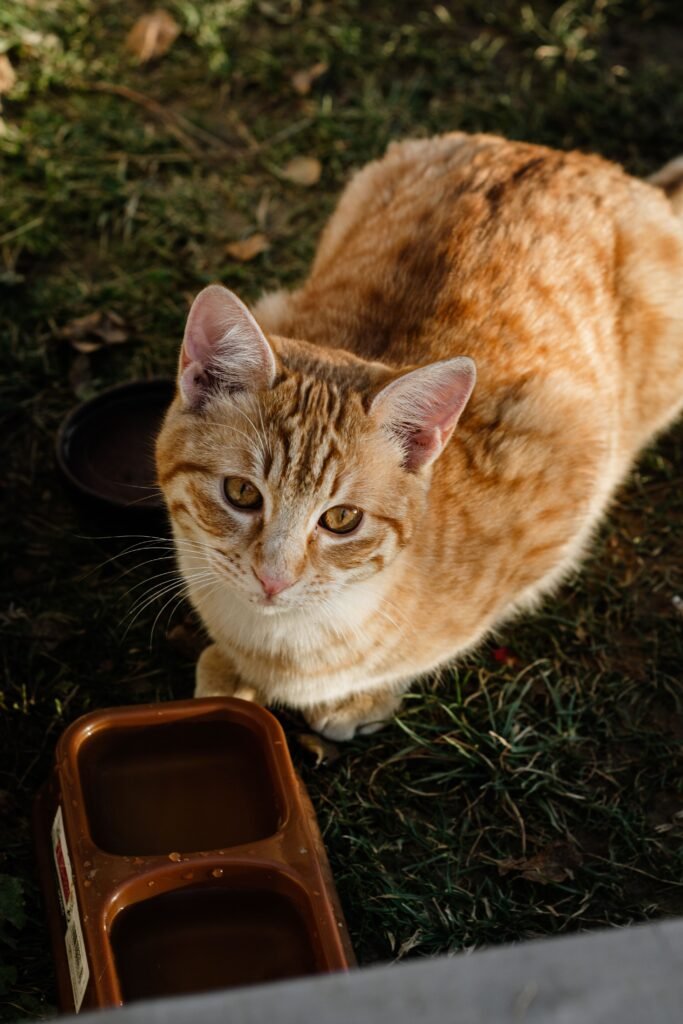
It’s a question almost every cat owner eventually asks. You scrape the last of the can into the bowl, flick off the light, and somewhere between the hallway and your pillow, a small worry starts up: will that food still be fine by morning?
The honest answer isn’t a clean yes or no. Whether you can leave wet cat food out overnight depends on how warm your home runs, how many hours pass, and what “safe” really means once bacteria get involved. Here’s what the food-safety science and the vets actually say.
The Short Answer
Generally, no. Wet cat food shouldn’t be left out overnight. The moment a can or pouch is opened, the food meets air, warmth, and whatever bacteria are floating around your kitchen, and the clock starts ticking faster than most people realize.
Canned food is a perfect target. It’s high in moisture and packed with protein, which is exactly the environment bacteria love. Leave it sitting overnight, and you’re well past the point where it’s safe to serve.
That said, “overnight” isn’t the same risk in every house. A warm kitchen and a cool, air-conditioned bedroom don’t spoil food at the same speed. So before you write off that half-eaten bowl completely, look at the one factor that changes everything: temperature.
How Your Home’s Temperature Changes the Timeline
Bacteria grow fastest in warmth, so the temperature of the room your cat eats in decides how quickly a harmless bowl turns into a risky one. Here’s how the same can of food behaves in three very different homes.
Warm or Hot Rooms (80°F and Up)
Heat is the quickest way to turn a bowl of wet food into a problem. Once a room climbs into the 80s or 90s, bacteria multiply quickly, and food can become unsafe in as little as one hour, especially if the air is humid.
Summer nights without air conditioning, a bowl sitting near a sunny window, or a kitchen still warm from the day’s cooking all speed this up. In conditions like these, there’s simply no safe overnight window. Anything served before bed should be gone from the bowl long before you turn in.
Normal Room Temperature (68–75°F)
Most homes sit somewhere in this range, and it still falls squarely inside the zone where bacteria thrive. At a typical indoor temperature, wet food is best treated as risky after about two hours, no matter how clean the kitchen looks.
An eight-hour stretch overnight isn’t remotely close to safe here, even if the food still looks perfectly normal by morning. This is the temperature most households actually live at, which is exactly why the overnight habit carries more risk than people expect.
Cool or Air-Conditioned Rooms (Low 60s)
A consistently cool home does slow bacterial growth compared to a warm one. That buys a little extra time, but it doesn’t stop the process or make the food safe for a full night. Bacteria in cooler air are just more patient. They keep multiplying, only at a gentler pace. Even in the coolest setting a normal home can offer, a whole night still pushes well past any reasonable safety window.
So How Long Can Wet Cat Food Actually Sit Out?
The widely used rule for wet cat food is about two hours at normal room temperature, dropping to roughly one hour once the room passes 90°F. Major pet-food brands agree: Purina advises tossing any wet food that’s been in the bowl for more than an hour.
This mirrors the USDA’s food-safety “Danger Zone,” the temperature range between 40°F and 140°F where bacteria grow fastest. Within that zone, the USDA notes, bacteria can double in number in as little as 20 minutes. The agency’s guidance for perishable food is no more than two hours out, or one hour when it’s above 90°F.
An overnight stretch usually runs six to ten hours. That blows straight past the limit no matter which temperature category your home falls into. Feeding the right amount helps here too: serving a portion your cat will finish in one sitting leaves less behind to worry about once the meal is over.
Does Covering the Bowl Make It Safe?
It’s a tempting workaround, but covering the bowl doesn’t buy you the night. A lid or a layer of wrap slows moisture loss and keeps the surface from drying out, which is useful. What it doesn’t do is stop bacteria from multiplying underneath.
Bacterial growth depends on temperature and time, not on whether air can reach the surface. A covered bowl left out overnight is still sitting in the same room, at the same temperature, for the same number of hours, so the clock runs exactly as it would if it were uncovered.
Covering is genuinely helpful for short-term storage in the fridge. It just isn’t a way to leave food out past the safe window.
Does It Even Stay Good Overnight?
Safety aside, wet food left out all night rarely stays appetizing anyway. The texture changes the moment air hits it. By morning, the surface often looks dry, cracked, or lightly crusted, while whatever’s underneath can go watery or oddly separated. The smell shifts too. A can that smelled fine at bedtime can carry a sour, off odor by sunrise, even when nothing looks obviously wrong.
Cats notice all of this long before we do. A sensitive nose is often the reason a cat flat-out refuses food that’s been sitting too long, even when it hasn’t visibly spoiled. If your cat walks away from a bowl they’d normally devour, that’s usually your answer.
What Happens If Your Cat Eats It?
If your cat does polish off food that’s been sitting out all night, the main concern is bacteria like Salmonella and E. coli, which thrive in that same danger zone. Not every cat will get sick, but it’s worth knowing what to watch for.
Milder cases often show up as vomiting, diarrhea, or a dip in appetite within a few hours of eating the spoiled portion. According to Catster’s veterinary guidance, common signs of salmonella in cats include fever, lethargy, poor appetite, vomiting, and diarrhea.
More serious reactions can include ongoing lethargy, dehydration, or repeated vomiting. Those signs call for a vet visit rather than waiting it out at home. If your cat seems genuinely uncomfortable, keeps gagging, or refuses food after eating something left out too long, check in with your vet instead of assuming it’ll pass on its own.
How to Store Leftover Wet Food the Right Way

If your cat only eats half the can, the fix is simple: refrigerate the rest right away rather than leaving it in the bowl. Cold slows bacterial growth to a crawl, which is exactly what you want.
Cover the leftovers (a reusable can lid or a bit of wrap both work) and get them into the fridge promptly. PetMD recommends keeping open wet food refrigerated and airtight, and discarding it after about three days to stay ahead of bacteria or mold. A few quick habits that help:
- Buy smaller cans or pouches so there’s less left over in the first place.
- Refrigerate any unused portion within the safe window, not hours later.
- Label the can with the date you opened it so three days doesn’t quietly become six.
- Let chilled food warm to room temperature before serving, since most cats turn their noses up at cold food straight from the fridge.
- Stored this way, a single can can stretch across a couple of meals safely, which also makes wet food a lot more economical.
The Bottom Line
Every factor points the same way. Warm rooms, cool rooms, covered bowls, long overnight stretches- they all still leave wet food outside its safe window. Two hours is the practical limit in most homes, and covering the bowl only slows drying, not bacteria.
Quality fades just as fast as safety does, and a dried-out or sour-smelling bowl is rarely one your cat will want to finish anyway. So the overnight bowl tends to lose on both counts.
The better approach isn’t complicated: serve a portion your cat will actually finish, feed a bit more often if needed, and refrigerate whatever’s left instead of leaving one big serving out all night. Fresh, smaller portions served close to mealtime will always beat convenience when it comes to keeping your cat both healthy and genuinely interested in eating.
FAQs
Can I leave wet cat food out overnight if my house is cold?
A cool home slows bacterial growth, but it doesn’t stop it. Even in the low 60s, leaving it out overnight still goes past the safe window, so it’s best to refrigerate leftovers rather than risk it.
How long can wet cat food sit out before it goes bad?
About two hours at normal room temperature, and closer to one hour once the room is above 90°F. After that, it’s safest to toss it or refrigerate any untouched portion.
Can cats get sick from eating wet food left out overnight?
Yes. Spoiled food can expose them to bacteria like Salmonella and E. coli, which may cause vomiting, diarrhea, lethargy, or loss of appetite. Persistent or severe symptoms are a reason to call your vet.
Does covering the bowl let it stay out longer?
No. Covering slows the food from drying out, but it doesn’t slow bacteria, which grow based on temperature and time. A covered bowl left out overnight is no safer than an uncovered one.
How long does wet cat food last in the fridge?
Most opened wet food keeps for about three days when it’s covered and refrigerated. Label the can with the date you opened it, and give it a smell check before serving.
My cat didn’t finish their food. What should I do?
If it’s been out less than two hours, cover it and refrigerate the rest. If it’s been sitting longer than that, especially in a warm room, throw it out and serve a fresh, smaller portion next time.