
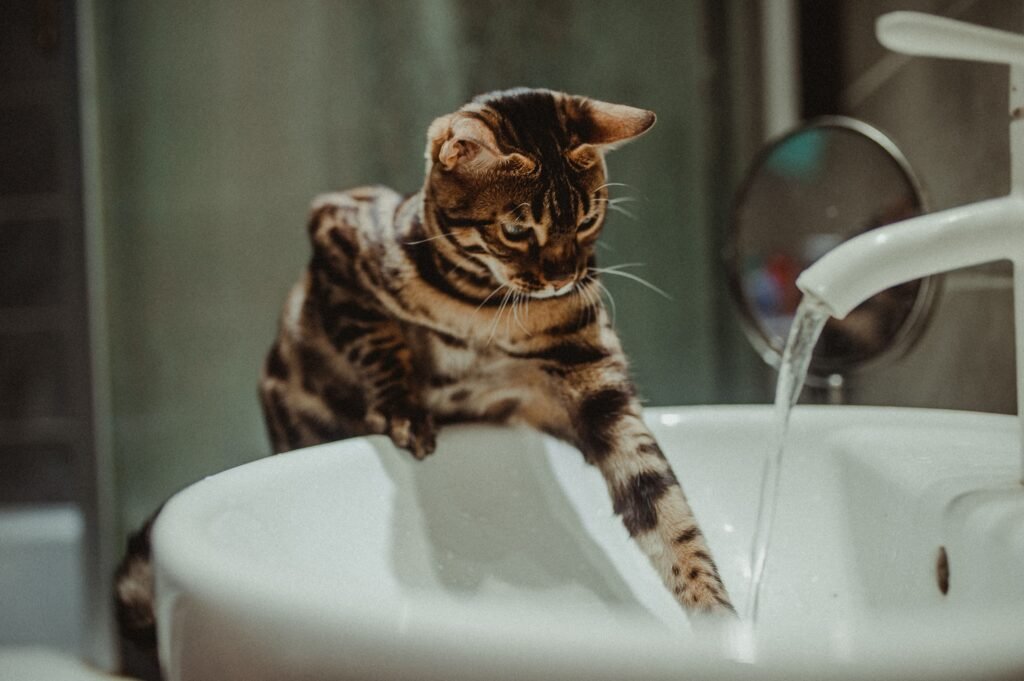
The water-bowl paw dip is one of the most perplexing and prevalent cat behaviors. When you fill a new bowl, your cat doesn’t just drink; instead, she reaches in with a paw, taps the surface, splashes a little, and occasionally sucks the water directly off her foot as though that were the obvious method.
It appears peculiar enough for any owner to question whether something is amiss. The good news is that nothing is nearly always the case. Cats use their incredibly sensitive whiskers and paws to perceive the world, so dipping a paw is often just a way to inspect the water before taking a sip.
Like many feline peculiarities, it may seem strange at first, but once you understand why, it makes perfect sense. Additionally, in some circumstances, the behavior merits closer examination, typically because it relates to your cat’s actual alcohol consumption.
This tutorial explains why it’s common for your cat to put her paws in the water bowl, when to pay more attention, and how to make little adjustments to keep her comfortable and hydrated.
Is It Normal for a Cat to Put Her Paws in the Water Bowl?
Pawing at the water is very typical for most cats. It is one of the many peculiar personal behaviors that distinguish each cat as a unique animal. In fact, organizations like the ASPCA view differences in cats’ interactions with water—such as pawing, sniffing, and favoring particular sources, as typical individual behavior.
If she has done this since she was a kitten and is otherwise healthy and drinking well, it’s most likely just her style.
Only in two situations does the behavior need further investigation: either it occurs out of nowhere or intensifies in a cat that has never engaged in it, or it coexists with other abnormalities such as excessive drinking. Later, we’ll address both.
Why Does My Cat Put Her Paws in the Water Bowl?
A single factor rarely causes this behavior. It usually comes down to a mix of instinct, physical comfort, and personality, and most cats have more than one of these at once.
According to Catster’s vet-reviewed guidelines, several common factors typically cause it. These are the most important ones.
Avoiding Whisker Discomfort
The finely tuned sensory organs in a cat’s whiskers are more than hairs; they contain nerve endings that constantly send information to the brain. Veterinarians frequently refer to the overload that occurs when those whiskers scrape against the sides of a deep or narrow bowl as “whisker fatigue.
A cat may use her paw to pick up water and lick it off rather than sticking her face in the dish. One of the simplest things to fix is a bowl that is too small for her whisker span.
She Cannot See the Water Clearly.
Cats find it very difficult to see still water. They have little to lock onto on a level, clear water surface because their eyes aren’t designed to focus well on objects directly in front of their noses.
Before lowering her head, a cat taps the water to produce ripples that show the precise location of the surface. This is particularly common in elderly cats, whose vision gradually deteriorates with age; so if a senior cat starts doing it out of the blue, a casual veterinary consultation is warranted.
Instinct and a Love of Moving Water
A house cat nonetheless harbors the instincts of a wild hunter deep down. Moving water from a stream is safer and fresher than still or stagnant water, which might include bacteria, algae, and parasites.
Because of this ancestral wiring, many cats are attracted to running fountains and taps, and a still bowl may seem a little suspicious. Part of the purpose of pawing the surface is to make the water appear more trustworthy and alive.
Running a Quick Taste and Safety Check
Dipping and then licking the paw is a similar practice. Before properly drinking, some cats use this as a small quality-control test. A cautious cat can check the temperature by dipping her paw in the water and then licking it.
Cats that are particularly cautious or nervous are more likely to do this; it is just their watchful nature at work, not a sign they don’t trust you.
Pure Play and Curiosity
Sometimes, nothing is more profound than enjoyment. A playful cat views the ripples, splashes, and light-catching water in the kitchen as a free toy.
This is particularly true for young cats and kittens, who may develop a lifelong habit of batting at the water only for amusement. Play is usually the whole story if your cat seems content and at ease while doing it.
Marking the Bowl as Hers
There’s one more subtly intriguing explanation. Cats use the scent glands in their paw pads to imprint their unique fragrance on objects.
A cat may be claiming the water as her own by pawing at the bowl. It fits in perfectly with all the other reasons mentioned above and is a subtle kind of feline signposting.
Why Cats Are Naturally Poor Drinkers, and Why It Matters
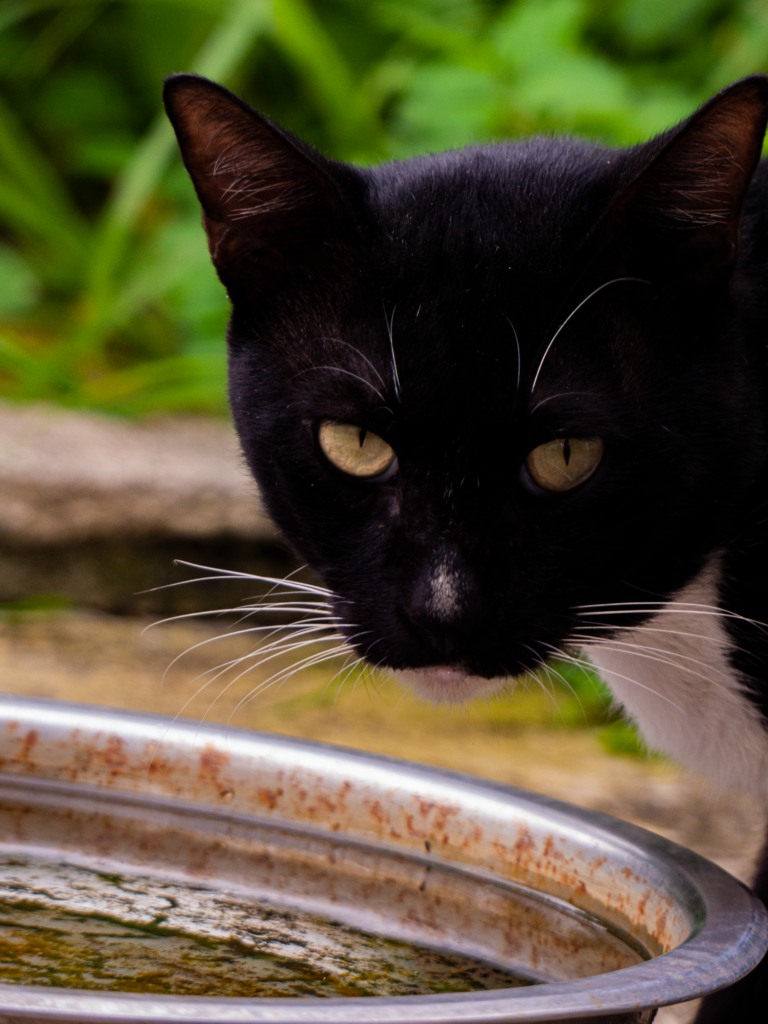
At the core of this subject is an important cat fact. Unlike dogs, cats have a naturally low thirst drive. This is a legacy of their ancestors, who lived in the desert and obtained most of their moisture from the food they ate.
This shows that moderate dehydration is common, especially in cats fed only dry food, and that many cats do not drink as much as they should. Drinking too little water over time can strain the kidneys and contribute to urinary difficulties.
Because of this, consider carefully anything that impacts your cat’s comfort level when drinking, including a bowl that encourages paw-dipping. Promoting proper hydration supports your cat’s long-term health, whether through a better bowl, a fountain, or extra wet food in the diet.
When Paw Dipping Might Signal a Problem
While this behavior is generally harmless, a few tendencies warrant attention. The context around the action is often more important than the behavior itself.
Cats may develop repetitive habits when they are understimulated, so if an indoor cat with little to do starts pawing at the water incessantly, it may signal boredom or anxiety. In that case, extra play and enrichment are often helpful.
A rapid change combined with increasing thirst is a more serious red flag. Cats who suffer from illnesses like diabetes, kidney sickness, or an overactive thyroid tend to drink substantially more than normal. If your cat suddenly drinks more, consult a veterinarian to rule out weight loss, low energy, or changes in appetite.
How to Reduce the Splashing
You don’t have to quit this behavior if it’s harmless fun. However, if your floor is constantly wet or whisker pain is the cause, a few easy changes can make a big difference.
Punishment is ineffective. Since a cat won’t associate being reprimanded with paw-dipping and the underlying cause won’t change, gentle adjustments work best.
Switch to a Whisker-Friendly Bowl
The most effective change is frequently the bowl itself. Choose a shallow, wide dish that is ideally wider than your cat’s whiskers to make sure nothing scrapes her face when she drinks.
Materials are crucial as well.
The ideal materials are stainless steel or ceramic; plastic tends to hold bacteria that can even cause feline chin acne, retain odors, and scratch easily. For this reason, animal welfare groups like the RSPCA recommend stainless steel or ceramic over plastic.
Try a Cat Water Fountain
Given that cats are drawn to flowing water, a pet fountain can be a game-changer. The constant flow not only saves your cat the trouble of making her own ripples, but it also often looks fresher and more appealing.
Many owners notice a significant decrease in paw-dipping after converting to a fountain. The moving water also encourages cats to drink more overall, promoting hydration.
Get the Water Level and Placement Right
Little additions around the bowl can also be beneficial. If you fill it halfway rather than all the way, your cat won’t have to stoop awkwardly to drink.
Where you put the water also matters. Keep it well away from the litter box and food because cats naturally avoid drinking near them. If you offer water in several places throughout the house, a reluctant drinker will have more chances to take a sip.
How Often Should You Clean the Water Bowl?
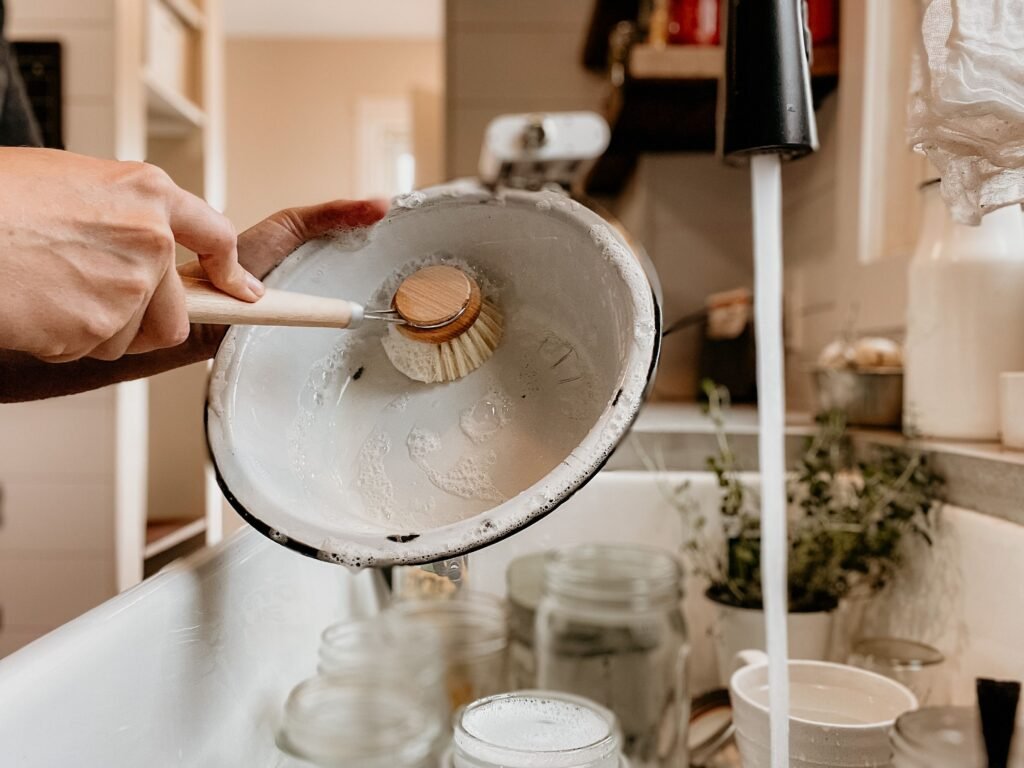
Because your cat dips her paws in the bowl, she may bring in food particles and dirt, so clean it often. Most cat owners don’t realize a dirty bowl can harbor bacteria quickly and subtly discourage cats from drinking.
Wash the bowl with warm water and a tiny bit of mild dish soap, then rinse it thoroughly. Change the water every day. Cats have an acute sense of smell, so if any soap residue remains in the dish, they may refuse it entirely.
After scraping the bowl weekly, rinse it thoroughly or soak it in a diluted vinegar solution for a deeper clean. Rotating two bowls simplifies the procedure, and ceramic or stainless steel remains cleaner between washes than plastic.
Frequently Asked Questions
Why does my cat dip her paw in the water and then lick it?
This usually comes down to comfort or caution. Before drinking, she may be checking the temperature and taking a quick taste, or she may be trying to save her sensitive whiskers from being crushed in the dish. It’s normal behavior.
Does paw dipping mean my cat dislikes her bowl?
It is possible. Because it bothers their whiskers, some cats scoop water rather than use a deep or narrow bowl. Usually, switching to a broad, shallow bowl fixes the problem quickly.
Should I stop my cat from putting her paws in the water?
Not unless it’s causing a mess or you notice whisker pain. If it’s merely play or habit, there’s no need to step in because it’s harmless.
Does the behavior make the water dirty?
In a sense, yes. Because paws can carry dirt and bacteria into the bowl, frequent water changes and thorough cleaning are essential for enthusiastic dippers.
Can a water fountain stop the pawing?
Yes, the majority of the time. Because cats enjoy moving water, a fountain gives them the flow they desire without requiring them to make ripples, and it usually lessens splashing.
Is this behavior ever a sign my cat is sick?
This behavior usually isn’t a sign of illness. However, if it begins abruptly and is accompanied by decreased energy, increased thirst, or weight loss, a veterinary examination is worthwhile.
A Quirk Worth Understanding
My cat dips her paws into the water bowl, but why? It is, for the most part, a delightful combination of instinct, whisker comfort, and simple curiosity, and there is nothing at all to worry about. Cats aren’t meant to gulp down their drink; instead, they are meant to experiment with and interact with it.
The behavior may provide useful information in the grand scheme of things. If whisker discomfort is the reason, a wide, shallow bowl or a fountain can make drinking much more pleasurable and possibly increase your cat’s intake.
Let your cat enjoy her little ritual, keep the water clean and fresh, and watch for any sudden changes in her thirst. The goal is a comfortable, well-hydrated cat, and it usually takes only a few small adjustments.
Unambiguous Text