
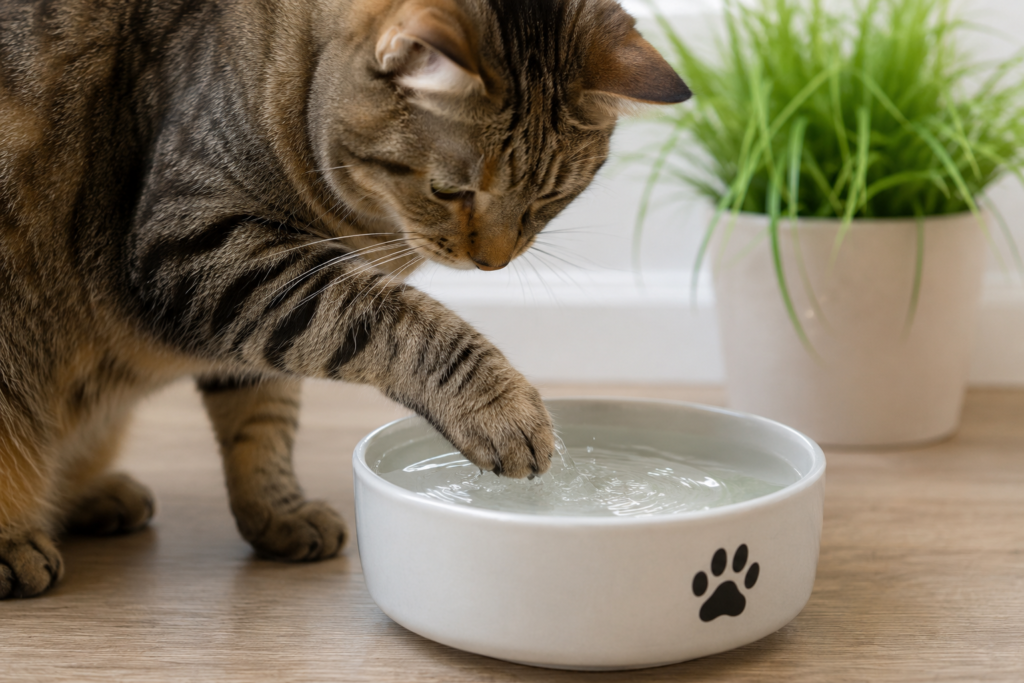
Cats do the strangest things, and dipping their paws in water is one of them. You set out a clean bowl, and instead of just drinking, your cat reaches in, splashes around, and sometimes laps water off her paw like that is totally normal. It leaves you confused, wondering if something is wrong.
The truth is, most of the time, it is completely fine. Cats have sensitive whiskers and paws that give them a lot of information about the world around them, so dipping a paw can be their way of checking what is in the dish or how deep it is.
It is one of those behaviors that looks odd but actually makes sense once you know the reason behind it.
If you ignore the cause, though, small issues like whisker pain or bowl discomfort can quietly affect how much your cat drinks.
Poor hydration in cats can lead to urinary problems and kidney stress over time, so it is worth paying attention to. According to BetterPet, whisker fatigue from a deep or narrow bowl is one of the main reasons cats avoid drinking normally.
The good news is that most causes are easy to fix with a simple bowl change or a small routine adjustment. Understanding why your cat does this is the first step to helping her stay comfortable and well-hydrated.
Why Do Cats Put Their Paws in the Water Bowl?
There is rarely just one reason behind this behavior. It is usually a mix of instinct, physical comfort, and personality. Once you understand what is driving it, the behavior starts to make a lot more sense.
Instinct and Wild Behavior
Cats are natural hunters, and in the wild, dipping their paws into water allows them to test its depth, temperature, and safety before drinking. This instinct ensures they do not accidentally fall into deep water or drink from a contaminated source. Your house cat has no such risks, but those instincts are still very much alive.
Even a perfectly clean bowl can trigger this wild testing behavior. It is not a sign of distrust, just old habits passed down through generations of cats.
Whisker Fatigue and Bowl Depth Discomfort
Cats are sensitive creatures, and a cat’s whiskers are filled with nerves that help them navigate their environment. When a cat’s whiskers constantly brush against the sides of a deep or narrow bowl, it can create discomfort or even pain, so pawing at the water could be their way of avoiding this irritating sensation.
Using a wider, shallower bowl often solves this problem quickly. If the bowl is too deep, too narrow, or placed in a corner, cats may prefer to scoop water rather than stick their heads awkwardly into the dish.
Testing Water Safety Before Drinking
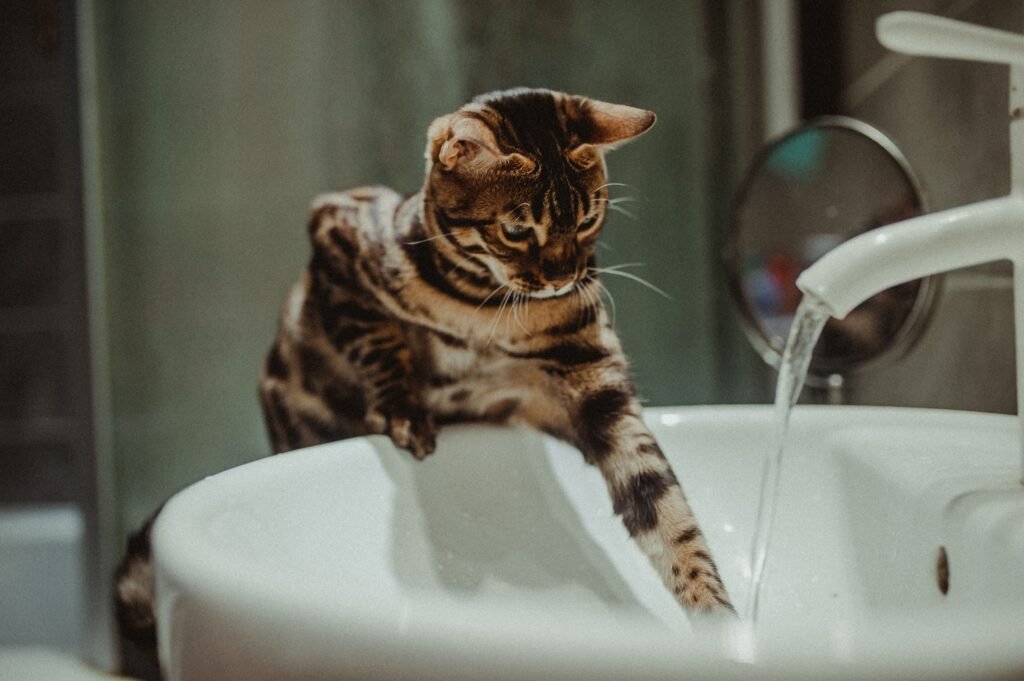
Some cats will paw the water, watch the ripples, then drink. In the wild, cats do this to make sure the water is safe, which is also why a cat will sometimes lick or sniff its paw after sticking it in the bowl. Your cat is simply running a quick safety check before committing to a sip.
This is more common in cautious or anxious cats. If your cat seems nervous around the bowl, the testing behavior is usually tied to that naturally alert personality.
Poor Eyesight and Water Surface Detection
Still water in a bowl can be very hard for cats to see. Pawing at the water creates ripples, making it easier for them to see and locate the surface. This is especially true for older cats whose vision has started to decline.
In rare cases, cats might interact with their water bowl due to age-related or health-related poor eyesight. If your senior cat has recently started doing this, a vet check is a good idea.
Playfulness and Curiosity
Sometimes, your cat just wants to play. Cats are playful creatures, and messing around with the water in the bowl might just be your cat’s way of entertaining herself. Water moves, splashes, and shimmers, which is basically a toy to an easily entertained cat.
For younger cats and kittens, the habit may start as play and gradually turn into routine. If your cat looks happy while doing it, that is usually all it is.
Why Does My Cat Paw at Your Face?
Paw dipping is not the only pawing behavior that leaves owners puzzled. Cats also tap, pat, and paw at their owners for very different reasons.
Seeking Attention or Affection
When a cat reaches out and gently touches your face, it is almost always about connection. Cats use their paws to communicate, and a soft tap on your cheek is usually their way of saying they want your attention right now. It is one of the more endearing things cats do, though it can get annoying at 3am.
If your cat does this often, it usually means they feel close to you and trust you. Responding with some gentle attention typically satisfies them and stops the pawing for a while.
Waking You Up or Asking for Food
A paw to the face is also a very deliberate wake-up call. Cats are creatures of routine, and if breakfast is five minutes late, a patient tap on your nose is their polite reminder. Some cats escalate from a tap to full-on kneading if you ignore them too long.
This behavior is very common in cats who have learned that pawing gets a response. If you want to reduce it, try keeping a consistent feeding schedule so your cat does not feel the need to beg for food.
Is This Behavior Normal or a Concern?
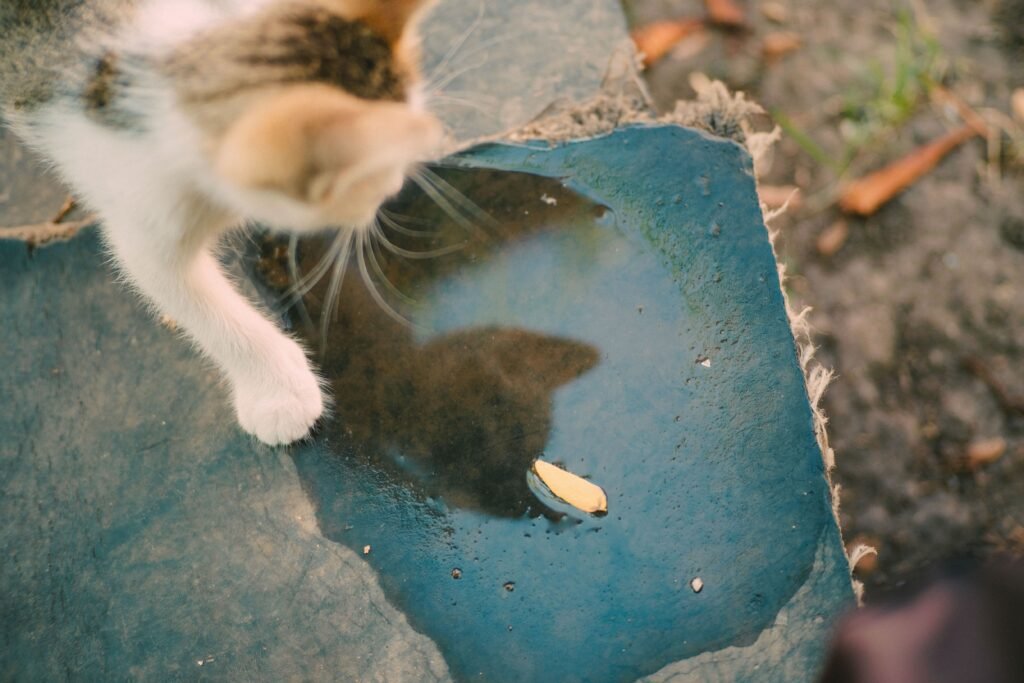
Most of the time, paw dipping is completely harmless. But there are moments when it signals something worth looking into.
When Paw Dipping Is Completely Normal
If your cat has always done this, especially since kittenhood, it is almost certainly just a habit or preference. Cats can paw at their water bowl simply as a form of play, and this behavior is often harmless entertainment. As long as your cat is drinking enough water and seems healthy, there is nothing to worry about.
In most cases, a cat pawing at their bowl is typical cat behavior, slightly weird but mostly justifiable. You do not need to stop it unless it is making a mess or bothering you.
Signs the Behavior May Indicate Stress or Anxiety
If you notice your cat frequently pawing at their water bowl, it could be a sign they are feeling bored or stressed. Cats sometimes develop repetitive behaviors when they lack stimulation.
A sudden increase in your cat’s interest in water could also signal a health issue. Conditions like kidney disease, diabetes, or thyroid disorders often make cats thirstier than usual. If the behavior changes suddenly and is accompanied by weight loss, lethargy, or increased sneezing, get your cat checked by a vet.
How to Stop or Manage Paw Dipping in the Water Bowl
You do not always need to stop it, but if it is causing puddles everywhere, a few simple changes can help a lot.
Choosing the Right Bowl Size and Shape
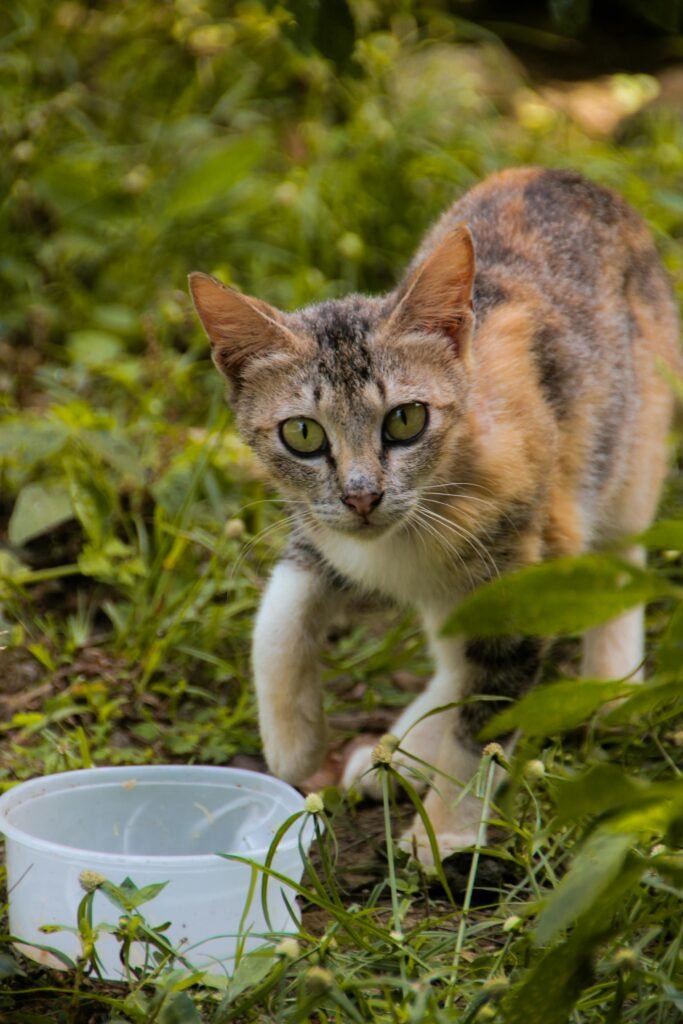
Bowl shape matters more than most owners realize. Cats’ whiskers are extremely sensitive, so they do not like their whiskers touching the sides of the dish, which can happen when they drink from a shallow bowl. A wide, flat bowl removes that discomfort completely.
Look for ceramic or stainless steel options that are easy to keep clean. Plastic bowls tend to hold odors and can put some cats off drinking altogether.
Switching to a Cat Water Fountain
Cats prefer running water to still water because it appears more natural to them and feels like a safer source of water. Getting your cat a water fountain keeps the water in constant motion and may make it more appealing.
A fountain also reduces the need for your cat to create her own ripples by pawing. Many owners see the paw-dipping behavior drop significantly after switching. You can also refer to how much wet food to feed a cat to balance hydration through diet.
Adjusting Water Levels
If the bowl is too full, cats can feel uncomfortable putting their head down close to the surface. Filling it about halfway gives your cat enough room to drink comfortably without touching the sides. Small tweaks like this often make a noticeable difference.
How to Tell If Your Cat’s Paw Is Broken
Paw-related concerns are not always about bowl behavior. Sometimes a cat’s paw can get injured, and knowing what to look for matters.
Common Signs of a Broken or Injured Paw
Cats are stoic animals, and it might not always be evident right away if a paw is broken. Signs include limping, swelling, behavior changes, vocalizing, and decreased appetite. Your cat may also start hiding more than usual, which is a sign that they are in pain and trying to protect themselves.
If something looks out of place, like a toe that seems crooked or an unusual bump, it could be cause for concern. Excessive grooming of one particular area is another sign, as your cat may be trying to soothe the pain. Also watch for heavy breathing while resting, along with limping, as that can point to more serious pain.
When to Visit the Vet
If your cat refuses to put weight on the leg and is showing signs such as crying, decreased appetite, or visible bruising, this might indicate a broken or fractured paw. Do not wait to see if it improves on its own.
If you believe your cat may have a broken leg, gently wrap them in a towel or blanket to keep them warm, and try to keep them still to avoid worsening the injury before getting to the vet. A vet can confirm through an X-ray and recommend the right treatment.
How Often Should You Wash Your Cat’s Water Bowl?
The bowl your cat dips her paws in also needs to be cleaned regularly. A dirty bowl can cause health issues faster than most owners expect.
Recommended Cleaning Frequency
Water should be changed daily, and the bowl should be washed at least once a day to prevent the growth of harmful bacteria. This is especially important if your cat eats wet food, as particles easily transfer to the water bowl.
Once a week, disinfect the bowl completely with diluted bleach or vinegar, soaking it for 5 to 10 minutes before rinsing. This kills parasitic cysts and bacterial growth that daily washing alone might miss.
Best Practices for Keeping the Bowl Clean and Safe
Standard mild dish soap is perfectly safe for cleaning cat bowls. However, you must rinse thoroughly, as a cat’s nose is highly sensitive and they might refuse to eat or drink if the bowl still smells like soap.
Stainless steel or ceramic bowls are the easiest to keep clean and do not develop the same bacterial buildup that plastic tends to. Having two bowls and rotating them daily makes the cleaning routine much easier to keep up with.
FAQ,S
Why does my cat dip her paw in water and then lick it?
This is a natural safety check from wild instincts. Cats test the water first, then lick their paw to taste and confirm it is safe. It is completely normal behavior.
Is paw dipping a sign that my cat dislikes her bowl?
It can be. A deep or narrow bowl causes whisker discomfort, so cats avoid putting their face in it. Try switching to a wider, flatter bowl and see if the behavior changes.
Can paw dipping make the water dirty?
Yes, over time, the water picks up bacteria from your cat’s paws. This is why daily water changes and bowl cleaning matter, especially if your cat regularly dips in.
Should I stop my cat from putting her paws in the water?
Not necessarily. If it is just a habit or play, it is harmless. Only step in if it is causing messes or if you notice signs of stress or twitching while awake, alongside the behavior.
Does this behavior mean my cat is sick?
Usually not. But if it starts suddenly and comes with increased thirst, weight loss, or low energy, those are signs worth checking with a vet. A sudden change in behavior is always worth noting.