
When your cat’s head jerks or flutters, appearing one moment and vanishing the next, a brief calm can suddenly turn into a flash of terror. One moment your cat may be sleeping or sitting quietly, and the next it may jerk its head a little uncontrollably something it clearly did not choose to do.
In most cases, this is not dangerous. Cats’ nervous systems occasionally emit tiny, random impulses, much like ours, and a head twitch is meaningless. The same movement, though, might also be an early warning indication of an issue, like an itchy ear or a brain or nerve issue.
More important than whether twitching occurs at all is whether it is a one-time event or a recurrent pattern; a single flick while napping isn’t the same as the same jolt showing up frequently.
This page explains the signs of head twitching, how it differs from normal head shaking, the typical causes, and when a wait-and-see approach to a veterinary appointment is appropriate.
What Head Twitching Looks Like in Cats
A head twitch usually appears as a brief, uncontrollable flutter in the facial or head muscles. It lasts only a few seconds before disappearing on its own, and it typically resembles the skin rippling around an ear or face rather than the entire head moving.
Some cats exhibit it only occasionally, either while sleeping or right after a big disturbance. Some people have fleeting outbursts that happen every few minutes. Either way, the movement is still very little and immobile.
Because a twitch is quick and uncontrollable, it looks more like a blink or a flinch than something the cat is doing intentionally. This is not the same as the more common head shake, which we’ll look at next.
Head Twitching vs. Head Shaking: Know the Difference
These two can be easily confused because they both involve sudden head movements, though they usually have different implications. An unexpected, transient, involuntary flutter is called a twitch.
Intentional, repetitive, side-to-side head shaking is similar to a dog shaking off water. The causes rarely overlap. Infection, ear mites, or wax buildup in the ear canal typically cause severe, frequent head shaking.
Twitching can affect a much wider range of systems, including nerves, muscles, skin, stress, and sometimes the brain. After a few seconds of careful inspection, you can usually tell which one you’re looking at. If your cat is obviously attempting to hurl something out of its ear, consider shaking; if it’s a small, natural flinch, think twitching.
Why Is My Cat’s Head Twitching?
A head twitch could be caused by anything from a minor ear irritation to a major brain problem. Because the muscles and nerves around a cat’s head are so close together, irritation in one area often shows up as nearby movement.
The causes described below range from common problems veterinarians see regularly to rarer, more serious ones—the first few account for most twitching cats.
Ear Infections, Mites, or a Foreign Object
Ear issues are the most common reason why cats move their heads. Debris or a lodged grass seed can also keep the surrounding nerves busy, as can inflammation in the canal caused by bacteria, yeast, or ear mites.
Other symptoms, such as ear scratching, a slight head tilt, head shaking, or an unpleasant odor or discharge, often appear alongside the twitch. Because an untreated ear infection can worsen and start to affect balance, early care is essential.
Fleas, Allergies, and Itchy Skin
Itchy skin, particularly around the head and neck, is another frequent trigger. Fleas prefer to gather near the ears and neck, where a cat finds it hard to scratch, and the itch sits right above the nerves that trigger those muscles to quiver.
Dietary sensitivities and environmental allergies can also cause the same restless twitching and rippling of the skin. If the flea issue is fixed or the allergy is under control, the twitching usually disappears soon.
Dental and Facial Pain
Because the teeth and jaw sit directly next to the nerves that control the face’s muscles, oral pain may show up as a twitch near the face. Common hidden factors include extensive dental disease, irritated gums, and rotted teeth.
Other symptoms, including drooling, dropping food, chewing on one side, or pawing at its mouth, are frequently seen in cats experiencing dental pain. A thorough examination, sometimes under anesthesia, is often the only way to detect dental disease because much of it lies beneath the gum line.
Feline Hyperesthesia Syndrome
First identified by veterinarian J. Tuttle in a 1980 paper, feline hyperesthesia syndrome is a poorly understood condition often called rolling skin or twitchy cat disease. It makes a cat’s skin extremely sensitive and prone to rippling, usually across the lower back and tail.
Unexpected skin rippling, frenzied grooming or biting, dilated pupils, vocalizing, and sudden bursts of running often triggered by a light touch can all signal an episode.
It is a characteristic twitching condition in cats, even though it focuses on the back rather than the head. A veterinarian should check severe or frequent bouts.
Focal Seizures
Not every seizure manifests as intense, all-body convulsions. A focal seizure, which affects only one area of the brain, might look like facial or head twitching, sometimes accompanied by lip-smacking, chewing, drooling, or a momentary glazed expression.
These brief, easily overlooked episodes can occasionally develop into more severe seizures. Consult a veterinarian for any recurrent head or facial twitching that occurs in discrete episodes, since a focal seizure requires a completely different treatment than an itchy ear.
Vestibular Disease
The vestibular system, the body’s balance center located in the inner ear and brain, is frequently the source of twitching accompanied by a head tilt and loss of balance. A disturbance there may cause nystagmus, characterized by rapid eye flicking, stumbling, abrupt head movement, and a fixed head tilt.
Vestibular syndrome frequently develops suddenly and, with supportive care, usually goes away on its own in two to three weeks, according to the Cornell Feline Health Center. However, it is worth getting tested because a growth or an ear infection might also cause it.
Cerebellar Hypoplasia
Cerebellar hypoplasia, a disorder in which the area of the brain responsible for coordination never fully develops, is a problem that some cats are born with. This ailment is typically caused by a viral infection before birth.
A common sign is a slight tremor or head bobbing, usually most noticeable when the cat is focused on eating.
These cats usually have a tilted, unsteady gait from kittenhood. The good news is that affected cats typically adjust well and lead fulfilling lives, and the illness does not worsen over time.
Toxins and Poisoning
Some toxins can disrupt a cat’s nervous system enough to cause head and face twitching, which can quickly become urgent. Permethrin, an insecticide used in many dog flea products that cats cannot digest, is the main culprit; even a tiny quantity can induce tremors, twitching, drooling, and convulsions.
Toxic plants, home cleansers, and some pesticides are additional risks. Treat twitching as an emergency and contact your veterinarian or a poison hotline immediately if it occurs following a flea treatment or potential exposure, especially if it is accompanied by drooling, vomiting, or weakness.
Stress and Harmless Muscle Twitches
At the milder end, stress and common muscular irregularities can cause a lot of twitching. Small, repetitive twitches are a common way for an anxious cat to release tension, but they usually go away as the stressor, such as a new pet or a noisy home, settles down.
Simple muscular twitches also occur, usually when the muscles relax and fire irregularly during rest or right after sleep. A vet is rarely needed for a single, isolated twitch like this; instead, a persistent, recurring pattern warrants closer examination.
Is Cat Head Twitching Normal?
In most cases, a single head twitch during sleep or right after waking isn’t cause for concern. A cat’s nervous system constantly sends tiny, random impulses, most of which are meaningless.
If the twitch remains localized and your cat is eating, playing, and moving normally, it is fine to keep an eye on them for a day or two. In those situations, it requires only a little attention.
When twitching occurs daily, recurs frequently, or coexists with other symptoms, the picture shifts. At that time, it no longer falls into the harmless group. Ignoring a growing pattern can let a manageable problem, such as an ear infection, slowly worsen.
Other Symptoms That Raise the Stakes
The company a head twitch keeps matters because it rarely travels alone when something substantial is behind it. Keep an eye out for these symptoms that coexist with the twitching:
- a fixed tilt of the head to one side.
- difficulty rotating, stumbling, or balancing.
- Nystagmus is the term for quick, darting eye movements.
- Excessive drooling, frequently from one side.
- Abrupt weakness, nausea, or confusion.
- Seizures or obviously confused behavior.
When combined with head twitching, any of these go far beyond a simple muscle blip. Instead of waiting and seeing, you should call your veterinarian that same day.
When to See the Vet, and What Counts as an Emergency
Certain patterns should never be ignored, but not every twitch requires a veterinarian. Make an appointment if the twitching happens repeatedly every day or several times a week, is accompanied by pain indicators such as flinching around the head, or occurs as an unexpected, severe episode.
Some circumstances are true emergencies. If the twitching turns into a seizure, occurs after a flea treatment or suspected poisoning, or involves vomiting, acute disorientation, collapse, or sudden weakness, get help immediately.
Because cats are skilled at concealing discomfort, a problem may develop for some time before it becomes apparent. Early intervention usually means more treatment options and a quicker recovery.
How a Vet Diagnoses Head Twitching
Instead of doing testing right away, a veterinarian typically begins with close observation. The initial steps include a thorough physical exam, a close look at the mouth and ears, and a neurological assessment of balance, reflexes, and eye movement.
Because skin and ear issues are so common, those measures alone account for most cases. The veterinarian may order blood testing, analyze ear swabs under a microscope, or perform imaging tests such as an MRI or CT scan if the symptoms suggest the brain or nerves, or if the cause is still unknown.
Here, having a clear history is quite helpful. You can quickly narrow the cause by noting when it began, how often it occurs, and what else you have seen.
What to Do Before the Vet Visit
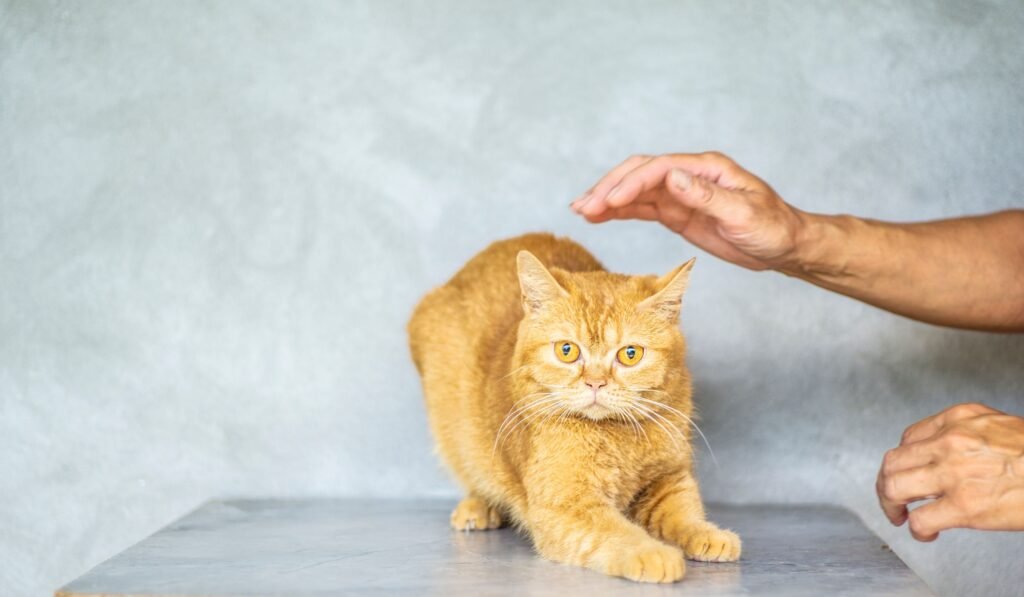
A few easy steps will benefit your cat and your veterinarian while you wait for the appointment. Keep your cat calm and confined to a quiet, secure area where it can’t harm itself if episodes happen frequently.
Making a little video the next time it twitches is the most beneficial thing you can do. During an exam, episodes seldom occur on cue, and video provides a veterinarian with much more information than a description.
Note the frequency of the twitching and the duration of each episode. Human medications like acetaminophen and ibuprofen poison cats, so you should never give them any medication on your own.
You can use warm water and mild dish soap to rinse off any suspected dog flea products gently, but if your cat is already shaking violently, see a veterinarian right away. In a toxin emergency, poison hotlines such as the ASPCA Animal Poison Control Center at 888-426-4435 and the Pet Poison Helpline at 855-764-7661 can help.
Frequently Asked Questions
Is it normal for a cat’s head to twitch?
A sporadic twitch during sleep or after a startle is typically benign. If it happens frequently, keeps coming back, or is accompanied by symptoms like a head tilt, it becomes a cause for concern.
What’s the difference between head twitching and head shaking?
Twitching is a fleeting, uncontrollable flutter the cat doesn’t choose. Head shaking is a purposeful side-to-side movement that is almost always caused by ear irritation, such as an infection or mites.
Can ear mites make a cat’s head twitch?
Indeed. Because they irritate nearby nerves, ear infections and mites are among the most common causes. You may notice ear discharge, head shaking, and scratching.
Could head twitching be a seizure?
It can be. A focal seizure can cause jerking of the head or face, sometimes accompanied by lip-smacking or a glazed expression. See a veterinarian if the twitching happens often.
When is cat head twitching an emergency?
If it develops into a seizure, follows a flea product or suspected poisoning, or is accompanied by vomiting, extreme wobbliness, collapse, or disorientation, treat it as urgent.
Will a head twitch go away on its own?
Stress-related twitches or a fleeting muscular quirk frequently do. Without treatment, twitching caused by an infection, dental pain, toxins, or a nerve issue won’t go away.
Watching the Pattern, Not Just the Moment
The majority of cat head twitches are innocuous, a fleeting flash with no particular significance. Like humans, cats occasionally make mistakes, especially while they’re sleeping.
The pattern is more important than any one instance. A single twitch that disappears is comforting, but a recurring twitch or one accompanied by other strange behavior, such as a head tilt, drooling, or balance issues, typically indicates a specific issue.
When that happens, the only reliable way to distinguish between a benign blip and a serious issue is a veterinary examination. Watch how often it happens and what it leads to, record a brief video if you can, and trust the trend you see. The best defense you can give your cat is that attention.
Pingback: Why do cats’ ears twitch? - Eachpetscare