
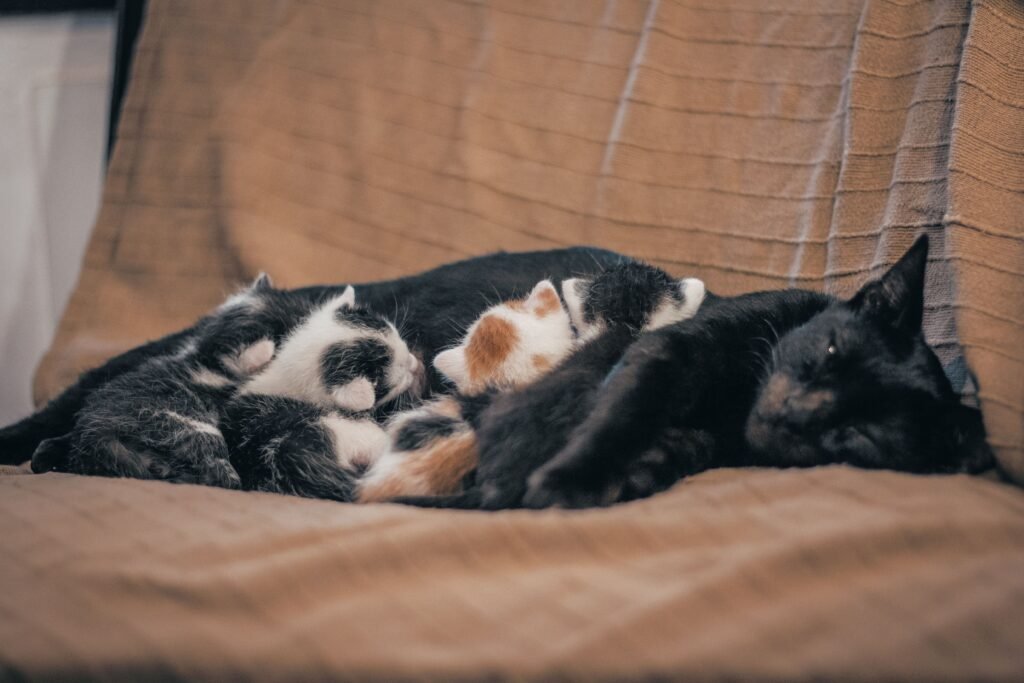
One immediate, practical question that arises when a cat becomes pregnant is how many kittens are on the way. A surprise litter of six or seven means more mouths to feed, more veterinary expenses, and more homes to find than most owners plan for, so the answer matters.
Fortunately, there is a trustworthy ballpark. A litter of cats typically consists of four to six kittens, with four being the most typical amount. However, that number varies significantly depending on the cat’s age, breed, health, and whether it’s her first time.
With a general idea of what to expect, you can plan everything from food and supplies to setting up future residences. It also helps you identify when a birth isn’t proceeding as planned.
This book covers the average number of kittens a cat can have, what causes them to fluctuate, how breed and age play a role, the record-breaking extremes, and how a veterinarian can provide an accurate count before the big day.
How Many Kittens Does a Cat Usually Have?
A litter of cats often produces four to six kittens, with four being the most typical result. House cats usually give birth to three to six kittens every litter, with an average of roughly four, according to PetMD’s cat pregnancy guide.
However, the range is wider than many anticipate. A litter can be as small as one kitten or as large as eight or more; particularly large litters of 10 or twelve kittens are uncommon.
The largest exception to the norm is first-time mothers. Because her body is still adjusting to the process, a cat giving birth to her first litter typically produces only two or three kittens. Once she reaches adulthood, subsequent litters are typically bigger.
What Determines How Many Kittens a Cat Has?
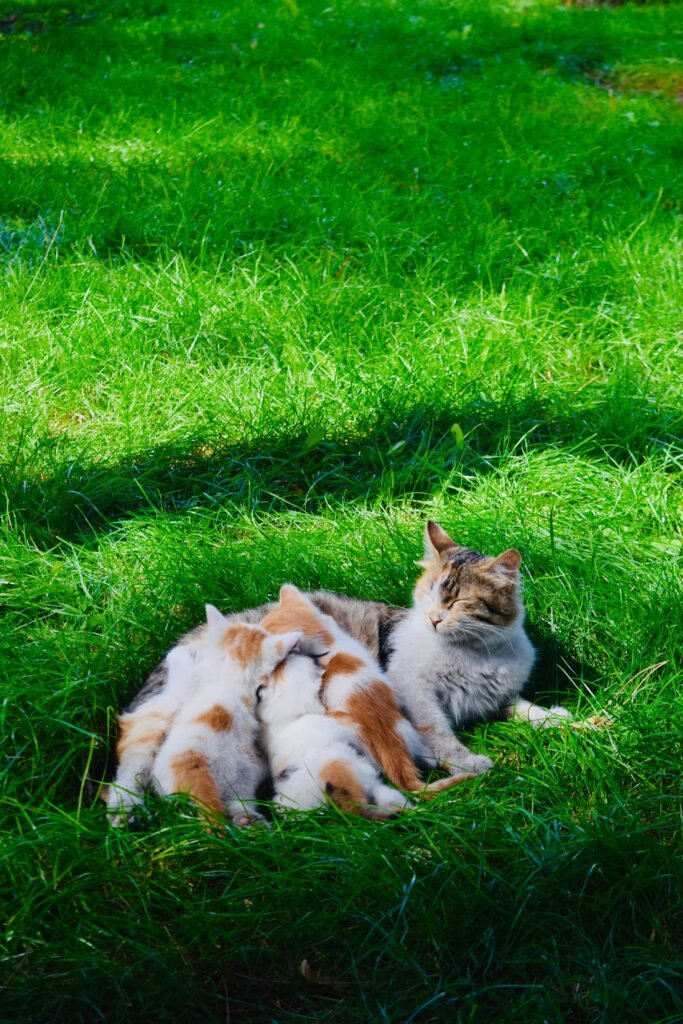
Even within the same home, no two cats are guaranteed to have the same litter size. Several factors determine how many kittens arrive; these are the ones that matter most.
Age and Experience
Age is one of the biggest influences. A cat in her prime, between two and four years old, typically has the largest litters, while very young cats and first-time mothers usually have smaller ones.
A cat’s litters gradually shrink once more as she ages past that peak. For a few years, an experienced middle-aged queen is designed to carry and give birth to more kittens than an aging senior or a mother of young kittens.
Breed and Genetics
Family lineage and breed also play a clear role. A cat whose own mother had large litters is more likely to follow suit. Some breeds consistently have larger litters, while others tend to have smaller ones.
Within that, body size is important. As a rule, larger cats tend to carry more kittens than petite ones, which is why several of the biggest breeds also produce some of the biggest litters.
Health and Nutrition
A mother’s health directly affects the final count. A well-fed, healthy cat can carry more kittens to term. When a cat is malnourished, stressed, or fighting an infection, her body may reabsorb some embryos early or lose them during pregnancy.
So two cats that conceive the same number of kittens can still deliver very different-sized litters depending on their condition.
The Surprising “Teat Rule”
Here is a quirky piece of biology that often holds. Across many mammals, the average litter size tends to be roughly half the number of teats the mother has.
Cats usually have eight teats, which lines up neatly with that typical average of about four kittens. It is a rough pattern rather than a hard rule, but it is a tidy way to remember the usual number.
Litter Size by Breed
Breed is one of the first things owners ask about, so it warrants a deeper examination. While every individual cat is different, several breeds tend to be dependably larger or smaller.
A short word of warning first: several so-called “breeds” are actually merely coat patterns, which we will clear up below.
Breeds That Tend Toward Larger Litters
Several popular breeds are noted for roomy litters, often landing at the higher end of the four-to-six range or beyond. Siamese and Burmese cats are often known for larger-than-average litters.
The huge, strong breeds join them. Maine Coons, Ragdolls, Ragamuffins, and Siberians all tend toward generous litters, supported by their larger body size.
Breeds That Tend Toward Smaller Litters
At the other end sit the flat-faced breeds. Persians and Himalayans often have smaller litters, often in the three-to-four range.
Their facial structure and related health concerns can make pregnancy a little harder, so these breeds need thorough veterinary care. Smaller, more cautious litters are the norm.
Why Calico, Tabby, and Tortoiseshell Don’t Count
Many owners are confused by this. Calico, tabby, tortoiseshell, and tuxedo are coat colors and patterns found in a wide variety of breeds; they are not breeds.
Therefore, a calico’s litter size depends solely on the breed she is bred to. The number of kittens she will have is unrelated to the coloring.
How Age Changes How Many Kittens a Cat Has
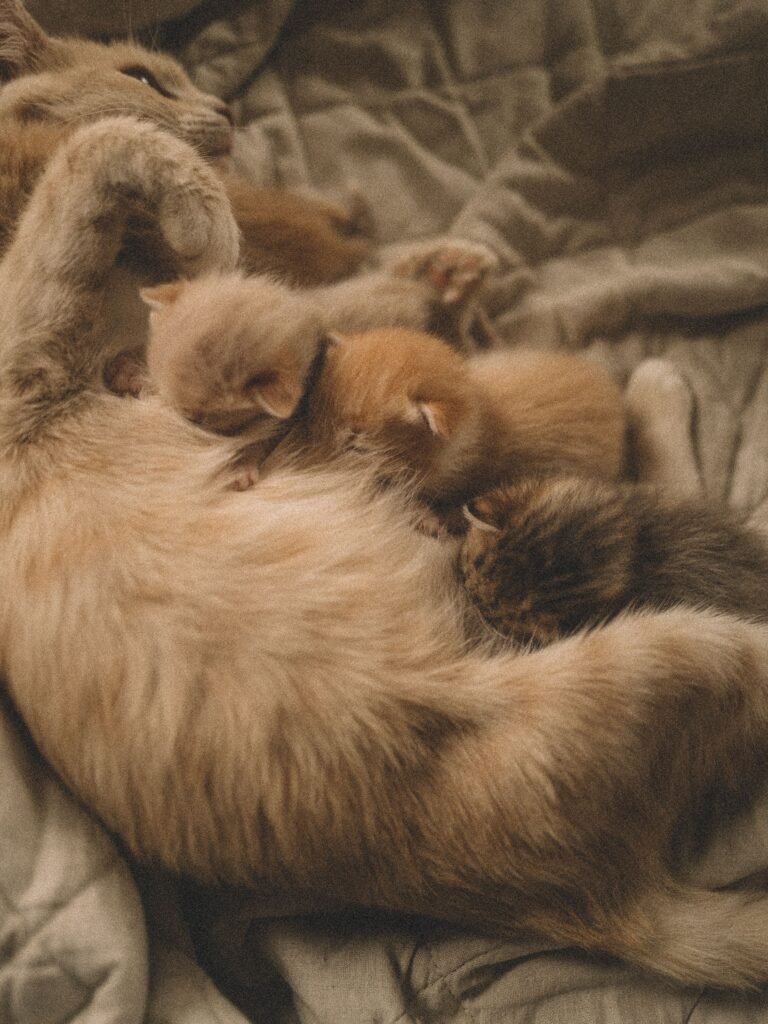
Most new owners are surprised by how early cats can begin breeding. As young as four months old, a female can experience her first heat and get pregnant, frequently before she even appears completely mature.
Because the young mother’s body is still investing energy in her own development, those early pregnancies result in the smallest litters, typically consisting of just one or two kittens. Veterinarians generally advise against breeding a cat this young and suggest spaying before the first heat for her health.
As cats get older, litter numbers increase gradually, peaking between the ages of two and four. The numbers gradually decline with age after that prime timeframe. An unspayed cat can theoretically continue to have kittens into her senior years because cats do not go through menopause. Still, the hazards increase as her fertility and litter sizes decrease.
How Often Can a Cat Get Pregnant?
The real eye-opener is how quickly cats can procreate. In a year, a single female may give birth to two, three, or even more litters.
This is possible because a cat’s pregnancy lasts roughly two months and she can return to heat quickly. Back-to-back pregnancies may result from a nursing mother being ready to mate again within two to three weeks of giving birth.
These quick, frequent litters can reduce kitten survival and tax a mother’s health. Veterinarians advise giving purposely bred cats plenty of time to heal between litters, rather than letting them become pregnant again right away.
How Many Kittens Can One Cat Have in a Lifetime?
Add the totals over time, and they become astounding. If a cat continues to get pregnant throughout her life, she may give birth to fifty or more litters and more than two hundred kittens.
That appears modest in the record. Dusty, a Texas cat, is well known for giving birth to almost 420 babies during her lifetime, a record no other cat is known to have surpassed.
However, one prevalent assertion merits a fact check. The frightening statistics about a single cat giving birth to hundreds of thousands of cats are sometimes overstated and include all her offspring, not just the kittens she gives birth to. The true lesson is quite straightforward: in a matter of years, one unspayed cat can fuel a massive family tree.
The Record for the Most Kittens in One Litter
One cat defied the ceiling, which typically tops out at eight. Tarawood Antigone, a Burmese cat from Oxfordshire, UK, has the biggest litter ever documented.
In 1970, she gave birth to 19 kittens, according to Guinness World Records. Fifteen of them made it out alive, an incredible outcome that remains the record over fifty years later.
Litters anywhere close to that size are extremely uncommon and dangerous. Nature aims for a count in the low single digits for nearly all cats.
Can You Tell How Many Kittens to Expect Before Birth?
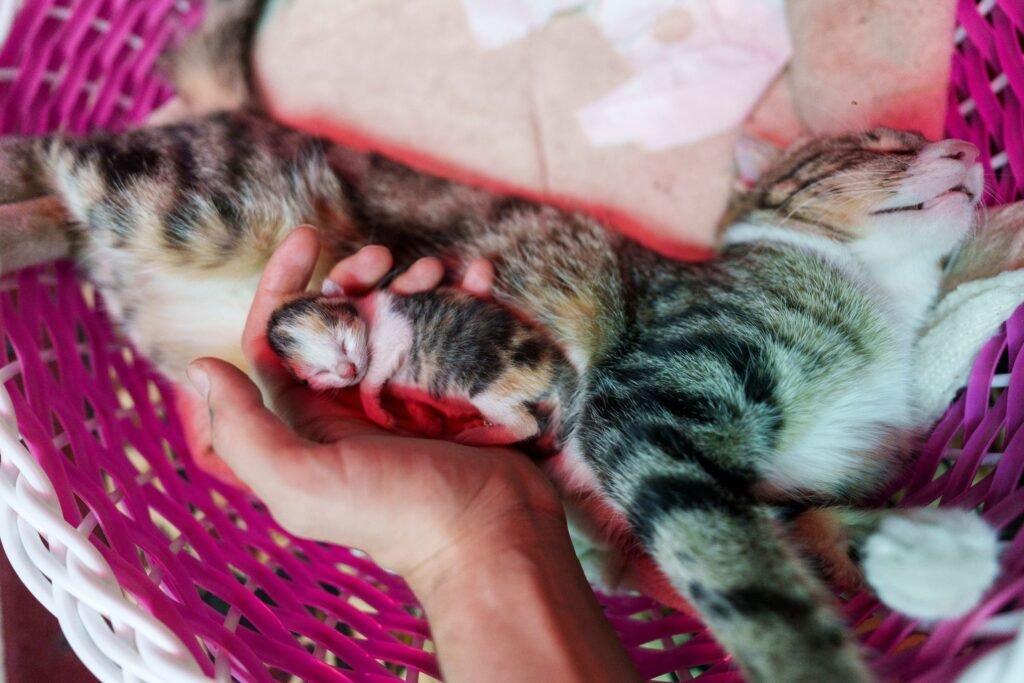
The final count may not surprise you. Although the timing varies, a veterinarian can provide a reliable estimate.
Early on, a veterinarian can confirm the pregnancy by feeling the tummy lightly around day 20 or by using an ultrasound around three weeks, which can also provide an approximate count. The kittens overlap and are still small, so neither is ideal for a precise head count.
Late in pregnancy, an X-ray is the preferred method for a precise count. Since the kittens’ skeletons don’t become visible until around six weeks, a final radiograph provides the most accurate number.
What to Expect During Labor and Delivery
Most cats manage the delivery on their own once labor starts, and understanding the typical cycle makes it easier to distinguish between calm and crisis. Most cats give birth to their whole litter in roughly six hours.
After an hour or so of hard, intense labor, the first kitten usually shows up. After that, there are usually brief pauses between each 30- to 60-minute break.
Instead of hovering, keep a silent, vigilant eye. Call your veterinarian immediately if your cat strains hard for an extended period without a kitten, or if more than two hours pass between kittens when she clearly still has more.
Why Feral and Stray Cats Have Different Numbers
Outdoor life changes the math. Because poor diet and ongoing stress negatively affect pregnancy, feral and stray cats often have smaller litters than well-cared-for home cats.
Survival is the harder truth. In feral colonies, when illness, cold, and predators prevent many kittens from reaching weaning, kitten mortality is much higher. Spay and neuter programs also help control community cat numbers.
Why Spaying Is the Responsible Choice
For most households, prevention is the most compassionate long-term solution given how quickly and frequently cats can procreate. Spaying a female cat completely stops the litter cycle.
It helps avoid several major health issues later on and spares women the physical strain of multiple pregnancies. It also prevents more kittens from entering already overcrowded shelters. Most veterinarians advise spaying unless you are a dedicated, responsible breeder.
Frequently Asked Questions
How many kittens does a cat usually have?
Each litter of cats typically contains four to six kittens, with four being the most typical. A litter can have as few as one kitten or as many as eight.
What is the most kittens a cat has ever had in one litter?
Fifteen of the 19 kittens that Tarawood Antigone, a Burmese cat, gave birth to in 1970 survived.
How many kittens does a first-time cat have?
First litters often consist of two or three kittens. As cats get older, litters usually get bigger.
How many litters can a cat have in a year?
A cat may give birth to two, three, or even more litters a year. Generally, veterinarians advise against letting a cat reproduce too often.
At what age do cats have the biggest litters?
A cat’s litter size peaks between the ages of two and four. Older cats and very young cats typically have fewer kittens.
Can one litter have kittens from different fathers?
Indeed. A phenomenon known as superfecundation occurs when a cat mates with multiple males during a single heat, giving her kittens multiple fathers.
How soon can a cat get pregnant after giving birth?
Unexpectedly quickly. Even when nursing, a cat may go back into heat as soon as two or three weeks after giving birth.
Planning for a Healthy Litter
The straightforward answer to how many kittens a cat can produce is often four to six, although the actual figure varies depending on her age, breed, health, and experience. A healthy, well-fed mother provides her kittens the best chances; first litters are small, while middle age brings the largest ones.
Beyond a single litter, it’s important to understand how quickly cats reproduce. Careful planning or spaying is crucial because two or three litters a year, starting at just a few months of age, add up quickly.
A late-pregnancy veterinary checkup can give you an accurate count if your cat is pregnant. From there, the nicest presents you can give the mother and her new family are delicious food, a peaceful environment, and careful attention during delivery.
Pingback: How to Know If Your Cat Is Pregnant? - Eachpetscare