
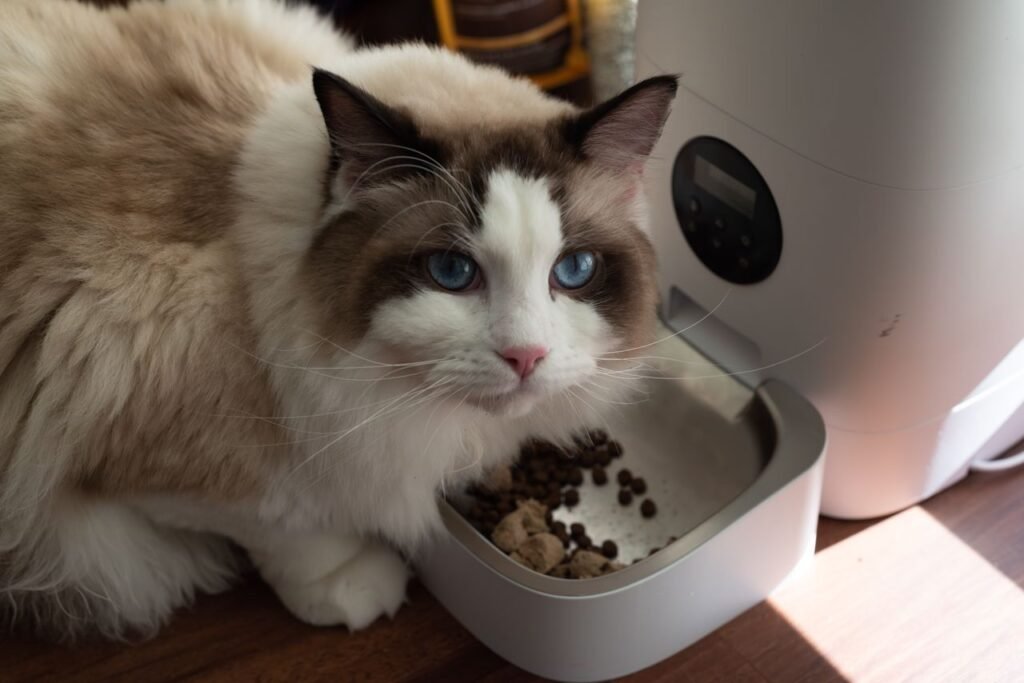
If you have ever stood in your kitchen holding a scoop of kibble, wondering if you are giving your cat too much or too little, you are not alone. Most cat owners eyeball a bowl and hope for the best.
The trouble is that guessing rarely works out well. A cat that gets too little dry food can lose energy and muscle, while one that gets too much can slide into obesity, which now affects a huge share of pet cats in the United States.
The right portion depends on several factors at once: your cat’s age, weight, activity level, and whether they are pregnant or recovering from surgery. There is no single number that fits every cat in every home.
That is exactly what this guide walks through. From kittens to seniors, from daily totals to a simple chart and calculator, you will leave with a clear, practical answer for your own cat.
How Much Dry Food to Feed a Cat?
The short answer is that most healthy adult cats need somewhere between 25 and 35 calories per pound of body weight each day. A 10-pound cat, for example, should eat around 250 kcal per day when fed only dry food.
Since kibble is calorie-dense, that number translates into a fairly small amount by volume, often less than a full cup. The exact figure printed on your bag will vary depending on how many calories that specific formula packs per cup.
According to the World Small Animal Veterinary Association, many cats weighing around 11 pounds need roughly 250 to 290 calories per day, depending on their body condition and activity level. That works out to about half a cup to three-quarters of a cup of dry food for most brands.
These numbers are only a starting point. Life stage changes everything, which is why the sections below break things down by age and condition.
Kittens
Kittens burn through calories at a startling rate because their bodies are building bone, muscle, and organs all at once. During the growth window, kittens generally need around 60 to 65 calories per pound of body weight each day, roughly double what a grown cat requires.
That higher calorie need also means kittens cannot simply eat two meals and be fine. Kittens four months old or younger typically do best with three meals a day, dropping to two meals once they pass four months.
Always check the feeding chart on the specific kitten formula you buy, since calorie density varies widely between brands. Kitten food should also carry a growth or “all life stages” label, since regular adult formulas fall short on the protein and fat kittens need.
Most kittens transition toward adult amounts and adult food around 10 to 12 months old, once their rapid growth phase winds down.
Adult Cats
For a fully grown, healthy cat between roughly one and seven years old, the goal shifts from growth to simple weight maintenance. Most cats in this range do well on 20 to 33 calories per pound per day, adjusted for their activity level.
An indoor cat that naps most of the day needs less than an outdoor cat that hunts, climbs, and roams. Spayed or neutered cats also tend to burn slightly fewer calories, so their portions often need a small downward adjustment.
Check your cat’s ribs with light pressure every few weeks. If you can feel them easily without pressing hard, your portion is likely in a healthy range.
Senior Cats
Once a cat crosses into its senior years, usually around age seven, its metabolism starts to slow down. Older cats typically need between 20 and 30 calories per pound, somewhat less than younger, more active adults.
Lower activity is the main driver here. Senior cats sleep more, move less, and do not need the same fuel they once did.
That said, very old cats sometimes swing the other way. Past age eleven or so, some cats begin losing the ability to absorb nutrients efficiently, and their calorie needs can actually creep back up rather than down.
Because of this shift, it is worth reweighing your senior cat and reviewing portions with your vet every six months rather than assuming last year’s amount still fits.
Pregnant or Nursing Cats
Pregnancy and nursing place a heavy caloric demand on a cat’s body, far beyond normal maintenance levels. A nursing mother producing milk for a litter can burn two to three times her usual calorie needs, depending on litter size.
Portions should increase gradually through pregnancy and then climb sharply once nursing begins, since milk production is far more taxing than pregnancy itself. Many owners switch to a kitten formula during this stretch, since it packs in the extra protein and fat that both mother and growing kittens need.
Free feeding, meaning food is left out and available all day, often works better than scheduled meals during heavy nursing weeks. Once kittens are weaned, portions should taper back down to normal adult levels over a week or two.
How Much Dry Food to Feed a Cat Per Day?
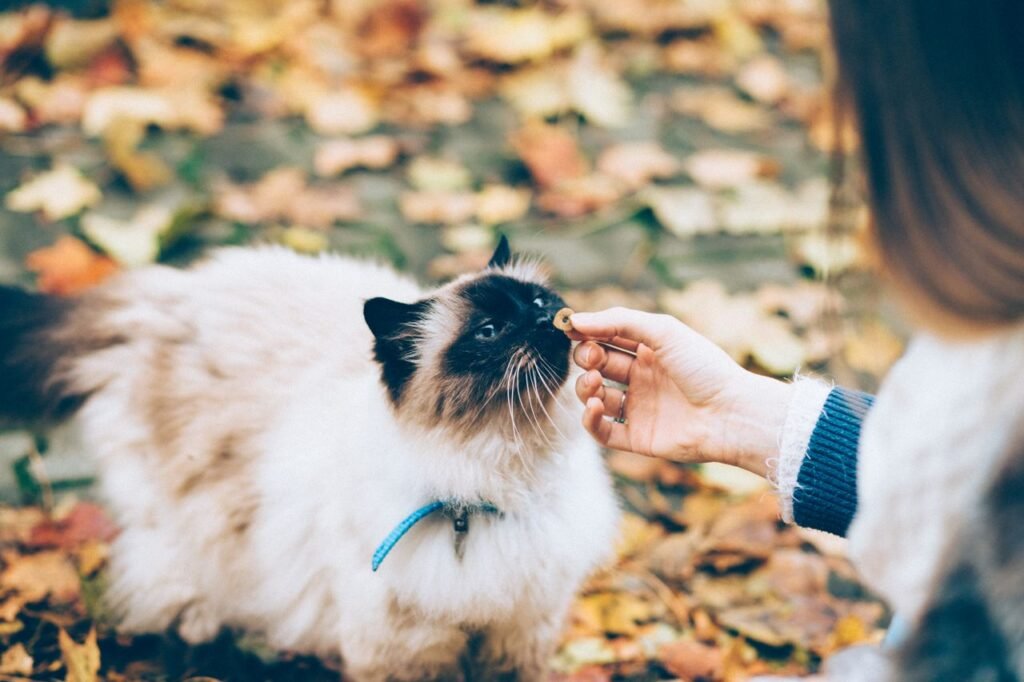
Beyond the life stage, there is the practical question of how that daily total should actually be served. Most vets recommend splitting the day’s food into at least two separate meals rather than one large serving.
Two meals a day, spaced roughly twelve hours apart, mirrors how a cat’s digestion naturally works. It also helps prevent the stomach upset that can come from eating a big portion all at once.
Some owners prefer three or four smaller meals, especially for cats prone to vomiting or those who beg constantly between feedings. Smaller, more frequent meals can ease that pressure without changing the total calorie count for the day.
Free feeding, where dry food sits out around the clock, works for a small number of naturally lean, disciplined cats. For most cats, though, it tends to encourage overeating and slow, steady weight gain over months.
Whichever schedule you choose, the daily total should stay consistent. Splitting food differently across meals does not change how much your cat needs overall.
How Much Dry Food to Feed a Cat Chart?
A quick reference chart can make daily scooping far less of a guessing game. The figures below assume an average activity level and a standard dry food with around 350 to 400 calories per cup, though your bag’s label should always take priority.
| Cat Weight | Life Stage | Approximate Daily Dry Food |
| 5 lbs | Kitten | 1/2 to 2/3 cup |
| 8 to 10 lbs | Adult | 1/3 to 1/2 cup |
| 10 to 12 lbs | Adult, active | 1/2 to 2/3 cup |
| 10 lbs | Senior | 1/4 to 1/3 cup |
| 8 to 10 lbs | Nursing | 3/4 cup to 1 full cup |
Treat this table as a rough starting point rather than a fixed rule. Two bags of dry food with the same weight per cup can differ by well over 100 calories, simply because of how densely each brand packs its kibble.
Always cross-check the chart above against your specific bag’s feeding guide, then adjust based on your cat’s body condition over the following weeks.
How Much Dry Food to Feed a Cat Calculator?
Because charts only offer a rough average, many owners find it more accurate to calculate their cat’s needs directly. Veterinary nutritionists typically start with something called Resting Energy Requirement, or RER, a formula based purely on body weight.
The formula is 70 multiplied by your cat’s weight in kilograms raised to the 0.75 power. That number is then multiplied again by a factor tied to your cat’s life stage, whether that is growth, weight loss, neutering status, or pregnancy.
Doing that math by hand is clunky, which is why most vet clinics and pet nutrition sites offer free online calculators built on this exact formula. You enter your cat’s weight, age, and activity level, and it returns a daily calorie target.
Once you have that calorie number, divide it by the calories per cup listed on your dry food bag. That final figure is your actual daily scoop amount, split across however many meals you choose to feed.
A calculator is especially useful for cats outside the “average” range, such as overweight cats needing gradual weight loss or very active outdoor hunters.
How Much Wet and Dry Food to Feed a Cat
Many owners feed a mix of wet and dry food rather than sticking to kibble alone, and that combination changes the math slightly. Wet food carries far fewer calories per ounce than dry kibble, since most of its weight comes from moisture.
The simplest approach is to calculate your cat’s full daily calorie target first, then split that number between the two food types. If half the calories come from a wet food pouch, the dry food portion should shrink by roughly half from what it would be alone.
A rough starting split many vets suggest is close to half wet and half dry by calories, though this varies by cat and by how much extra hydration your cat needs. Cats prone to urinary issues often do better leaning more heavily toward wet food.
This is a broad note rather than a full breakdown, since combining foods deserves its own detailed look at ratios and hydration needs.
Building a Feeding Routine That Fits Your Cat
Every piece of this puzzle, life stage, daily totals, and calculator numbers, comes together into one simple habit: watching your cat and adjusting as you go. No chart or formula replaces regular checks of your cat’s weight and body condition.
Kittens need frequent, calorie-dense meals that taper off as they approach their first birthday. Adults need steady, weight-appropriate portions, while seniors often need less food until very old age, when needs can shift again.
Revisit your cat’s portion every time something changes, whether that is a new life stage, a spay or neuter surgery, a move to a more sedentary lifestyle, or a vet’s recommendation after a checkup. What worked six months ago may no longer fit today.
Small, consistent adjustments based on your cat’s actual body, not just a printed number on a bag, are what keep a feeding routine working for years rather than weeks.