

If you are a new pet owner or your mother dog has just given birth to new puppies, you might be worried about your dog’s teething stage. Of course they also lose their teeth like human babies. It is normal but there is something that you need to know about their teething stage because sometimes it may be not normal.
The topic is you should know when dogs lose their baby teeth, so you don’t need to worry about extra things. Because you will already know that this is a natural thing and it happens to all dogs, not just your puppy.
According to the National Institute of Health, there are several factors that affect a dog’s teeth development, such as breed type and size,genetics, health status, nutrition and care. However, the basic and general rule may remain same; dogs have tow teething stage in their life;
- First 28 baby teeth erupt, then they fall out.
- And 42 permanent teeth emerge.
Baby teeth are thin and pointed, while permanent teeth are large and strong. A newborn puppy is toothless because it initially relies on its mother’s milk.
As the puppy grows, it needs to chew, so the process of teething and replacement begins. At the same time, its diet also changes, from milk to soft and then solid food. This is a natural process, so the owner should be aware of it in advance.
When Do Dogs Start to Lose Their Teeth?
Incisors are the first puppy teeth and your dog usually starts losing them around three to four months of age. PetMD describes that this process begins in most puppies at 3.5 months, around 14 to 16 weeks, and in some small dogs it can be delayed until 4 to 5 months.
Meanwhile, large or giant breeds get their permanent teeth earlier than smaller breeds. The front incisors and canines fall out first, and are replaced by permanent teeth.
Overall Timeline of Puppy Teething
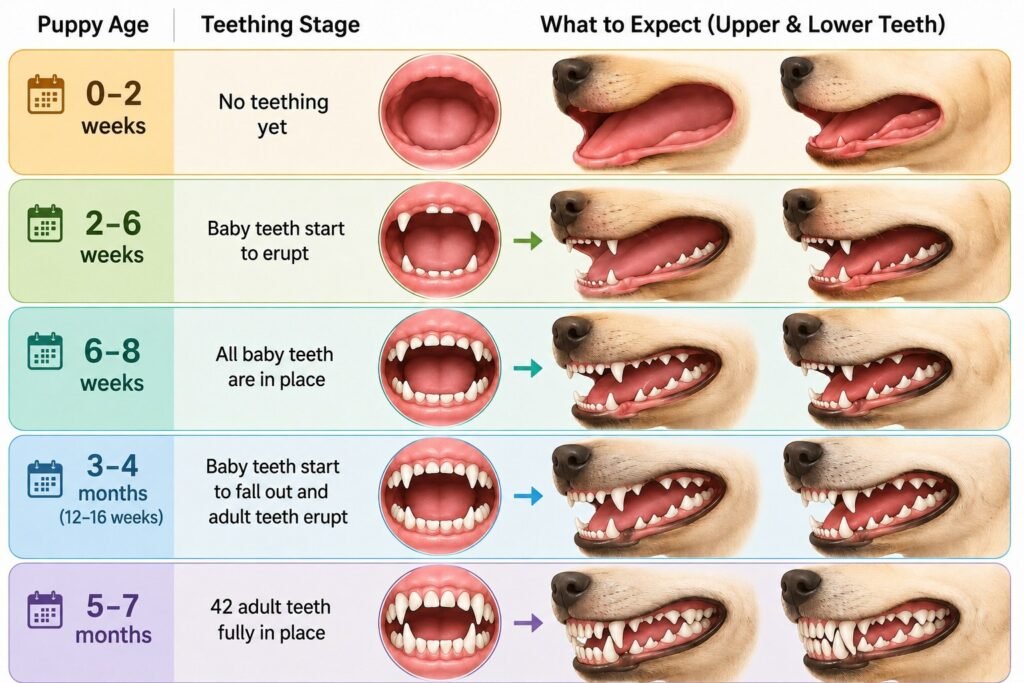
You all may know that a newborn puppy has no teeth for 2 weeks. Then, at 3 to 4 weeks of age, small incisors begin to grow.
By 5 to 6 weeks, the incisors, canines, and some premolars appear, and by about 6 to 8 weeks, all 28 primary teeth are complete. By 2 months of age, the puppy’s teeth are fully formed.
From about 3 months or 12 weeks, baby teeth begin to fall out. First, the incisors, which are small front teeth and canines, which are rod-shaped teeth fall out, then the remaining premolars and finally the molars are replaced.
This process continues from five to seven months of age. By about 6 to 7 months of age, all 42 adult teeth of the puppy have erupted. If even some baby teeth remain after 6 months, they can be surgically removed.
| Age Period | Teeth Stage | Common Signs |
| 0 to 2 weeks | No teeth | Normal behavior, no noticeable changes |
| 2 to 6 weeks | First milk teeth start erupting | Sometimes new teeth appear, delicate gums |
| 6 to 8 weeks | All 28 milk teeth have erupted | Dental care needed, teeth may be visible during play |
| 3 to 4 months (12 to 16 weeks) | Milk teeth start falling and permanent teeth begin to emerge | Increased chewing, red/swollen gums, drooling or slight bleeding |
| 5 to 7 months | 42 permanent teeth fully developed | Chewing habit increases, slight mouth odor may appear |
What Age Do Dogs Lose Their Baby Teeth?
As I’ve already described, puppies start losing their baby teeth around 3 to 4 months, or 12 to 16 weeks) after birth. This is the age when their larger permanent teeth start to come in.
The incisors and canines are replaced first, while the remaining premolars and molars come in later. This process can be a little slower in smaller breeds.
Usually, all baby teeth fall out by five to seven months of age and the permanent teeth are in place. A puppy’s baby teeth usually fall out by three to four months of age, and the permanent teeth come in by six months.
How Many Times Do Dogs Lose Their Teeth?
Dogs only lose their baby teeth once in their life (in infancy). After that, they have permanent teeth, while an adult dog has 42 teeth. If any teeth fall out later, it is due to diseases such as tooth decay or injury.
If teeth are falling out later in life, you should consult a doctor immediately. So, the real answer is a puppy only loses its baby teeth once; permanent tooth loss is not normal.
Signs Your Puppy is Teething
Some common signs of dog’s teething include;
Excessive chewing or biting: During the dog’s teething stage, your puppy will start to chew on everything. In some dogs, sitting on toys, shoes, or furniture is also common.
Redness or swelling of the gums: The gums of your dog may become sensitive and swollen during teething. There also may be slight redness and small blood spots.
Loss of appetite or soft food: The interest of your dog in eating may also decrease due to teething pain. And sometimes you may also think that your puppy prefers soft or watery foods during teething.
Excessive drooling: The amount of saliva may increase during teething. Even normal breath may smell bad because the gums are slightly inflamed or have gingivitis.
Irritability: The puppy may be more sensitive or irritable due to the slight twitching and pain of teething. This symptom is temporary.
The above symptoms are common and indicate a minor problem. If these symptoms are accompanied by a high fever, discharge from the mouth, or severe bleeding, consult a doctor immediately.
As a Pet Owner, How to Help Them Through It?
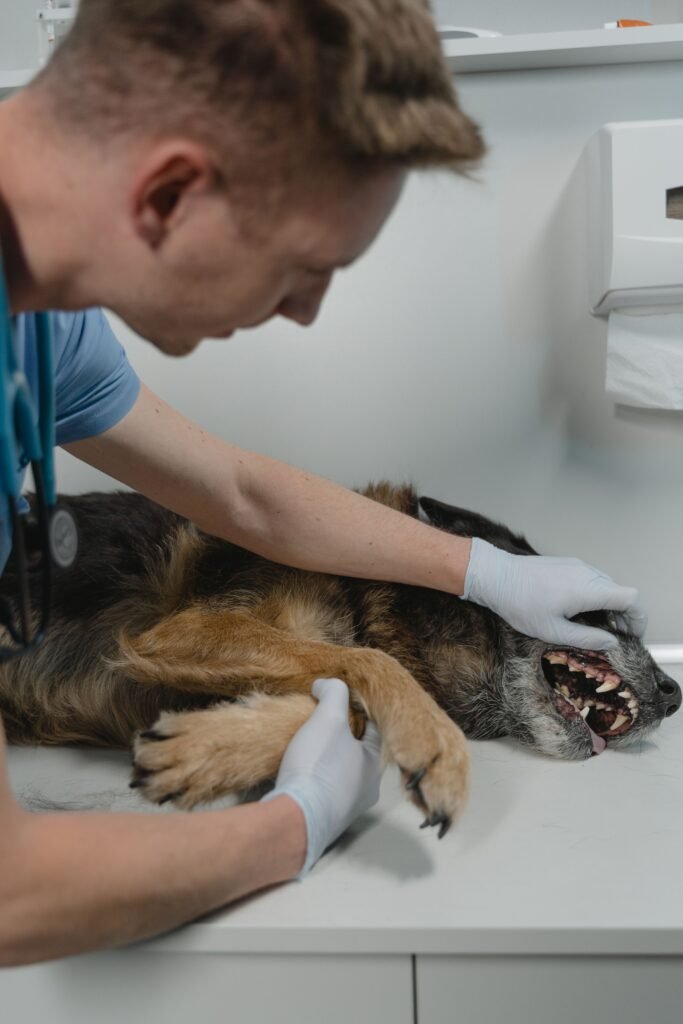
Now there is the real part!! By the way, it is normal that your baby dog is losing its teeth, however some rare problems can also occur during teething. You should be aware about these problems so you can consult with a pet doctor at the right time.
Here are some possible complications and when to see a doctor
Retained Deciduous Teeth: If baby teeth do not fall out on time and are left with the deciduous teeth, a double row or irregular teeth pattern can develop. This can lead to crowding of the teeth, food can get stuck, and gum inflammation (gingivitis) or periodontitis can develop. In such a situation, the baby tooth should be extracted by the doctor, so that the permanent teeth can come into the correct position.
Periodontal Disease: If food gets stuck around the retained baby teeth, plaque can form, which if not removed in time can lead to gum disease. Bad breath can increase and permanent teeth can be affected up to the roots.
Misaligned or slightly broken: If deciduous teeth collide with the gums or other teeth, the teeth can even break. If the pain is severe or the teeth are starting to break, don’t waste time, seek veterinary advice immediately.
Guidance for visiting a vet: Teething is usually natural, but if several baby teeth are still present at 6 to 7 months of age. Or if there is severe swelling, cavities, or persistent pain in the mouth, a veterinary check-up is necessary. The veterinarian can examine and remove the remaining baby teeth or treat any complications.
Regular dental check-ups and teeth cleanings can help prevent future problems.