
When a cat goes into heat for the first time, it might actually frighten her owner. The pacing, the loud yowling, the abrupt rolling over, and the persistent need for attention all seem to be indicators that something is really wrong.
In actuality, it is an entirely typical aspect of the biology of an unspayed cat. The fact that it keeps happening repeatedly is what makes it so draining.
A cat will go back into heat every few weeks during the breeding season if she is not spayed and does not mate. This implies that both the conduct and the associated stress recur.
Fortunately, most of the anxiety is eliminated when one understands the pattern. You can truly help a cat settle once you understand how long she stays in heat and why it keeps happening.
This handbook simplifies everything in one location. The time, the phases, the indicators, the triggers, how to soothe her, and the one action that permanently breaks the cycle are all covered.
How Long Do Cats Stay in Heat?
Let’s begin with the query that the majority of owners have. Veterinarians refer to this phase as estrus, and a single heat often lasts seven days.
However, the range is broader than that figure indicates. A heat can last anywhere from one to twenty-one days, according to VCA Animal Hospitals, so while some cats seem to be bound for weeks, others glide through it.
This is the bit that surprises people. Your cat doesn’t just finish and stay done if she doesn’t mate; instead, she takes a little respite before immediately returning to heat.
Although it can vary from two to nineteen days, the interval between heats typically lasts one week. The loud performance then starts up again.
How Often Do Cats Go Into Heat?
Frequency is just as important as length because heats reoccur. An unspayed cat may go into heat every two to three weeks throughout the mating season.
This implies that two or even three distinct cycles can occur in a single month. It can seem never-ending to an owner, particularly if their cat lives indoors.
We’ll talk about biology in a moment, which explains why it keeps repeating. In other words, her body keeps resetting and attempting again in the absence of mating.
When the heat and rest phases are combined, a complete cycle lasts roughly three weeks on average. The cycles really add up when you spread that over a lengthy breeding season.
The Cat Heat Cycle, Stage by Stage
In reality, a cat’s heat is only one phase in a longer cycle. All that dramatic behavior makes much more sense when you know them.
The feline reproductive cycle is divided into discrete parts by veterinarians. This is what takes place in each.
Proestrus
The calm prelude before a storm is called proestrus. The majority of owners never even notice it, and it typically lasts one to two days.
Her hormones begin to rise throughout this brief phase, but her behavior hardly changes. She might attract the attention of men even though she isn’t yet interested in mating.
Estrus (the Actual Heat)
The key event is estrus, which is when she is receptive to mating and exhibits all the loud, dramatic symptoms. This is what people mean when they say that she is “in heat.”
Although it varies greatly across cats, it typically lasts around a week. The estrus symptoms finally go away on their own if she doesn’t mate within this time.
Interestrus
The rest period for a cat that did not mate is called interestrus. It is the brief pause that occurs between one heat wave and the next.
This hiatus might last anywhere from a few days to many weeks, although it usually lasts around a week. After that, estrus resumes, and the cycle is repeated.
Diestrus (Only After Mating)
Only when your cat truly mates and ovulates will diestrus occur. The hormonal hiatus is lengthier, lasting about 30 to 40 days. This results in pregnancy if woman gets pregnant. She might experience a fake pregnancy if she ovulated but failed to conceive.
Anestrus
The seasonal off-switch, or anestrus, is a period of complete rest without any cycling. It occurs during the winter months when the days are short for outdoor cats.
Typically, this tranquil period lasts two to three months. However, cats who live indoors and are exposed to artificial light may avoid it and cycle all year round.
What Triggers a Heat, and What Makes It Worse
Heat doesn’t just appear. It can be turned on under specific circumstances, and some can even turn it up. Daylight is the primary trigger.
Cycles cluster in the warmer months because longer, brighter days in the spring tell a cat’s body that breeding season has arrived.
For indoor cats, artificial light functions similarly.
Her body will be persuaded that it is always spring if her house is lit up every nite, which would keep her cycling considerably more than an outside cat would.
It can also get more intense with other cats. Her symptoms can be triggered or intensified by an unneutered male nearby, or even by another female who is already in heat, which will increase the volume of her yowling.
When Do Cats Have Their First Heat?
Cats are shockingly young when it comes to sexual development. Between the ages of four and six months, the majority of girls experience their first heat.
However, breed affects the timing. While longhaired varieties like Persians and Maine Coons might not start until closer to a year old, shorthaired types like Siamese frequently start early.
The thing that most surprises new owners is this. Sometimes as early as four months of age, a cat can get pregnant during her first heat.
Veterinarians advocate for early spaying for just this reason. Long before most people anticipate it, a kitten can become a mother.
Do Cats Go Through Menopause?
Almost everyone is surprised by this. Unlike humans, cats do not experience menopause. For nearly her entire life, an unspayed female remains fertile. Long into her senior years, she continues to experience heat cycles with no apparent end.
As she gets older, the cycles could become less regular, but they never completely stop on their own. They can only be permanently ended by spaying. This is particularly important for senior cats. Age is not a justification for avoiding getting spayed because an unspayed senior has an increased risk of pyometra and reproductive malignancies.
Why Cats Keep Cycling: Induced Ovulation
The infinite loop is best explained by a peculiarity of feline biology. It’s the peculiar manner that cats ovulate. Cats are induced ovulators, which means they only release an egg after mating, in contrast to humans.
Ovulation is not caused by the cycle itself, but rather by the actual act of mating. Therefore, no egg is released when a cat in heat does not mate. Her body simply swings back into heat to attempt again, treating the cycle as incomplete.
This is the main cause of an unmated cat’s weeks-long cycles. She never receives the hormonal “off” signal that mating would produce in the absence of that trigger.
Do Cats Bleed or Have Periods in Heat?
One of the most common misconceptions regarding cats in heat is this. A common misconception is that cats bleed like dogs or people. Cats actually don’t have periods at all.
They have no menstrual blood or monthly shedding, and their reproductive system functions entirely differently. It is uncommon for a cat in heat to bleed at all.
If blood is visible, consider it an excuse to contact your veterinarian rather than a typical aspect of the cycle. Therefore, behavior rather than blood is what makes a cat in heat dramatic. The true indicators are restlessness and yowling, with no mess to clean up.
Silent Heat: When the Signs Are Easy to Miss
Not all cats are theatrical performers. Some experience what is known as a “silent heat,” cycling with few obvious symptoms. She does not roll or yowl as much during a silent heat, but she is still viable and capable of becoming pregnant.
It is more likely to be concealed by younger cats and those who are quiet by nature. It is important to understand that a quiet cat does not necessarily mean that it is not cycling. A silent heat could be the solution if an unspayed girl consistently attracts males for no apparent reason.
Signs Your Cat Is in Heat
Once you recognize the indicators of heat, it’s difficult to ignore them. The sound is usually the first thing that owners notice.
Keep an eye out for these typical indicators:
- loud, persistent calling or yowling, frequently at nite.
- becoming overly demanding, clinging, or loving.
- rubbing against everything while rolling around on the ground.
- When petted close to the tail, she treads and lifts her rear.
- making a lot of effort to get outside and meet a partner.
- urinating or going to the litter box more frequently.
Some owners honestly believe that all of this is a sign of discomfort or illness. In actuality, it is instinct at maximum volume rather than an indication of a medical issue.
Is Being in Heat Painful for Cats?
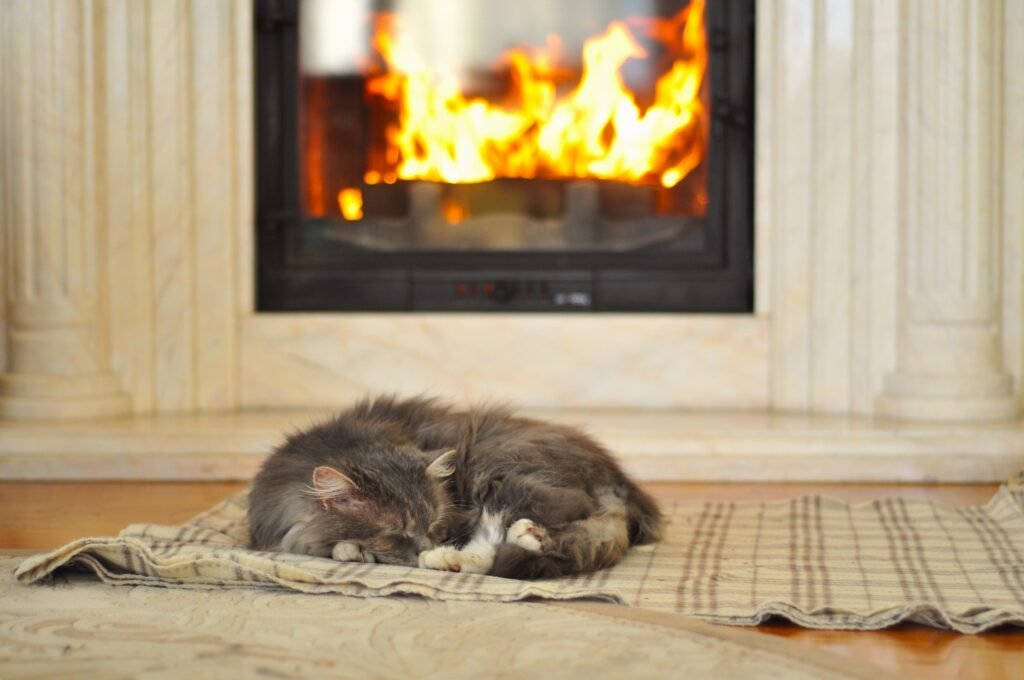
Many owners worry that a cat in heat is in pain because of how upset she appears. The good news is that heat doesn’t usually hurt.
Her feelings are more akin to annoyance and restlessness than pain. She just can’t follow her instincts, which are screaming for her to find a partner.
Nevertheless, she finds the experience to be genuinely stressful. Over several cycles, the persistent hormonal desire, sleep disturbances, and pacing can wear you down.
Another reason to think about spaying is this continuous stress. She is completely spared the frustration when the cycles are broken.
What Happens If Your Cat Mates
The cycle changes drastically if a cat in heat does manage to get close to a male. Everything that happens after mating is altered. From ovulation until a potential litter, this is what happens after mating.
Ovulation and Pregnancy
Her body releases eggs during mating, which typically puts an end to the fever after a day or two. Pregnancy starts if those eggs are fertilized.
A cat’s pregnancy is brief, lasting around nine weeks, or 63 to 65 days. There are usually four kittens in a litter, though there may be more or less.
One Litter, Several Fathers
There’s one more unexpected trick that cats can pull off. There can be multiple fathers in a single litter.
various kittens in the same litter may have various fathers since a cat may mate with multiple men during a single heat. Veterinarians refer to condition as superfecundation.
How Fast Cats Multiply
This explains why the number of stray cats increases so rapidly due to unspayed cats. From a few months of age, a female can give birth to multiple litters annually.
The numbers quickly increase as those kittens mature and procreate. It is the primary cause of shelters’ intense advocacy for spaying and neutering.
How to Help and Calm a Cat in Heat
You can make her much more comfortable while a heat lasts. You both feel less restless after taking a few easy steps. While none of these break the cycle, they lessen its intensity. This is what really aids.
Keep Her Safely Indoors
Keeping her within is the single most crucial step. When a cat is in heat, it will do everything in its power to sneak out and locate a partner.
Being outside for even a short while can result in pregnancy. Every time you open the front entrance, keep an eye on screen doors, close windows, and be vigilant.
Offer Comfort and Warmth
During a heat wave, extra care goes a long way. Some of her restlessness can be calmed with leisurely combing and gentle caressing.
A little warmth is also beneficial. She can be made to feel less uncomfortable and more at peace by placing a covered heat pad or a warm cloth in her preferred location.
Use Play and Distraction
One of your most underappreciated tools is play. A good play session reroutes the impulse to hunt, which is as deep as the urge to mate.
Try using a laser or wand toy for ten to fifteen minutes, especially before bed. Cats that are exhausted tend to be calmer, which typically reduces the intensity of their yowling during the nite.
Try Calming Scents and Sounds
Tension can be reduced with the use of calming tools. She can be calmed and part of the wailing can be muffled by soft classical music or soft background noise.
Plug-in diffusers are one example of a synthetic pheromone product. They help many cats feel more at ease throughout a cycle by imitating their natural relaxing fragrance.
Keep the Litter Box Spotless
In hot weather, a clean litter box is particularly more important. Cats tend to mark or spray more, and the smell of urine can make them mark the house even more.
During this time, change the litter frequently and scoop it every day. Use enzyme cleaners instead of ammonia-based ones because the smell may promote spraying.
Separate Any Males in the Home
If you live with an intact man, keep them totally apart. His very presence has the power to exacerbate her problems and increase her yowling.
More significantly, separation avoids an unintentional litter. Keep in mind that pregnancy might result from even brief contact during a heat.
Spaying: The Only Real Solution
Thus far, all of the advice is a comfort measure rather than a remedy. Spaying is the only action that actually puts an end to heat cycles.
In order to completely stop the cycles, spaying involves surgically removing the uterus and ovaries. It offers significant health benefits in addition to reducing noise, and the time actually affects how protective it is.
The Right Age to Spay
The majority of veterinarians advise spaying between five to six months of age, preferably prior to the onset of heat. When a kitten weighs around two pounds, many shelters spay them even sooner.
The payout is significantly altered by timing. The best defense against mammary cancer is provided by spaying prior to that initial heat, and the advantage decreases with each cycle she experiences.
The Health Payoff
Spaying has a compelling health case. It eliminates the possibility of pyometra, a potentially fatal uterine infection that frequently affects older, unspayed cats.
It also reduces the risk of cancer. An early spay reduces the incidence of malignant feline mammary tumors by around 90% and rules out uterine and ovarian cancer.
Spaying While She’s in Heat
Although many veterinarians advise waiting, you can neuter a cat during a heat. Her ovaries are enlarged and packed with blood vessels during estrus, which makes the procedure a little more difficult.
Your veterinarian could advise scheduling when the heat has subsided if it is not essential. However, spaying in the middle of a cycle is still quite feasible in an emergency or rescue scenario.
Can a Spayed Cat Still Act Like She’s in Heat?
Sometimes a cat who has already been spayed exhibits heat behavior once more. Although it seems perplexing, there is a true answer.
Ovarian remnant syndrome is most likely the cause.
This occurs when a small fragment of ovarian tissue is left over from the spay procedure.Enough hormones can be produced by even a little fragment to cause complete heat cycles.
Months or maybe a year or longer after the first procedure, the symptoms may start to show. See your veterinarian if a spayed cat appears to be in heat. Finding and removing the remaining tissue requires a second, little surgery.
When to See a Vet
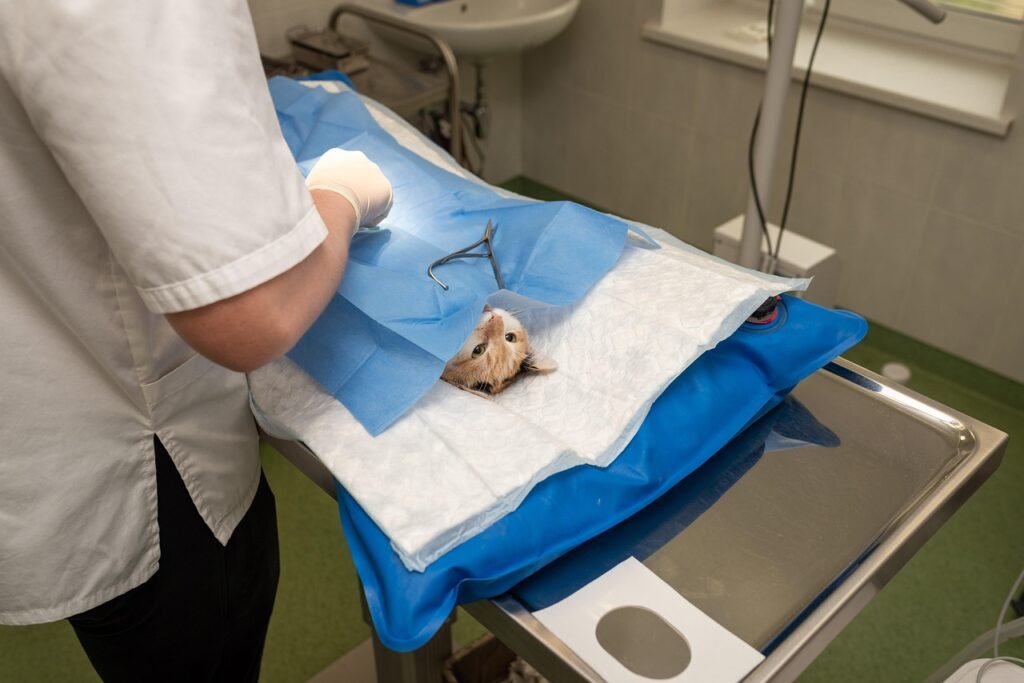
Most heats require patience rather than a trip to the vet. However, there are a few circumstances that do require expert assistance. If a heat persists for more than three weeks without ending, give your veterinarian a call.
After 21 days, persistent heat symptoms may indicate an ovarian cyst that requires medical attention. Additionally, keep a watchful eye out for pyometra symptoms. An emergency that requires quick attention includes a pus-like discharge, an enlarged abdomen, intense thirst, or a suddenly ill, sluggish cat.
Flag any fake pregnancy indicators as well, such as nesting or producing milk without litter. It’s usually a good idea to give the veterinarian a quick call if you have any concerns about her health throughout a cycle.
Frequently Asked Questions
How long does a cat stay in heat?
Although it can last anywhere from one to twenty-one days, a single heat typically lasts seven days. It varies depending on the breed, age, and individual cat.
How often do cats go into heat?
An unspayed cat may go into heat every two to three weeks throughout the mating season. If she doesn’t mate, that could result in multiple cycles in a single month.
Can a cat get pregnant on her first heat?
Yes, without a doubt. Early spaying is crucial because a cat can get pregnant during her first heat, which can occur as early as four months of age.
Do cats bleed when they are in heat?
No. Since cats rarely bleed during heat and do not have periods, any visible blood should be reported to your veterinarian.
Do cats go through menopause?
No. Spaying is the only technique to actually stop the cycles because an unspayed cat remains fertile and continues to cycle throughout her life.
Can a spayed cat still go into heat?
She shouldn’t, but if a tiny fragment of ovarian tissue was left behind following surgery, it might occur. It can be verified and removed by a veterinarian.
Can one litter of kittens have different fathers?
Indeed. A phenomenon known as superfecundation occurs when a cat mates with multiple males during a single heat, giving her kittens multiple fathers.
Is being in heat painful for my cat?
Usually not. Over time, the repetitive cycles become stressful, but it is more annoying and restless than painful.
Will my cat calm down after the heat ends?
Yes, as the heat subsides, she behaves normally again. However, the following cycle normally starts in a few weeks if she is not spayed.
conclusion
What is the duration of a cat’s heat? Throughout the breeding season, the cycle repeats every few weeks, with a single heat lasting an average of one week.
Although the behavior is spectacular, it is not indicative of a medical condition. It is far less stressful when one is aware of the stages and the biology involved.
Keep her inside, provide her with comfort and play, and keep her litter box tidy while a heat wave passes. You both feel less restless after taking these actions.
Spaying is the solution for a long-term solution. It both permanently breaks the cycles and safeguards the long-term health of your cat.