
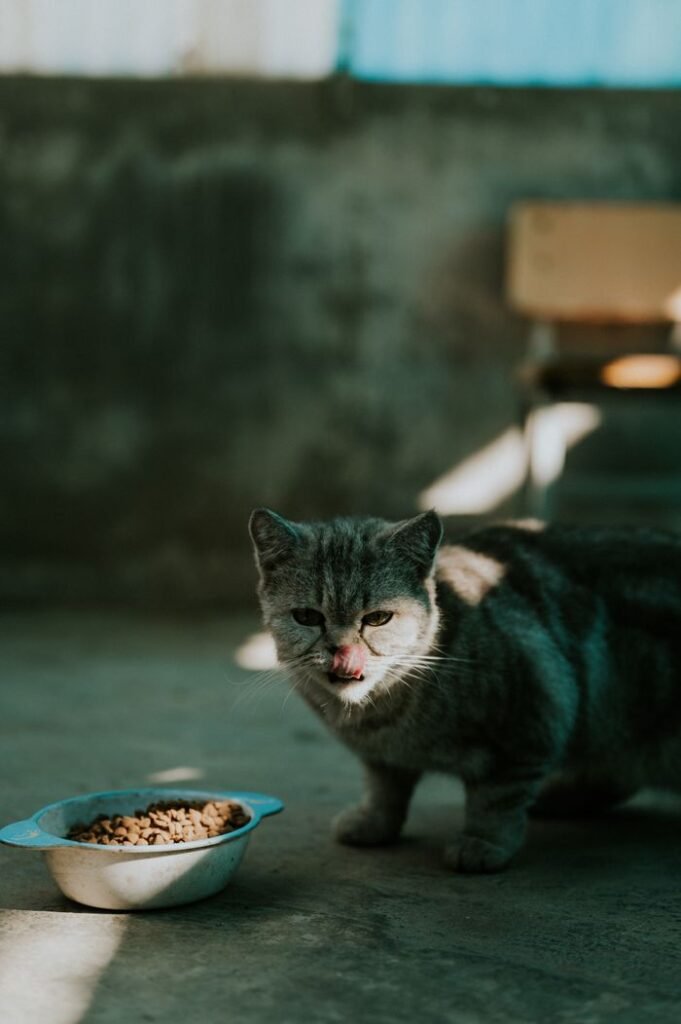
Figuring out how much to feed a cat sounds simple until you actually try it. Wet food scoops, dry food cups, and the chart printed on the bag rarely agree with each other.
The confusion exists because no single number fits every cat. A kitten burns energy in a completely different way than a ten-year-old cat napping on a windowsill.
Guess wrong for long enough, and the effects show up slowly. Extra weight creeps on, or a growing kitten falls behind on the nutrients it needs to develop.
The right portion always traces back to one thing: your cat’s life stage. Once you know that, the numbers stop feeling random and start making sense.
Should I Feed My Cat Wet or Dry Food
Wet food carries a lot of water, often above 70 percent moisture. That extra moisture supports hydration and can ease the load on the kidneys and bladder.
Dry food, on the other hand, keeps longer once opened and costs less per calorie. It also sits out safely, so a cat can graze on it through the day.
Crunchy kibble scrapes away a bit of plaque as a cat bites down. The effect on dental health is real, though it stays modest rather than dramatic.
Neither food type covers every base by itself. That gap is exactly why most veterinarians lean toward combining the two instead of picking one winner.
Do Cats Need Wet and Dry Food
No cat strictly requires both, but combining them fills in each other’s weak spots. Wet food handles hydration, while dry food adds convenience and a lower cost per meal.
Cats naturally drink very little on their own. Their wild ancestors lived in dry climates and pulled most of their moisture straight from prey, so the instinct to drink water never developed strongly.
This low thirst drive matters more than most owners realize. A cat eating only dry kibble may quietly run short on fluids without ever visiting the water bowl often enough to close the gap.
So while neither food is mandatory on its own, a blend tends to serve a cat’s body better than either extreme. That balance also protects against issues like urinary tract inflammation, which shows up more often in cats that barely drink.
How Much Wet and Dry Food to Feed a Cat
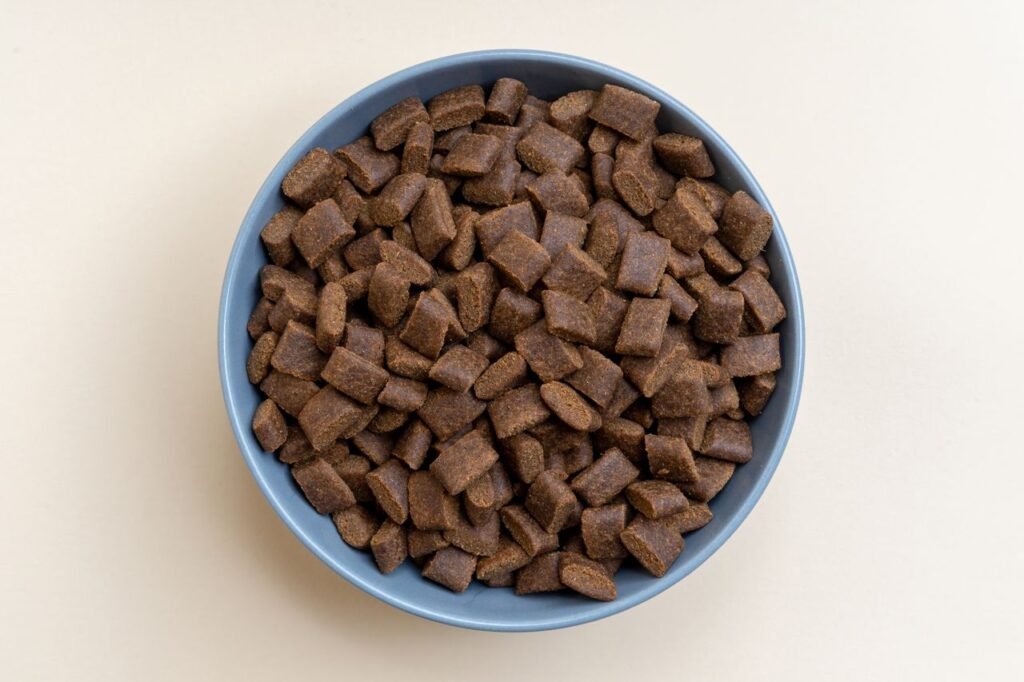
The starting point for any feeding plan is your cat’s daily calorie need, based on weight and life stage. From there, you split that calorie total across wet and dry food in whatever ratio suits your cat.
According to the World Small Animal Veterinary Association (WSAVA), a healthy adult cat generally needs somewhere between 20 and 33 calories per pound of body weight each day, depending on activity level. That range shifts quite a bit once you move outside the average adult stage.
The sections below break those numbers down by life stage, since a kitten, an adult, a senior, and a nursing mother all have very different daily needs.
Kittens
Kittens grow fast, and that growth demands a huge amount of fuel. A four-month-old kitten weighing around three pounds may need close to 250 to 300 calories a day, roughly two to two and a half times what an adult cat of the same weight would eat.
Because their stomachs are small, kittens can’t take in that many calories in one or two sittings. Frequent meals matter more here than the exact wet-to-dry ratio.
A general feeding rhythm looks like this:
- Under four weeks: nursing or bottle feeding every one to two hours
- Four to eight weeks: meals roughly every four to six hours
- Two to six months: three to four small meals spread across the day
- Six months to one year: two to three meals as growth slows
Once teeth come in fully, most kittens can eat wet cat food alongside a dry kitten formula, which covers both hydration and steady grazing between meals.
Adult Cats
Most healthy adult cats, roughly one to seven years old, need about 20 to 30 calories per pound of body weight daily. A ten-pound cat typically lands somewhere around 200 to 300 calories a day.
That range narrows once you factor in activity. An indoor cat that naps most of the day sits toward the lower end, while an active or unneutered cat needs closer to the upper end.
In practical terms, that might mean about half a cup of dry food, or a mix of a half cup and a small can of wet food, split across two meals. Exact amounts still depend on the calorie density printed on your specific food.
Two meals a day works well for most adults. Free feeding, where food sits out all day, tends to encourage overeating and slow weight gain over time.
Senior Cats
Calorie needs typically drop as cats age, mostly because activity slows down. A cat that needed 20 calories per pound as an adult may only need around 15 calories per pound once it reaches its senior years.
That drop isn’t universal, though. Some older cats actually digest fat and protein less efficiently, so despite eating the same amount, they lose weight and may need slightly more food rather than less.
Dental pain and a weaker sense of smell also cut into appetite in older cats, and this is often when a cat stops wanting dry food altogether. Shifting more of the daily total toward wet food, or moistening the kibble, often makes meals easier to finish.
Smaller, more frequent meals tend to suit senior cats better than two large ones. Watching body weight monthly is the most reliable way to catch these shifts early.
Pregnant or Nursing Cats
Pregnancy raises calorie needs gradually as the litter develops inside her, and knowing how to tell if a cat is pregnant early on gives you time to adjust her food before the real demand hits. Nursing pushes those needs much higher still, sometimes to two to six times her normal maintenance calories, depending on litter size and how many weeks into lactation she is.
Peak demand usually hits around three to four weeks after birth, when milk production is at its highest. Free access to food, or four to six smaller meals a day, helps her keep up without going hungry between feedings.
Wet food plays a bigger role here too, since nursing drains a queen’s hydration along with her energy reserves. Moistened dry food or a wet-food-heavy diet supports both needs at once during this demanding stretch.
Should You Mix Wet and Dry Cat Food
Combining wet and dry food in the same meal is perfectly fine and, for most cats, actually the better approach. It delivers the hydration benefit of wet food alongside the convenience and dental edge of dry food in one sitting.
Some owners prefer to separate the two instead, offering wet food at set mealtimes and leaving a small amount of dry food out for grazing. This approach can make portion control a bit easier to track visually.
Either method works as long as the total daily calories stay in the right range. The better choice usually comes down to your cat’s personality and how closely you want to monitor each meal.
Can You Mix Wet and Dry Cat Food
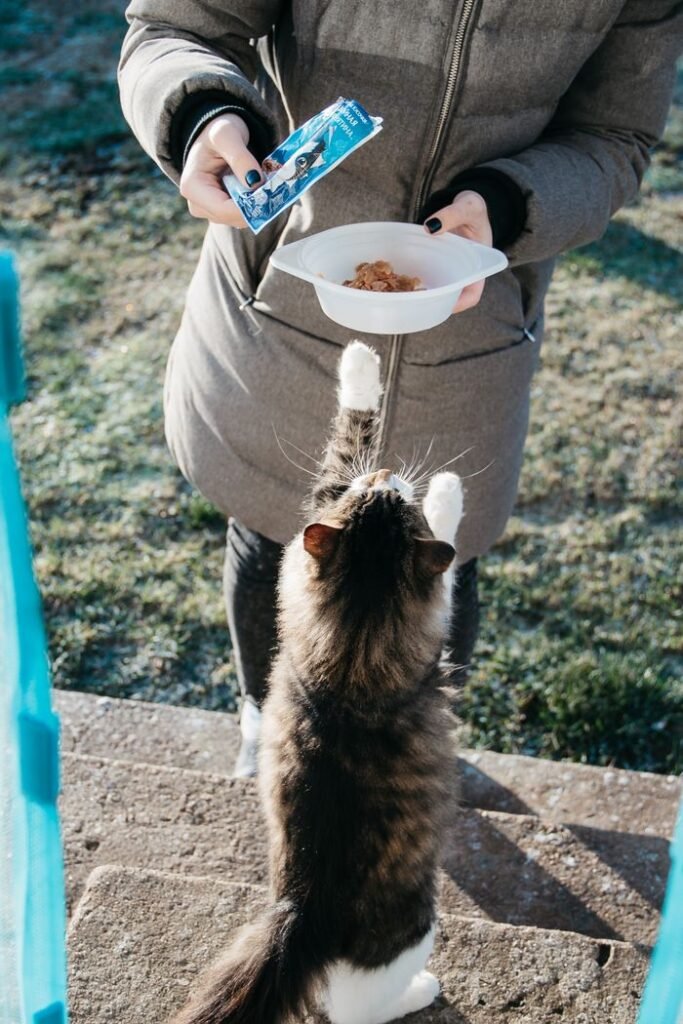
Mixing the two in one bowl is safe from a digestive standpoint. A cat’s stomach handles both textures without any trouble, so there’s no health risk in combining them at mealtime.
The bigger concern is freshness rather than safety. Wet food starts to dry out and attract bacteria if it sits out for more than a couple of hours, especially at room temperature.
If you mix both into one bowl, plan to remove any uneaten portion after that window rather than leaving it out all day. Dry food alone can sit safely for much longer, which is part of why some owners choose to serve it separately.
Storing leftover wet cat food in the fridge, covered, keeps it usable for a day or two. Dry food should stay in a sealed container away from heat and moisture to avoid spoilage over time.
Getting Your Cat’s Daily Feeding Balance Right for Good
There’s no single scoop size that fits every cat, and that’s the whole point. A kitten, an adult, a senior, and a nursing mother all burn calories at different rates, and their wet-to-dry ratio should shift right along with that.
If you remember one rule going forward, make it this: start from your cat’s daily calorie need based on weight and life stage, then split that total between wet and dry food in a way that supports hydration without sacrificing convenience. Weigh your cat every few months, watch their body condition, and adjust the amount before a small drift turns into a bigger problem.