
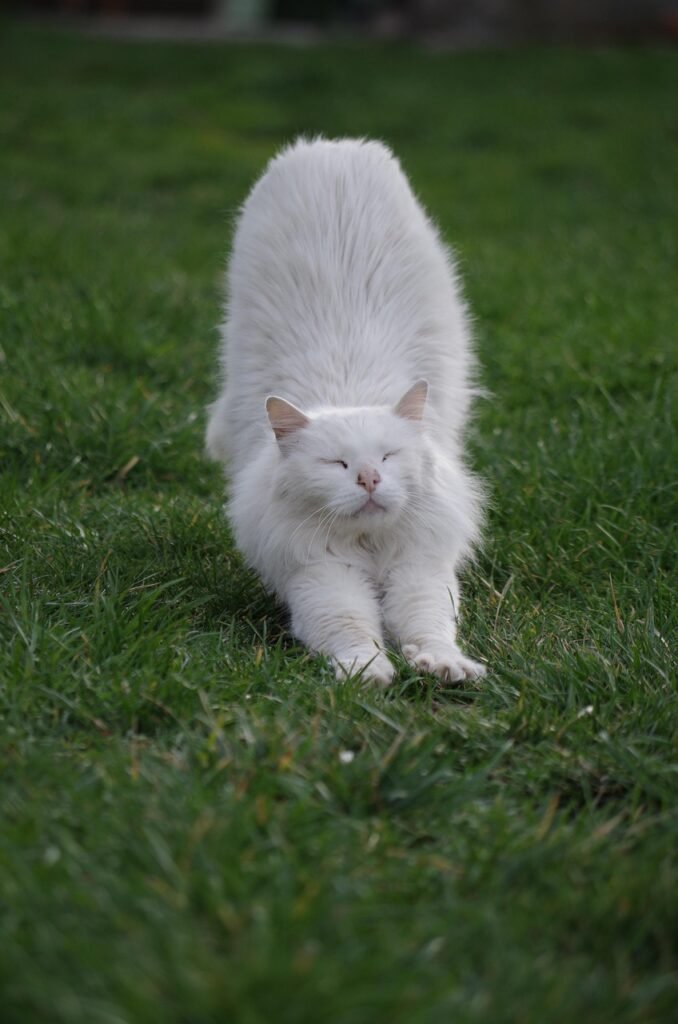
You’re petting your cat, everything seems calm, and then suddenly a ripple runs down her back like a wave under her fur.
Maybe she jumps up, looks back at her body, or even nips at the area. It can look strange, especially when you notice it for the first time.
The good news is that back twitching is fairly common in cats and does not always mean something is seriously wrong.
Still, there are several possible reasons for this behavior. Some are harmless, while others may need a vet’s attention.
This guide explains the common causes of cat back twitching and the signs that can help you understand what may be happening with your cat.
Why Does My Cat’s Back Twitch?
A twitching back can have several causes, including neurological problems, skin irritation, muscle or joint pain, and stress or overstimulation.
The way your cat behaves during an episode can give you useful clues. For example, you may notice excessive grooming, sensitivity to touch, changes in mood, or a reaction when you pet a certain area.
Let’s look at the most common reasons your cat’s back may twitch.
Neurological Causes: Feline Hyperesthesia Syndrome
Feline hyperesthesia syndrome, sometimes called twitchy cat disease or rolling skin syndrome, is one possible reason for back twitching.
According to Cornell University’s College of Veterinary Medicine, hyperesthesia involves increased sensitivity in an area of a cat’s skin, usually along the back and often near the area in front of the tail.
You may notice your cat suddenly reacting when you touch this area. She may scratch, bite, move away, or become restless.
During an episode, the skin along the back may ripple or roll, and the pupils may become wider. Some cats may also drool, chase their tails, or make unusual sounds.
These episodes are usually brief and may happen without an obvious trigger.
Dermatological Causes: Skin Irritation, Fleas, and Allergies
Sometimes, the twitching is caused by something affecting the skin rather than the nerves.
Flea bites, allergies, and other types of skin irritation can make the back itchy or uncomfortable. A cat may twitch, lick, scratch, or bite the area because she is trying to relieve that irritation.
Fleas can also be difficult to spot because cats groom themselves frequently. So, not seeing fleas does not always mean they are not present.
Mites, food sensitivities, and contact allergies may also irritate, particularly around the lower back and base of the tail.
If your cat has twitching along with red skin, scabs, hair loss, or frequent scratching, a skin problem may be worth checking with your vet.
Musculoskeletal Causes: Pain, Injury, or Spinal Issues
Back twitching can also happen when a cat is experiencing pain or discomfort.
A strained muscle, injury, joint problem, or another painful condition may cause small, repeated muscle movements.
Cats are very good at hiding pain, so twitching may sometimes be one of the few signs that something is bothering them.
Look for other changes, such as reluctance to jump, a hunched posture, reduced activity, or sensitivity when you touch the back.
If the twitching started after a fall, rough play, or an accident, it is a good idea to have your cat checked by a vet.
Behavioral and Stress-Related Causes
Not every twitch has a medical cause. Stress, excitement, and overstimulation can also make a cat react with sudden twitching.
A new pet, a move, unfamiliar visitors, or loud noises can make some cats feel stressed.
Long petting sessions can also become too much for some cats. Your cat may suddenly twitch, move away, or become irritated when she has had enough.
While researching this topic, I came across a Reddit comment from a cat owner who shared a similar experience. They explained that their cat would twitch and become irritated when touched around the back and tail area.

This kind of experience shows why some cats may react differently when they are touched or petted around sensitive areas. If your cat reacts this way, it is better to stop petting that area and give her some space. In these situations, the twitching may settle once the cat is calm, and the source of stress or overstimulation is removed.
Why Does My Cat’s Back Twitch When Touched?
Touch is a common trigger for back twitching in some cats.
Cats with feline hyperesthesia may react strongly when their skin is touched, particularly around the lower back.
If your cat suddenly twitches, becomes restless, turns toward your hand, or tries to move away when you touch a certain area, avoid continuing to pet that spot.
Repeated touching can make the reaction stronger and may cause an otherwise gentle cat to scratch or bite.
The safest approach is to stop petting the area and give your cat a moment to calm down.
Cat Back Twitching and Licking
When twitching happens along with constant licking or biting, your cat may be trying to deal with irritation or discomfort.
Cats with hyperesthesia may lick or bite themselves excessively, especially around the flanks, lower back, tail, and rear area.
This combination can also happen with itchy skin, allergies, fleas, or other sources of discomfort.
Excessive licking may eventually cause hair loss or sore skin in the affected area.
If your cat repeatedly licks or bites the same spot every day, especially if the area is becoming bald or irritated, it is worth talking to your vet.
Why Does My Cat Keep Twitching?
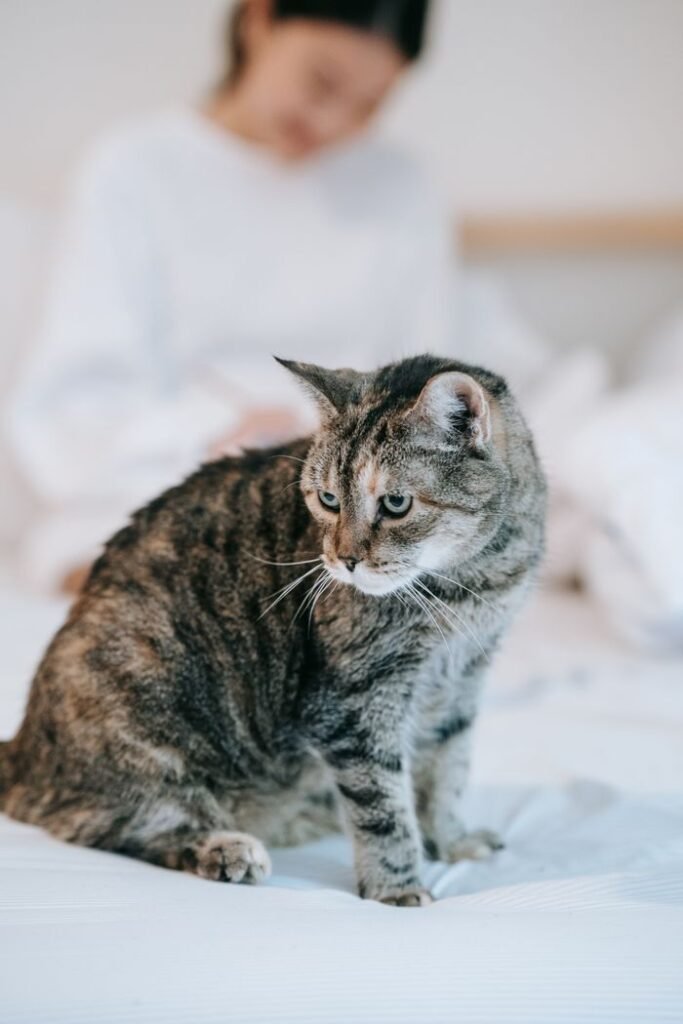
An occasional twitch during a long petting session is one thing. Twitching that happens every day or several times a day deserves more attention.
How often the twitching happens can give you a useful clue. A cat that twitches occasionally when overstimulated may simply be reacting to too much touch or excitement.
However, frequent twitching that happens even when your cat is resting may point to an ongoing problem, such as skin irritation, pain, or another underlying issue.
If the twitching becomes more frequent, intense, or is accompanied by other unusual behavior, a vet can help determine the cause.
Recognizing When Your Cat’s Twitching Back Needs a Vet Visit
Three things are especially useful to watch when deciding whether your cat needs a vet visit.
First, watch how your cat reacts to touch. A small flinch may not be concerning, but sudden aggression or a strong reaction to touch around the back can indicate discomfort.
Second, pay attention to grooming. Twitching combined with constant licking, biting, scratching, or bald patches may suggest skin irritation or another source of discomfort.
Third, keep track of how often it happens. An occasional twitch may not be a concern, but frequent or worsening episodes should be checked.
A vet can help rule out problems such as fleas, allergies, pain, or other underlying conditions. Before your appointment, make a note of when the twitching happens, how long it lasts, and what seems to trigger it. This information can help your vet better understand your cat’s behavior.