
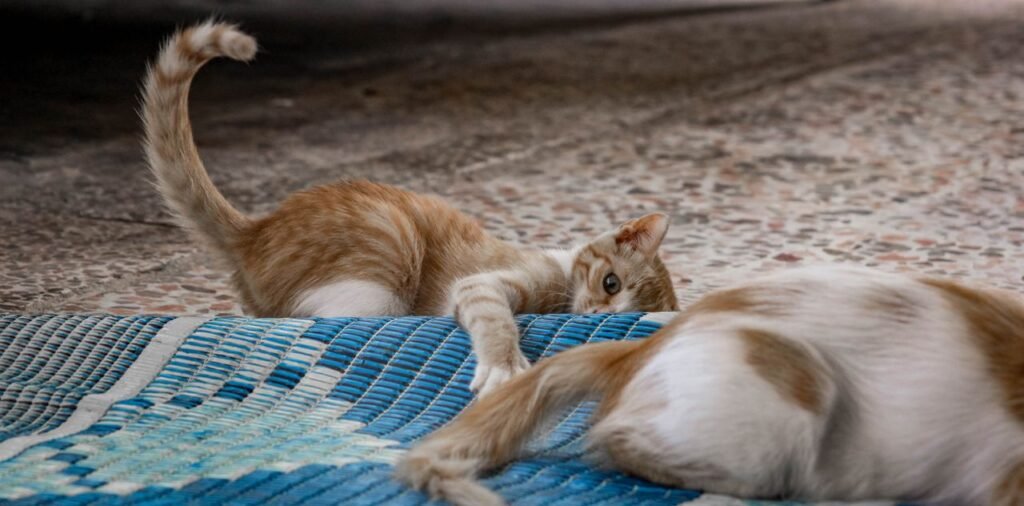
Have you ever noticed your cat’s tail suddenly twitching, flicking, or quivering? One day, I noticed that my cat’s tail was moving, but it wasn’t just her tail. Her eyes also looked surprised, and her whole body seemed uncomfortable. When I went closer, I saw that she was watching a snake and moving her tail while meowing. After seeing this, I researched the behavior and found that tail movement can sometimes be completely normal, but it does not always mean the same thing.
In some cases, tail twitching is simply a sign of excitement, interest, or irritation. However, frequent twitching may sometimes be related to stress, skin irritation, pain, or an underlying medical condition.
To understand why your cat’s tail is twitching, you need to look beyond the tail itself. Your cat’s ears, eyes, body posture, activity, and other behaviors can also provide important clues.
How to Tell If a Cat’s Tail Means Happy or Scared
You watch your cat’s tail flick and wonder what it actually means.
One second it looks calm, the next it puffs up like a bottle brush, and you’re left guessing.
That confusion is fair, because a tail rarely tells the whole story on its own.
This guide walks you through what your cat’s tail is really saying, and how to read it with more confidence.
What Does Tail Twitching Mean in Cats?
A cat’s tail movements can have different meanings depending on the situation. In a Reddit discussion, one cat owner shared that his cat holds her tail upright, with the tip up, when she is happy and excited to greet him.
Another commenter explained that the meaning of a cat’s tail movement depends on its overall behavior and the surrounding situation. According to the commenter, a frightened cat may have a puffed-up tail and may also hiss, growl, or make startled meows. In contrast, a relaxed and happy cat may display friendly body language.
The tail alone rarely gives you a full answer. What matters just as much is the setting your cat is in and what else its body is doing. A puffed tail during a thunderstorm means something different than a puffed tail during rough play with another cat.
The two sections below break down exactly what to look for in each state, starting with happiness and moving into fear.
Signs of a Happy Cat
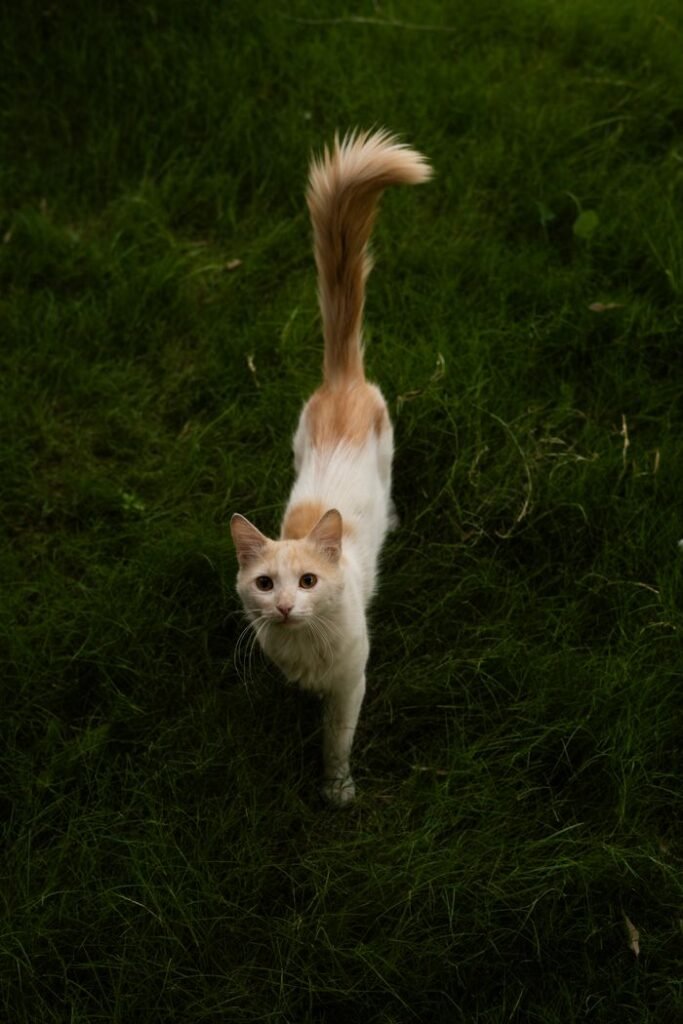
A content cat carries its tail differently. It usually sits upright, sometimes with a soft curl near the tip that looks almost like a question mark.
A gentle sway or slow swish while the rest of the body stays loose also points to comfort rather than stress.
Look for these signs together with a relaxed tail:
- Steady purring while being petted or held
- Soft, slow blinking directed at you
- Kneading with the front paws on a blanket or lap
- No flattened ears, wide eyes, or crouched posture
- Rubbing its head or side against your leg
These signals show up most during play, right before feeding time, or while your cat is receiving affection from someone it trusts.
Signs of a Scared Cat
A frightened cat often puffs its fur out, especially along the tail, to look bigger and scarier to whatever is threatening it.
The tail itself may bristle completely, or curl tightly around the body if the cat is trying to shrink instead of appear larger.
Watch for these signals alongside the tail when fear is present:
- Growling or a deep, steady hiss aimed at the trigger
- Sharp, startled meows that sound higher than normal
- Ears pinned flat and pointed sideways or backward.
- Wide pupils even in a well-lit room
- Crouching low with the body pressed toward the ground
Common triggers include unfamiliar animals, strangers entering the home, sudden loud noises, or a stressful trip to the vet.
What Hissing and Growling Really Mean
When a cat feels scared, it often hisses or growls, and these sounds almost always show up alongside that same puffed-up tail.
During a hiss, the cat opens its mouth and pushes air out fast, and its teeth usually become visible too.
It works like a warning, as if the cat is saying to back off right now before things get worse.
Growling usually kicks in once a hiss has already gone unnoticed and nobody has backed away.
The moment you hear either sound, take it as a sign your cat needs space right away, not comfort or closeness.
Sometimes the cat is also telling you it wants to get past something that feels threatening, so it’s best to clear the
way simply.
How to Test Which Signal You’re Seeing
If you are still unsure whether your cat is scared or simply excited, there is a quick way to check without causing more stress.
Sit down slowly and hold out one hand at a low, non-threatening height, without reaching toward the cat directly.
A happy cat will usually step forward on its own, rub against your fingers, or lift its tail higher as it approaches.
A frightened cat will do the opposite. It will back away, flatten its ears, or hold perfectly still while watching you closely.
Never chase or corner a cat to test its mood, since this can turn mild wariness into real panic within seconds.
Letting the cat choose whether to approach can give you a better idea of how comfortable it feels.
When Should You See a Vet?
Most of the time, a little tail twitching is nothing to worry about, especially when your cat is otherwise acting normally. But if the twitching keeps happening or suddenly becomes more frequent, it is worth paying closer attention.
You should consider talking to a vet if you notice other unusual signs along with the tail movement, such as your cat reacting strongly when touched, repeatedly licking or biting its back or tail, developing irritated skin or hair loss, or suddenly changing its normal behavior.
It is also a good idea to get your cat checked if it seems uncomfortable, has trouble moving its tail normally, or the twitching happens repeatedly without an obvious reason.
A vet can look at the bigger picture and help determine whether the movement is simply part of your cat’s body language or whether something else may be causing it.
Reading Your Cat’s Tail with Confidence
Once you combine tail position with the sounds and posture around it, guessing turns into genuine understanding.
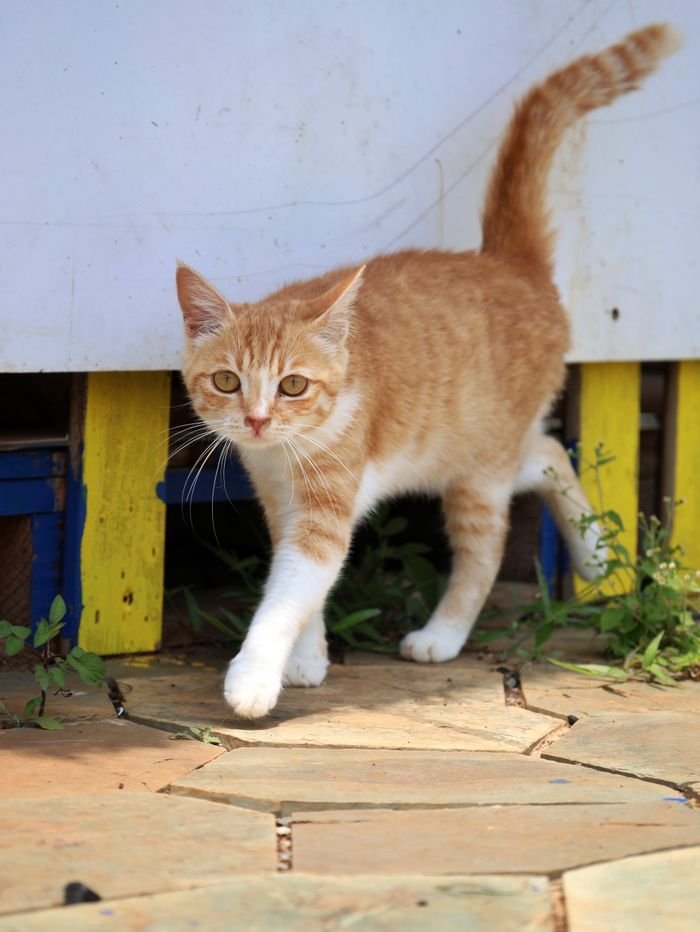
According to PetMD, a tail that stands upright while the body stays loose points to a cat that feels social and confident, while a low, puffed, or tightly curled tail points the other way entirely.
You don’t need to memorize every possible tail shape to get this right. Watching the whole picture, tail included, is enough to know how your cat is really feeling.
With a little practice, you’ll catch these signals almost without thinking, and your cat will feel far better understood because of it.
Conclusion:
A cat’s tail can tell you a lot, but it is rarely the only clue. By paying attention to your cat’s tail along with its ears, eyes, posture, and behavior, you can better understand whether it is happy, excited, scared, or simply reacting to something around it.