

Feeling your cat’s leg suddenly jerk can be quite frightening. You may wonder whether it’s a dream or something to worry about when her leg shudders or flicks on its own. She is sleeping soundly or unwinding for a moment.
As cats sleep, play, and react to their environment, limb twitching is usually harmless. Twitching, however, can also indicate a problem, from minor skin irritation to more serious conditions like a toxin or a seizure.
Learning how to tell the difference between normal twitches and those that need attention matters. Timing, surroundings, and other aspects of your cat’s life often shape how it shows up.
This tutorial covers the causes of a cat’s leg twitching (benign and medical), the difference between twitching and tremors, warning signs to watch for, and what to do when you see them.
What Cat Leg Twitching Actually Is
Leg twitching is the tiny, sudden, uncontrollable movement of a cat’s leg muscles. It usually looks like a quick flick, a paw flutter, or a brief, uncontrollable shudder.
Remember, twitching is not a diagnosis, but an indication. The movement itself tells just part of the story; it can imply anything from a pinched nerve to a vivid dream.
An occasional leg twitch is usually not a cause for concern. When your cat twitches regularly, when they are wide awake, or when it comes with other symptoms like discomfort, weakness, or behavioral changes, the picture changes.
Harmless Reasons a Cat’s Leg Twitches
Since it covers most circumstances, let’s start with the good news. Excessive limb twitching is normal and doesn’t require medical treatment. Here are the common, innocuous reasons.
Dreaming During REM Sleep
Dreaming is the most typical reason. Like humans, cats cycle through deep REM sleep, during which the brain creates bursts of activity that disturb the body’s regular quiet.
Little kicks, paw flutters, whisker twitches, and tail flicks during a slumber are the result. Because they spend a bigger percentage of their sleep in REM, kittens twitch even more. This is basic healthy sleep as long as your cat wakes up often and the twitches are minor.
Muscle Relaxation After Play
Leg muscles work hard during energetic play periods that involve jumping, chasing, and pouncing. Those muscles require a moment to relax when the activity ceases.
During that cooldown, the muscle merely releases accumulated tension with a brief twitch or two. Once your cat has properly slept, it normally vanishes within minutes and doesn’t return.
A Reflex to Touch, Sound, or Excitement
Sometimes leg twitches are just reflexive. An unexpected noise, a quick nearby movement, or a light touch in a ticklish area can trigger an unintentional, instinctual tiny jerk.
The same happens with increased excitement. While its body remains coiled and ready to spring, a cat laser-focused on a bird outside the window may quiver its legs slightly.
Health-Related Causes of Leg Twitching

If your cat twitches frequently while awake, or with other symptoms, it may signal a health issue. These can range from minor irritations to serious emergencies.
Understanding these medical factors is critical, as they range from mild to severe.
Pain, Injury, or Arthritis
When the surrounding muscles tighten and relax, a sore leg may twitch. Both recent trauma, like a sprain or bruise, and chronic discomfort, such as arthritis-related joint pain common in older cats, can cause this.
A warning sign is touch sensitivity. If your cat flinches, pulls away, or becomes agitated when you touch a particular spot on their leg, it likely hurts and needs a vet checkup.
Fleas, Allergies, and Itchy Skin
Itchy skin causes a lot of restless movement. When fleas, food allergies, or environmental allergens irritate the skin, a cat may repeatedly scratch, bite, or shake a leg.
Like a shiver, what looks like a twitch is actually the thin layer of muscle beneath the skin reacting to the itch. Watch for red pimples or bald patches, frequent licking of a single area, flea dirt specks in the fur, or persistent scratching at one leg.
Feline Hyperesthesia Syndrome
A poorly understood nerve disorder called feline hyperaesthesia syndrome makes a cat’s skin extremely sensitive, typically at the lower back and base of the tail. Signs of an episode include rippling skin, dilated pupils, frenetic grooming or biting, abrupt runs, and sporadic twitching.
Affected cats may occasionally twitch their legs or move dramatically during an episode, which usually lasts less than a minute, even though it primarily affects the back rather than the legs. Consult a veterinarian if episodes are severe or frequent.
Poisoning and Toxins
Because of its prevalence and urgency, this is one of the most important causes to understand. Permethrin, an insecticide present in dog flea and tick products, is by far the most common toxin that causes a cat’s muscles to twitch and quiver.
Even a tiny amount of permethrin, such as what rubs off a newly treated dog, can cause heavy drooling, a shaky gait, severe muscle tremors, twitching, and seizures in cats because they can’t digest it.
Antifreeze, lilies, and several household chemicals are additional risks. An emergency arises if twitching occurs after a flea treatment or potential toxin exposure.
Low Blood Sugar or Calcium
Twitching and tremors can also stem from issues with a cat’s body chemistry. Hypoglycemia, or low blood sugar, can induce weakness, trembling, and convulsions and is especially dangerous in small kittens, diabetic cats receiving excessive insulin, and extremely sick cats.
Because low blood calcium causes muscle cells to fire on their own, it can have a similar effect. In addition to kidney disease and certain hormone issues, it most frequently manifests in nursing mother cats. Veterinary care must be provided quickly in both cases.
Seizures and Nerve Problems
Seizures and nerve injury are at the very end. A focal seizure might look like persistent twitching in one leg or one side of the body, sometimes while the cat appears strangely “checked out.”
Seizures don’t always involve dramatic, full-body convulsions. The cat collapses, stiffens, paddles its legs, drools, and frequently loses awareness and urinary control during a generalized seizure.
Odd, one-sided twitching can also result from nerve injury, such as a pinched nerve. Any suspected seizure is a medical emergency, particularly if it is the first, lasts more than a few minutes, or occurs repeatedly.
Twitching vs. Tremors: What’s the Difference?
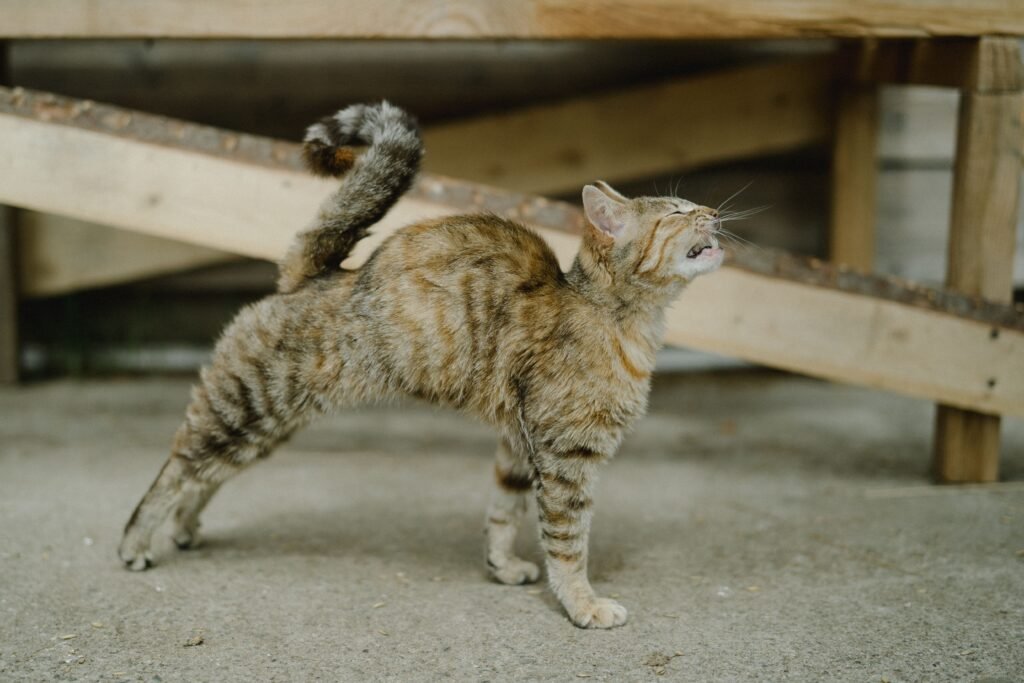
Although these terms are frequently used interchangeably, veterinarians understand them to mean different things. A twitch is a quick, isolated jolt that begins and ends in a second or two, usually in a single tiny muscle area.
A tremor is a long-lasting, rhythmic shaking that often covers a larger portion of the limb or body, and the cat can’t easily shake it off.
Generally speaking, a little flick during a nap seems to be harmless, but persistent shaking, especially when combined with weakness, stumbling, or confusion, leans toward something that needs to be checked.
Cat Leg Twitching While Sleeping
Owners are most likely to notice sleep twitching; therefore, it merits further investigation. Your cat’s body stays largely limp as it dreams, but its brain generates activity patterns very similar to when it’s awake.
Little paw flutters and leg kicks are just the dreaming brain sending out a few signals. This is typical when your cat wakes up peacefully and alertly, and the movements stay short, quick, and limited to a paw, leg, or ear.
Kittens are the most likely to do it, but healthy cats of all ages do it. Twitching during sleep that develops into rigid, full-body jerking; drooling or loss of urinary control; or leaving your cat confused and difficult to wake up are all abnormal.
These symptoms require a veterinarian’s attention since they indicate a seizure rather than a dream.
Warning Signs That Mean You Should Call the Vet
You rarely need a veterinarian for a single twitch during a nap or after play. When twitching happens frequently, worsens, or occurs alongside other symptoms, the situation changes.
If you observe any of these in addition to the twitching, schedule a visit with the veterinarian:
- Twitching that occurs every day or is clearly worsening.
- Walking erratically, limping, or having difficulty bearing weight.
- Signs of pain, such as screaming, hiding, or flinching.
- Poor energy, decreased appetite, or reclusive behavior.
- Sudden sensitivity or hostility when touched.
Certain circumstances are genuine emergencies that cannot wait. See a veterinarian immediately if the twitching becomes a seizure, lasts more than a few minutes, or repeats; if your cat falls, can’t stand, or loses awareness or bladder control; or if the twitching occurs after a flea treatment or suspected poisoning.
What to Do When Your Cat’s Leg Is Twitching
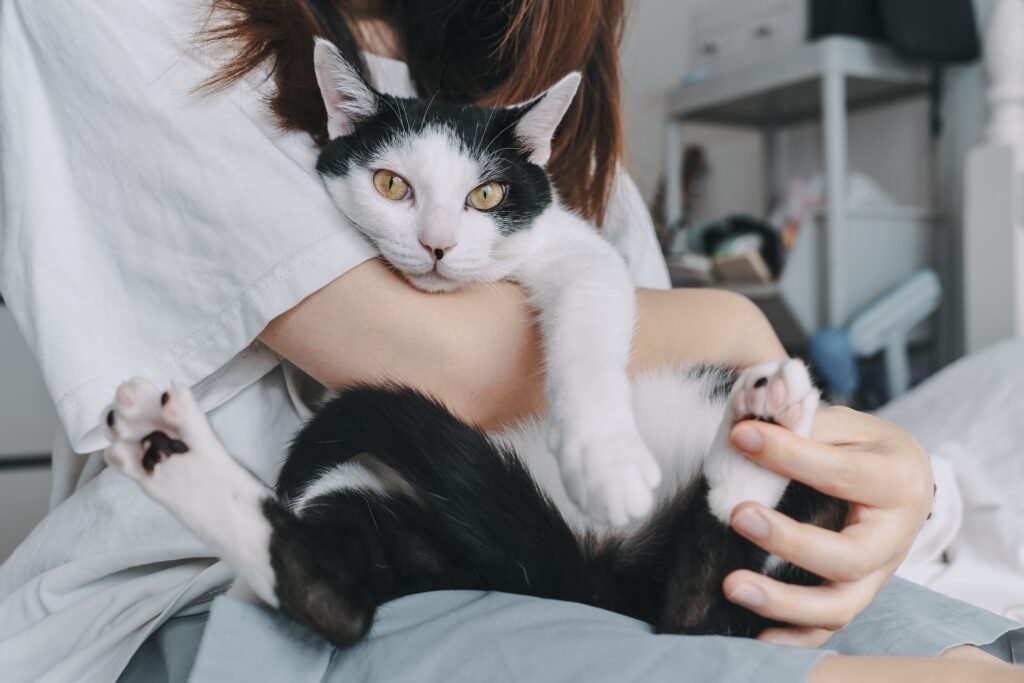
Take a moment to observe before drawing any conclusions. Keep an eye out for the times when your cat twitches the most, whether it’s during sleep, shortly after play, or suddenly when they’re sleeping.
Your veterinarian may learn a lot from this pattern. Make a little movie using your phone if you can. Veterinarians often say video is much more helpful than a description, and twitching usually stops the moment you walk over.
Note any triggers as well, such as a recent flea product or a touch close to the tail. Never give a human drug to your cat to stop them from twitching. Aspirin, ibuprofen, and acetaminophen are common analgesics that can be lethal to cats.
You can gently wash it off with warm water and mild dish soap if you think a dog flea product is the cause, but if your cat is already shivering violently or seizing, forego the bath and go straight to the vet.
Instead of restraining a cat that is actively seizing, keep it safe by dimming the lights, making less noise, removing harsh items, and keeping your hands away from its mouth.
Then call an emergency facility or your veterinarian immediately. In a toxin emergency, hotlines such as the ASPCA Animal Poison Control Center at 888-426-4435 and the Pet Poison Helpline at 855-764-7661 can assist you.
Frequently Asked Questions
Is cat leg twitching while sleeping normal?
Yes, most of the time. Small, harmless twitches occur during REM sleep, when the brain stays active while the body rests. You should only be concerned if your cat has stiff convulsions or is difficult to wake up thereafter.
Why does my cat’s back leg twitch?
Like front legs, back legs can twitch because of reflexes, itchy skin, and dreams. Persistent twitching in the back legs of senior cats is worth a thorough examination because arthritis and joint pain are more common there.
Can stress cause my cat’s leg to twitch?
It is possible. Anxious cats often store stress in their muscles, which can release as small twitches. After the stressor, such as a new pet or a change in routine, is resolved, this normally improves.
My cat’s leg is twitching while she is awake. Should I worry?
Sleep twitching is less concerning than awake twitching. Persistent one-sided twitching may be a reflex or an itch, but it can also indicate a localized seizure or nerve problem; therefore, consult a veterinarian.
Is leg twitching a sign of pain?
Occasionally. Pain is frequently indicated by twitching combined with flinching, limping, or sensitivity to touch. Your cat is less likely to be in pain if it is only twitching without other symptoms.
When is cat leg twitching an emergency?
If it turns into a seizure, lasts more than a few minutes, repeats, or is accompanied by collapse, loss of consciousness, or loss of bladder control, treat it as urgent. Twitching immediately after a flea treatment is also an emergency.
Reading Your Cat’s Twitches
A twitching cat leg usually requires no action and is often just a dreaming paw or a muscle releasing after play. Cats are just fidgety animals, especially when they’re sleeping.
Context matters. While regular, awake, or worsening twitching, or twitching combined with pain, weakness, or strange behavior, is your signal to take a deeper look, a fast flick during a nap is comforting.
Above all, watch for major triggers. Anything that triggers a seizure, a flea product, or potential poisoning is an emergency that requires quick medical attention. The best defense is knowing what is typical for your cat so you can spot changes quickly.