
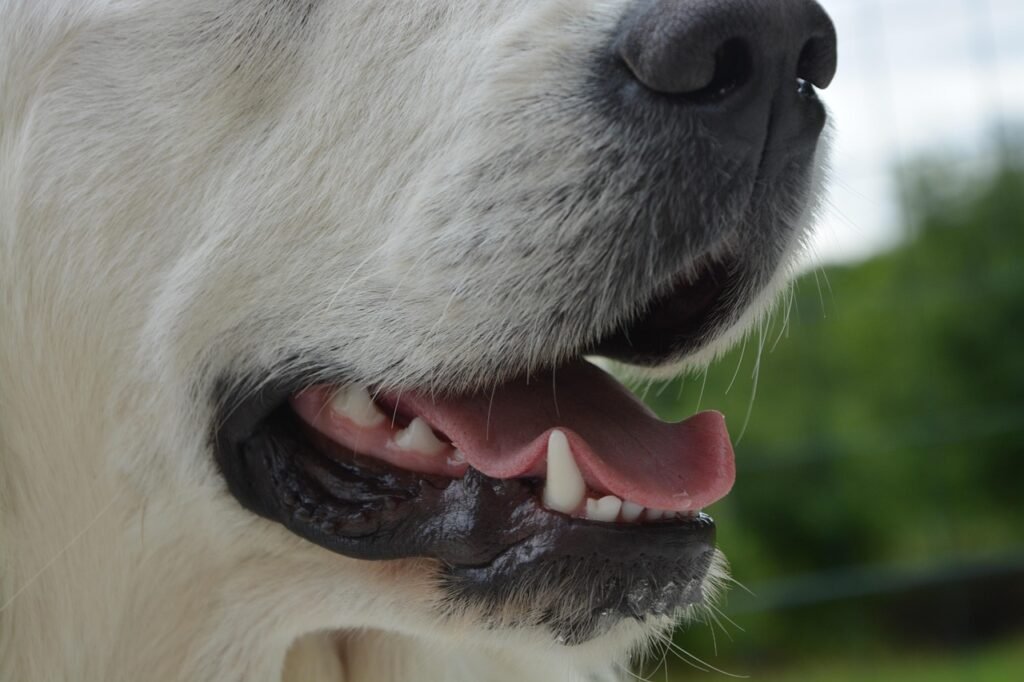
Have you ever found one of your dog’s teeth lying on the floor? If so, there’s usually no need to worry. Puppies naturally lose their baby teeth to make room for their permanent adult teeth. A puppy has 28 baby teeth, while an adult dog has 42 permanent teeth.
But how many teeth do dogs actually lose? When and why do these teeth fall out? Do dogs lose all of their teeth or only certain ones? And when should you take your dog to a veterinarian? In this guide, we’ll answer all of these questions and explain everything you need to know about the dog teething and tooth-loss process.
How Many Teeth Do Dogs Lose At a Time?
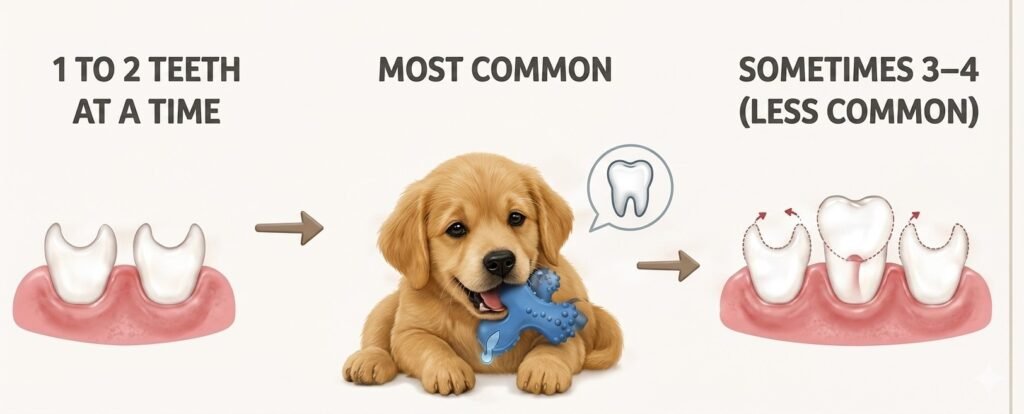
Many dog owners wonder how many teeth dogs lose at a time. When they notice their puppy’s teeth falling out or find a small tooth on the floor, they often become concerned.
However, this is usually a normal part of the teething process. Puppies gradually lose their baby teeth as permanent adult teeth grow in their place.
Dogs do not lose all of their baby teeth at once. Instead, they lose a few teeth at a time over several weeks or months. A puppy has a total of 28 baby teeth.
The 12 front incisors are usually the first to fall out at around three to four months of age. The 12 premolars typically fall out between four and five months, while the four canine teeth are usually the last baby teeth to be replaced, often between five and six months of age.
This gradual process allows puppies to continue eating and drinking comfortably while their adult teeth develop. If all of their baby teeth were to fall out at the same time, their gums could become sore and may even bleed, making it difficult for them to eat and drink. That is why nature has designed the dog teething process to occur slowly rather than all at once.
How Many Times Do Dogs Lose Their Teeth?
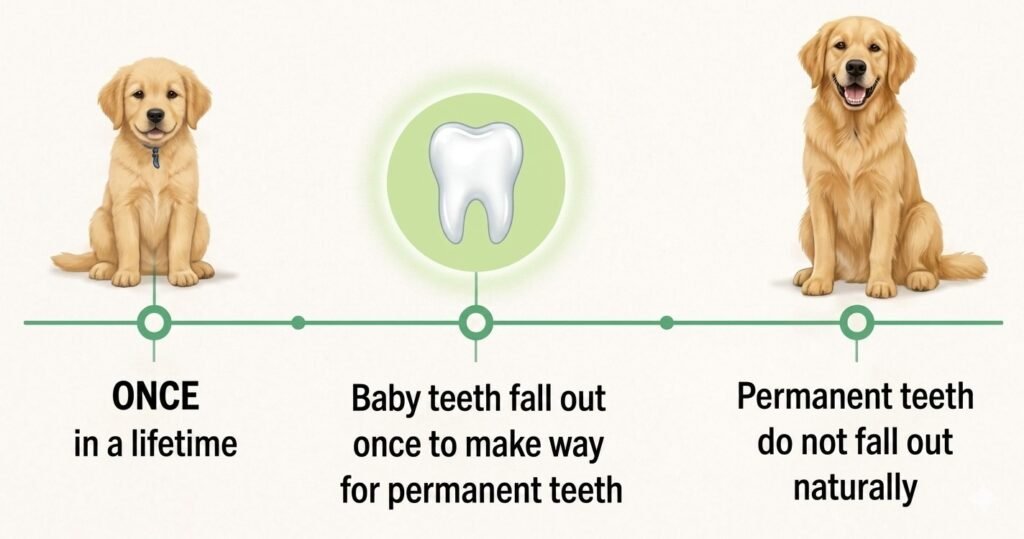
This is a common question, and almost everyone knows it. If you don’t know yet, you need to be aware of it for your dog’s care. Of course, dogs generally lose a set of teeth only once in their lives: during puppyhood, when the baby teeth are replaced by permanent teeth.
After this process, dogs have permanent teeth and usually no more teeth fall out. If teeth continue to fall out after adulthood, it is a sign of illness or injury, as I’ve already described.
Therefore, the general “tooth loss” process of a dog only occurs during childhood, and it is considered unusual for an adult dog to lose teeth.
How Many Sets of Teeth Do Dogs Lose?
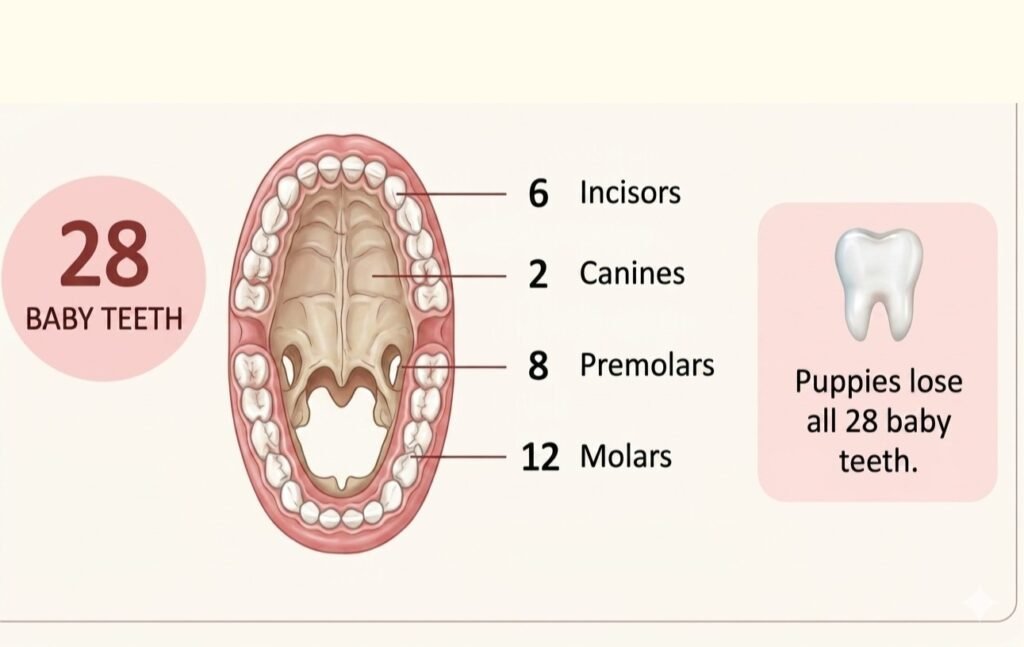
There are not a lot of sets of dog teeth; here we are talking about only two sets of your dog’s teeth, because they only have two. A dog has two sets of teeth in its life: milk (primary) and permanent (secondary) teeth.
A newborn dog’s first 28 milk teeth appear during its puppyhood, and later all of these are shed to form 42 permanent teeth by adulthood.
In theory, only the first set (milk teeth) is lost; the second set is the permanent teeth that must remain intact. If a permanent tooth falls out, it is due to a medical problem.
How Many Teeth Do Dogs Lose? Baby v.s Older Dogs
There is a different teething stage between a puppy and an adult dog. Since it depends on your dog’ s age, you should have an idea about it, so actually, at what age what is happening with your dog’s teeth.
Teething in puppies (at the age of 3 to 7 months) is a normal part of aging; during this time, a puppy gradually loses all 28 baby teeth and replaces them with 42 permanent teeth.
During this process, a few teeth erupt at a time and new teeth emerge. In contrast, tooth loss in adult or older dogs is usually a medical problem.
Adult dogs usually retain their 42 permanent teeth. Tooth loss in adult dogs is usually caused by disease (such as periodontal disease) or injury.
According to scientific studies, approximately 80 to 90% of dogs older than 3 years of age have some form of dental disease, which can often lead to tooth loss.
How Many Baby Teeth Do Dogs Lose?
Your baby dog (puppy) has a total of 28 baby teeth (incisors, canines, and premolars) at puppyhood. All of these teeth are gradually shed over about 2 to 8 months as the permanent teeth emerge.
Typically, all of the baby teeth have fallen out by 5 to 7 months after this transition, which begins at 12 to 16 weeks of age. Therefore, a typical puppy loses all of its baby teeth (28) at once or in a series of teeth.`
How Many Teeth Do Older Dogs Lose?
As far as the adult dog’s teething stage, after puberty, dogs may lose a few permanent teeth due to diseases in their necks, but this process is not considered uncommon.
Adult dogs usually have 42 permanent teeth, which should remain intact throughout their lives. However, periodontal disease (gum infection), injury, or chewing on hard objects can cause teeth to break or become loose in older dogs.
According to veterinary information, tooth loss is the most common symptom of age-related dental diseases (gingivitis and periodontal disease). Therefore, if teeth are lost in older dogs, a veterinary examination is necessary as soon as possible.
| Stage | Total Number of Teeth | Approximate Eruption Time |
| Puppy (Baby Teeth) | 28 (Incisors, Canines, Premolars) | Fully erupted by 2–8 weeks of age |
| Adult (Permanent Teeth) | 42 (Incisors, Canines, Premolars, Molars) | Fully developed by 3–7 months of age |
When Do Dogs Lose Teeth? Is It Normal and When Is It Not Normal?

Now here comes the real part: Is it normal for dogs to lose teeth, and when is it not normal? Knowing this, you can make the right decision at the right time.
Teething is appropriate and healthy for dogs only during puppyhood, around 3 to 7 months. At this time, puppies are shedding their baby teeth to make way for new permanent teeth.
There may also be light bleeding during the shedding, which usually appears as a light red mark on teething toys. Puppies may become restless and chew on things, which are also natural symptoms.
When It is Not Normal? You Need to Consult a Pet Doctor!
If an adult dog of any age loses a tooth or has loose teeth, it is a direct sign of illness or injury. For example, severe gum disease (periodontal disease) or an accident that broke or knocked out a tooth.
In such cases, immediate veterinary advice is required. Veterinarians also recommend that if permanent teeth need to be removed, for example, due to a tooth being infected or decayed, they should be treated or removed by a veterinarian to avoid pain and infection.
Dogs gradually lose 28 baby teeth during their childhood and grow 42 permanent teeth. Tooth loss in adulthood is not natural but a sign of illness.
If your dog’s teeth start falling out prematurely or if there are unusual symptoms in the gums (swelling, bleeding, bad breath), consult a veterinarian immediately.
Proper dental care and regular checkups can prevent dental problems and help your dog live a healthy smile.
Pingback: How to Clean a Dog’s Teeth for Professional Grooming - Eachpetscare