
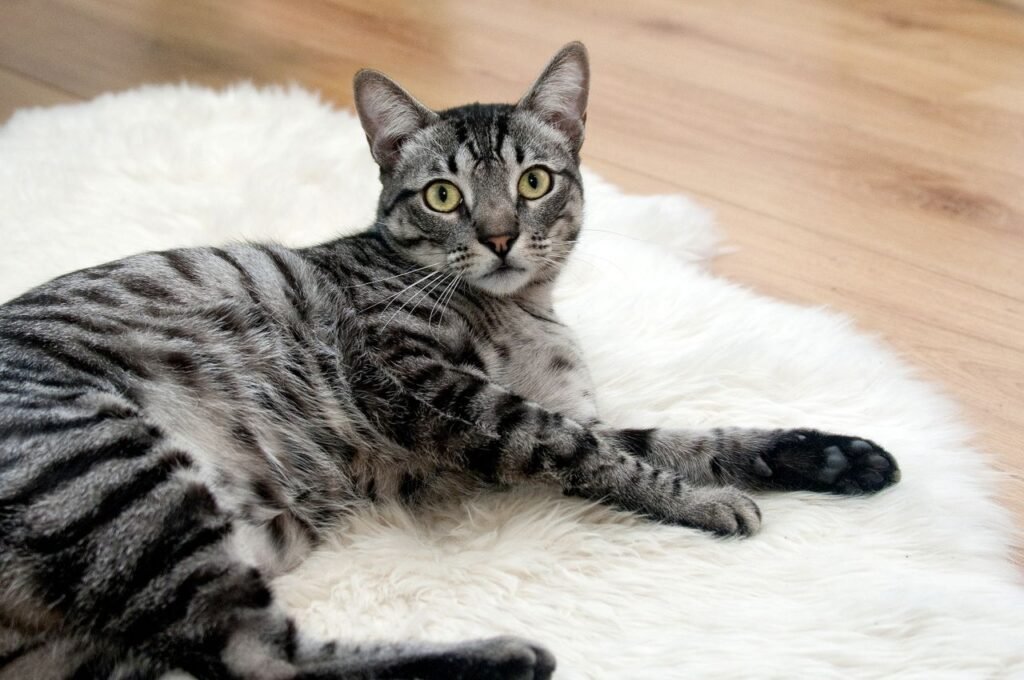
When I noticed my cat’s skin twitching, I immediately became concerned and wondered whether it was normal or a sign of a health problem. After researching the topic, I discovered that some causes of skin twitching are completely normal, while others may indicate an underlying medical condition.
Some muscle twitches in cats are a natural part of their behavior. A cat may twitch its muscles when feeling excited or playful, and tail or ear twitching is also a normal way of expressing focus, alertness, or mild irritation. These brief movements are usually harmless and nothing to worry about.
However, not all twitching is harmless. If your cat experiences skin rippling along its back, repeatedly chases its tail, suddenly becomes aggressive, or shows signs such as seizures, tremors, drooling, confusion, or loss of balance, these symptoms are not normal. They may be associated with Feline Hyperesthesia Syndrome (FHS), neurological disorders, or toxin exposure, and a veterinarian should examine your cat.
Skin twitching can also occur because of fleas, insect bites, or itchy skin. In these cases, mild and occasional twitching is simply a natural response, much like how people instinctively scratch or move when they feel an itch. However, if the twitching becomes frequent, severe, or is accompanied by other unusual symptoms, it should not be ignored, as it may indicate a more serious health problem.
Why Is My Cat’s Skin Twitching? Causes and Precautions You Need to Know
1. Normal Causes
What Is Skin Twitching?
This phenomenon, scientifically known as the cutaneous trunci muscle reflex, involves a thin layer of muscle located beneath a cat’s skin, especially around the back and sides. Whenever this muscle receives even a light stimulus such as a touch, an insect landing on the skin, or a gentle breeze, it automatically contracts, causing the skin to twitch or ripple, much like a wave moving across water.
How Does This Reflex Work?
- Sensory nerves in the skin detect a light touch or movement.
- The signal travels immediately to the spinal cord. It does not need to reach the brain first, which is why the response is so fast.
- The spinal cord sends the signal directly back to the muscle.
- The muscle contracts, causing the skin to twitch or ripple. This automatic process is called a reflex arc.
In other words, this is an involuntary reflex that the cat cannot consciously control. It is simply an automatic response of the nervous system.
What Triggers This Reflex?
- A fly or other insect landing on the skin is the most common trigger. Cats use this reflex to shake off insects without moving their entire body.
- Light touch or petting, especially on the back or sides.
- A gust of wind or static electricity.
- A slight pull on the fur, such as during grooming.
- Sudden noises or nearby movement.
Which Cats Experience This More?
- Short-haired cats often show skin twitching more clearly because their fur makes the movement easier to see.
- Cats with a sensitive or nervous temperament may have a more active skin twitch reflex.
- Some cats naturally have more noticeable skin twitching than others. This depends on individual sensitivity and does not necessarily indicate a health problem.
Signs of Normal Skin Twitching
- ✅ Occurs only in one specific area where the skin was touched or stimulated.
- ✅ The cat remains calm and relaxed.
- ✅ The twitching stops immediately after the trigger is gone.
- ✅ The cat does not excessively lick or bite the affected area.
2. Other Normal Causes
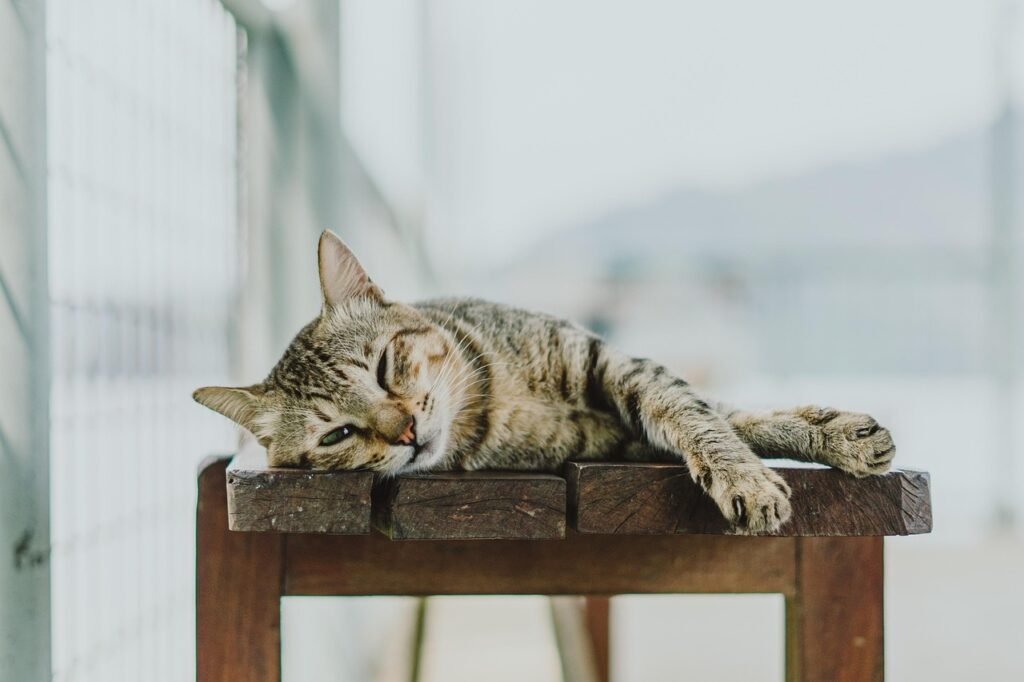
Excitement or Hunting Instinct
When a cat sees a bird, a toy, or a laser pointer, its tail or body may twitch slightly. This is a normal sign of excitement, focus, and hunting instinct.
Dreaming (REM Sleep)
If a cat is asleep or in a drowsy state, twitching of the paws, whiskers, or tail is usually caused by REM sleep, meaning the cat is dreaming.
Muscle Fatigue or Static Electricity
Occasionally, mild skin twitching may occur after a long nap or because of static electricity during dry weather.
3. Abnormal Causes (May Require a Veterinary Visit)
Feline Hyperesthesia Syndrome (FHS)
Also known as “twitchy cat disease,” Feline Hyperesthesia Syndrome (FHS) is a condition in which a cat’s skin, especially around the back and tail, becomes extremely sensitive. During an episode, the cat may suddenly bite its own skin, chase its tail, meow loudly, or run around frantically.
This condition may be associated with stress, neurological disorders, or skin problems. Although the exact cause is not fully understood, veterinary evaluation is recommended if these symptoms occur frequently.
Flea Allergy or Skin Irritation
Fleas, ticks, mites, allergies, or other skin irritants can cause repeated skin twitching. In these cases, the cat may also scratch, lick, or bite the affected area more often than usual.
Common signs include:
- Frequent scratching or licking
- Redness or skin irritation
- Hair loss
- Visible fleas or flea dirt in the coat
Neurological Issues or Seizures
Severe twitching accompanied by whole-body stiffening, drooling, confusion, or loss of balance may indicate a neurological disorder or seizure. These signs should never be ignored and require immediate veterinary attention.
Common signs include:
- Whole-body stiffening or convulsions
- Drooling or foaming at the mouth
- Disorientation after the episode
- Loss of bladder or bowel control
- Repeated, intense twitching that does not stop
Pain or Nerve Problems
Localized skin twitching may sometimes be caused by pain affecting the muscles, spine, or nerves.
Common signs include:
- Twitching in one specific area
- Sensitivity when touched
- Limping or difficulty jumping
- Changes in posture or movement
Anxiety or Stress
Stress can also trigger muscle twitching in cats. Common causes include moving to a new home, introducing a new pet, loud noises, or changes in the cat’s daily routine.
Common signs include:
- Twitching during or after a stressful event
- Hiding more than usual
- Reduced appetite
- Excessive grooming
- Increased twitching around unfamiliar people or animals
Cat Twitching While Awake: Normal vs. Abnormal
Cat twitching while awake can range from a harmless reflex to a sign of a serious medical condition. Understanding the difference can help you decide whether the behavior is normal or whether a veterinarian should examine your cat.
| Cause | Common Symptoms | Recommended Action |
| Feline Hyperesthesia Syndrome (FHS) | Skin rippling, tail chasing, self-biting | Visit a veterinarian |
| Flea Allergy or Skin Irritation | Scratching, redness, hair loss | Treat fleas and consult a veterinarian if symptoms are severe |
| Neurological Problems or Seizures | Body stiffening, drooling, loss of balance | Seek emergency veterinary care immediately |
| Pain or Nerve Problems | Localized twitching, pain when touched | Schedule a veterinary examination |
| Stress or Anxiety | Twitching during stressful situations, hiding, reduced appetite | Reduce stress and monitor your cat; consult a veterinarian if symptoms persist |
7. When to Seek Emergency Veterinary Care
Seek immediate veterinary attention if your cat experiences any of the following:
- Whole-body stiffening or convulsions
- Loss of consciousness
- Drooling accompanied by confusion or disorientation.
- Inability to calm down or signs of severe pain
- Repeated self-biting that causes wounds